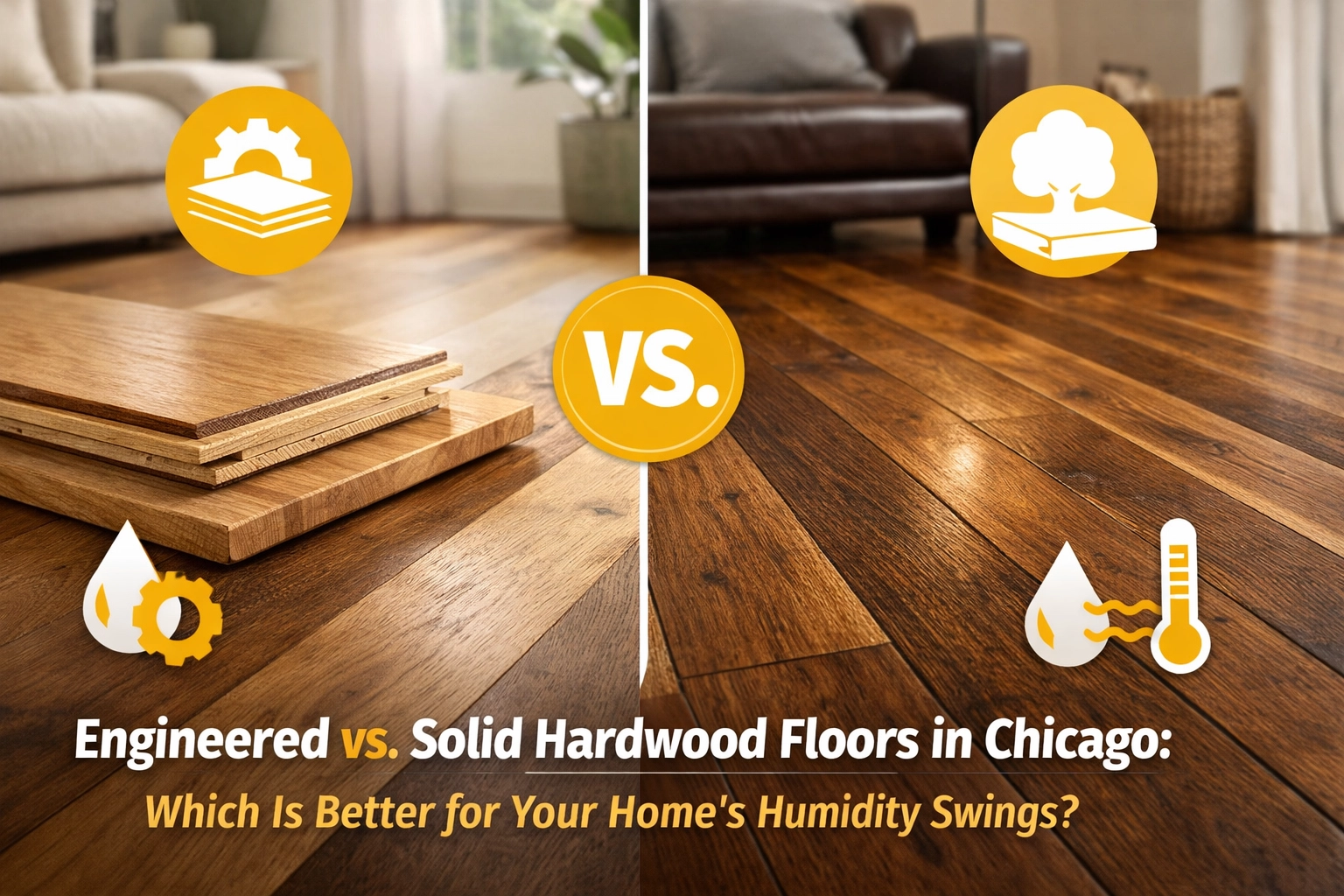
If you've lived in Chicago for more than a year, you already know the drill. We go from freezing, dry winters with indoor humidity levels that drop below 20% to sticky, humid summers that push 70% or higher. Your skin knows it. Your sinuses know it. And trust me, your hardwood floors definitely know it.
Wood is a living, breathing material. It expands when it absorbs moisture and contracts when things dry out. In a city like Chicago, that means your floors are constantly moving. The question is: which type of hardwood can handle that roller coaster without warping, cupping, or leaving you with gaps wide enough to lose a penny?
Let's break down engineered versus solid hardwood and figure out which one makes sense for your home.
What's the Difference Between Engineered and Solid Hardwood?
Before we talk about humidity, let's make sure we're on the same page about what these flooring types actually are.
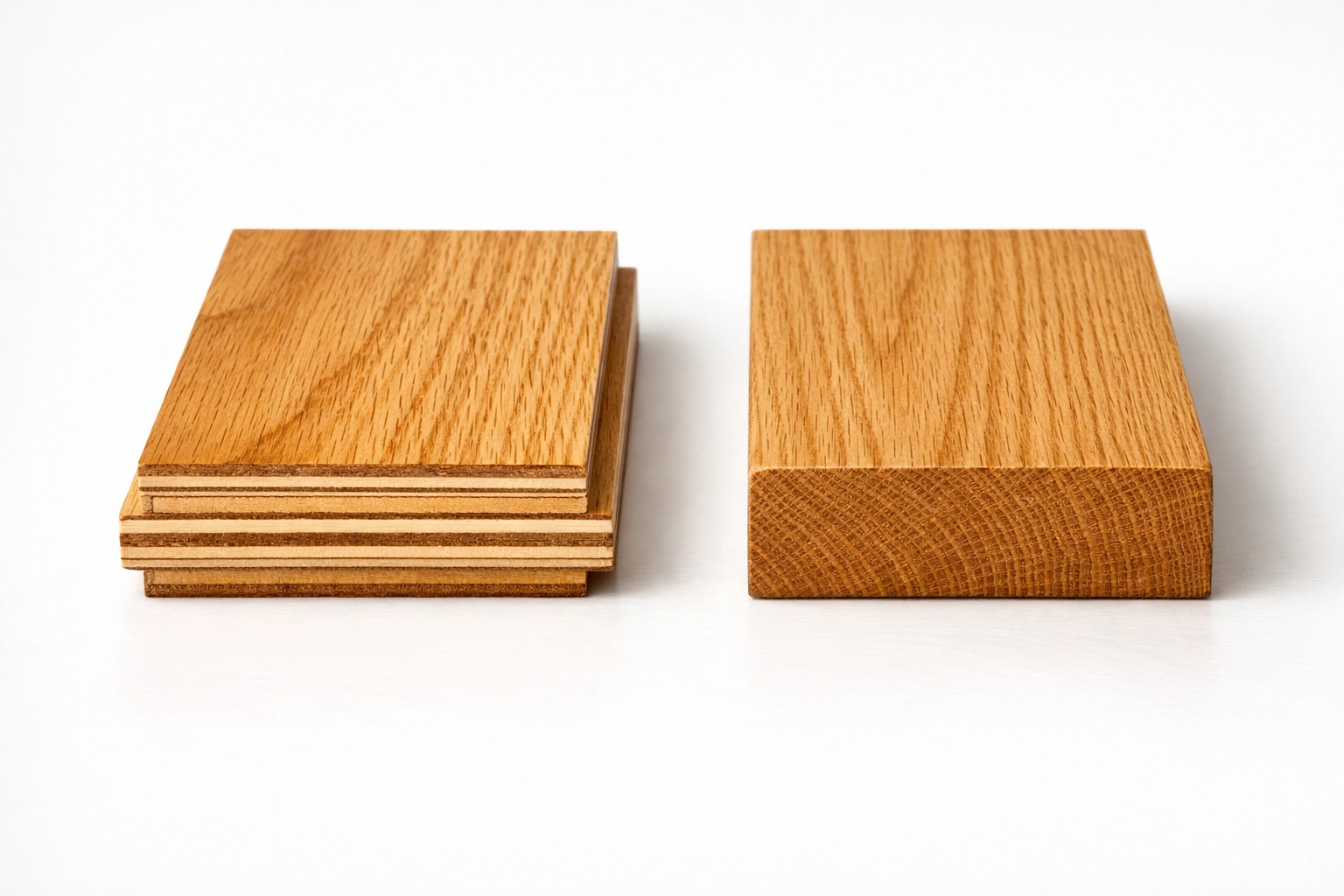
Solid hardwood is exactly what it sounds like, planks milled from a single piece of timber, usually 3/4 inch thick. It's the traditional choice, the one your grandparents probably had. You can sand it down and refinish it multiple times over its lifespan, which is a huge plus if you're thinking long-term.
Engineered hardwood, on the other hand, is constructed in layers. The top layer is real hardwood (called the "wear layer"), but underneath, you've got multiple plies of wood arranged in cross-grain patterns. This construction is what gives engineered flooring its stability, and it's specifically designed to resist the expansion and contraction that solid wood experiences.
Why Chicago's Climate Is Brutal on Solid Hardwood
Here's the thing about solid hardwood: it's gorgeous, durable, and timeless. But in Chicago's climate? It's also temperamental.
During winter, when you're running the heat non-stop, indoor humidity can plummet. Solid hardwood planks shrink as they lose moisture, creating gaps between boards. Then summer rolls around, humidity spikes, and those same planks swell back up. Do this enough times, and you're looking at cupping (where the edges of the boards lift higher than the center), crowning (the opposite problem), or even buckling.
I've seen it happen in homes across the North and West suburbs, everything from Lincoln Park to Naperville to Oak Park. One homeowner told me she could literally feel the texture change under her feet depending on the season. That's solid hardwood reacting to moisture, and no amount of maintenance will completely stop it.
Engineered hardwood, by contrast, expands and contracts approximately 50% less than solid hardwood. That multi-layer construction with alternating grain directions gives it dimensional stability that solid wood just can't match. It's not magic, it's physics.
Installation Flexibility: Where Can You Actually Use Each Type?
This is a big one, especially if you're considering flooring for a basement, condo, or anywhere with a concrete subfloor.
Solid hardwood needs to be nailed or stapled down to a wood subfloor. You can't install it over concrete, and you definitely shouldn't put it in basements or below-grade spaces where moisture levels are higher. It's just asking for trouble.
Engineered hardwood gives you way more options. You can glue it directly to concrete, float it over underlayment, or nail it down to plywood. This makes it ideal for Chicago condos (where you're often dealing with concrete slabs), finished basements, and any space where solid wood would be a non-starter.
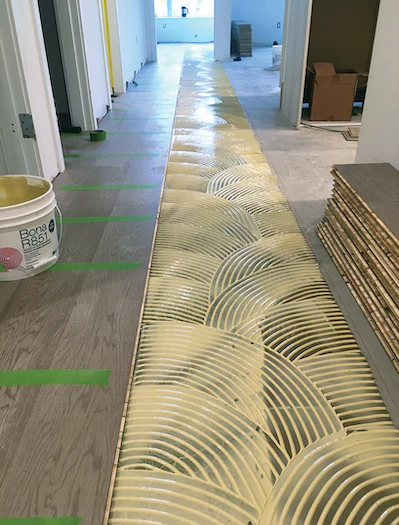
Plus, engineered floors can often be installed as a floating floor, which means faster installation and fewer headaches if you ever need to replace a section.
Longevity and Refinishing: The Trade-Off You Need to Understand
Here's where solid hardwood traditionally wins, or at least, where people think it wins.
Solid hardwood can be sanded down and refinished 5 to 7 times over its lifetime. If you've got a 100-year-old home with original oak floors that have been refinished three times, you still have a few more refinishing cycles left before you need to replace them.
Engineered hardwood, on the other hand, can typically only be refinished 1 to 3 times, depending on the thickness of that top wear layer. A thicker wear layer (4mm or more) gives you more refinishing options, but you're still not getting the same longevity as solid wood in that department.
But here's the kicker: in Chicago's humidity swings, engineered hardwood actually lasts longer overall. We're talking 25 to 30 years with proper maintenance versus 15 to 20 years for solid hardwood in moisture-prone environments. Why? Because solid hardwood takes more of a beating from the constant expansion and contraction. It's more likely to develop structural issues, warping, cupping, gapping, that can't be fixed with a simple refinishing job.
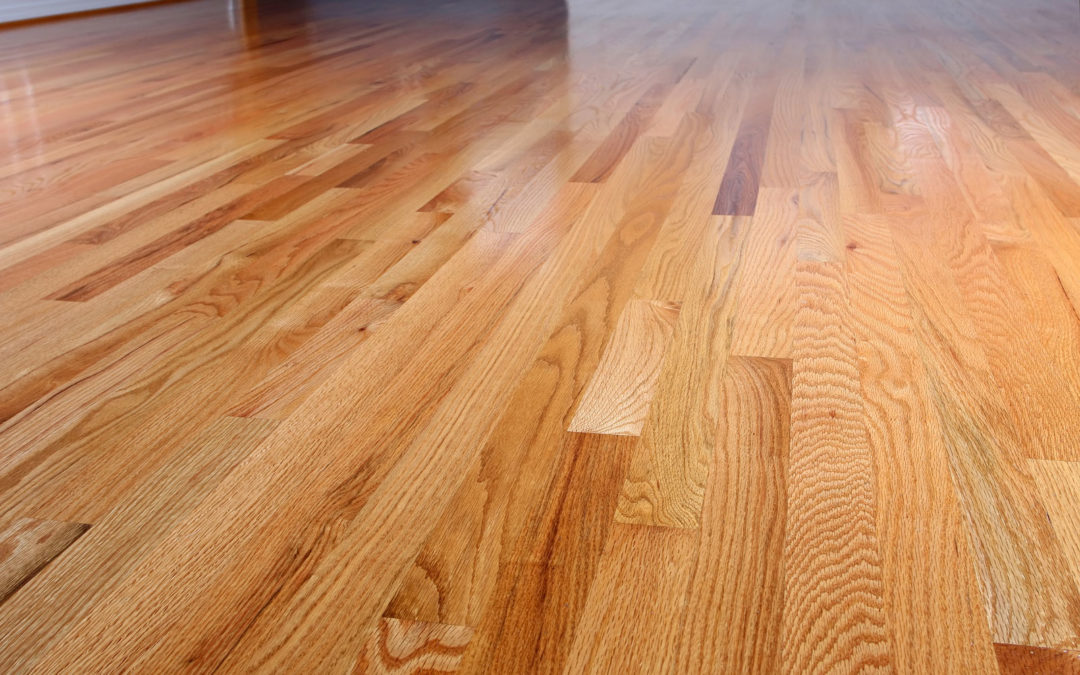
So yes, you can refinish solid hardwood more times. But if it warps or buckles, refinishing won't save it.
What About Maintenance and Everyday Life?
Both types of flooring require regular maintenance: sweeping, occasional damp mopping, and protecting them from excessive moisture. But there are some differences worth noting.
Engineered hardwood is more forgiving when it comes to humidity control. You still want to keep indoor humidity levels between 35% and 55% (check out our guide on humidity management for specifics), but you'll have a bit more wiggle room compared to solid wood.
That said, neither type is waterproof. Engineered hardwood is water-resistant, meaning it can handle minor spills better than solid wood: but you still need to wipe up standing water quickly. I've seen engineered floors hold up just fine in kitchens where solid hardwood would've been a disaster, but you're not getting the full waterproof protection of luxury vinyl or tile.
For everyday wear and tear: dogs, kids, furniture: both types perform similarly if you choose a durable species (oak, maple, hickory) and a harder finish. The difference is really in how they react to the environment, not how they handle foot traffic.
Cost Comparison: Is One Significantly Cheaper?
Material costs are pretty comparable, especially if you're looking at quality products in both categories. Engineered hardwood can actually be more expensive upfront, depending on the thickness of the wear layer and the quality of the core construction.
Where you might save with engineered flooring is on installation. Because it can be glued down or floated, you're not dealing with the same labor-intensive process as nailing solid hardwood. Plus, if your subfloor needs prep work (leveling, moisture barriers, etc.), engineered is often more forgiving.
Over the long term, the cost equation shifts. Engineered hardwood's superior moisture resistance means fewer repair calls, less chance of major issues, and a longer lifespan in Chicago's climate. If you're planning to stay in your home for 20+ years, that stability is worth something.
So Which One Should You Choose?
Here's my honest take after working on hundreds of floors throughout Chicago and the surrounding 60-mile radius to the North and West:
Choose engineered hardwood if:
- You're installing over concrete (condos, basements, modern construction)
- You live in an older home where humidity control is inconsistent
- You want maximum stability with minimal seasonal movement
- You're not planning to refinish your floors more than once or twice
Choose solid hardwood if:
- You have a wood subfloor and want the traditional option
- You're committed to maintaining ideal humidity levels year-round (35–55%)
- You love the idea of refinishing floors multiple times over decades
- You're in a single-family home with excellent HVAC and moisture control
For most Chicago homeowners, especially those in condos or homes with concrete slabs, engineered hardwood is the smarter choice. It's not about one being "better" in every scenario: it's about matching the flooring to your specific home and lifestyle.
Final Thoughts
Chicago's climate is tough on hardwood floors: there's no way around it. But understanding how engineered and solid hardwood react to humidity swings gives you the information you need to make a smart decision.
If you're still on the fence or want a professional opinion based on your home's specific conditions, we're happy to help. We've been installing and refinishing hardwood floors across the Chicago area for years, and we've seen just about every scenario you can imagine.
Whether you go with engineered or solid, the key is proper installation, quality materials, and a maintenance routine that keeps your floors looking great for decades. Get that right, and you'll have beautiful hardwood that holds up no matter what Chicago's weather throws at it.