
Let's be honest: refinishing hardwood floors in the middle of a Chicago winter sounds about as fun as shoveling your driveway in a blizzard. But sometimes, it's necessary. Maybe you're hosting family in March, or you just want to tackle that project before spring gets busy.
The problem? Winter refinishing comes with its own set of challenges that can turn a straightforward project into a disaster if you're not prepared. We've seen it all after years of working with homeowners across Chicago and the surrounding areas within a 60-mile radius extending North and West.
Here are the seven most common mistakes we see: and more importantly, how to avoid them.
Mistake #1: Ignoring Indoor Humidity Levels
Chicago winters are brutal on hardwood floors, and not just because of the cold. When your furnace runs constantly, indoor humidity can drop below 30%, which causes your floorboards to shrink and create gaps.
Here's the problem: if you refinish your floors when the humidity is too low, those boards will expand again come spring and summer. That can lead to buckling, cupping, or finish cracking.
How to avoid it: Run a humidifier in your home for at least a week before refinishing begins. Aim to keep indoor humidity between 35-55%. This stabilizes the wood and ensures the boards are at their "normal" size before any work starts. A professional like Rovin's Flooring Inc will measure humidity levels before starting any project: it's that important.

Mistake #2: Not Planning for Proper Ventilation in Cold Weather
In summer, you can throw open all the windows and let those polyurethane fumes escape. In February? Not so much. Opening windows when it's 15 degrees outside isn't just uncomfortable: it can actually mess with the finish application and drying process.
But here's the catch: you still need ventilation. Those fumes need somewhere to go, and they can be overwhelming (and potentially harmful) if they're trapped inside.
How to avoid it: Work with a flooring company that uses low-VOC or water-based finishes, which produce fewer fumes. Crack a window in a room far from where the work is happening, and run exhaust fans strategically. Better yet, consider staying elsewhere for a night or two if possible. Your lungs will thank you, and the finish will cure properly without temperature shock from wide-open windows.
Mistake #3: Choosing the Wrong Finish for Winter Conditions
Not all finishes perform the same way in winter. Oil-based polyurethane takes longer to dry in cold temperatures and needs proper ventilation (see above). Water-based finishes dry faster but can be finicky if the temperature drops too low during application.
Many homeowners don't realize that most finishes require a minimum temperature of 50-60°F to cure properly. If your house is too cold, you'll end up with a finish that never fully hardens or looks cloudy.
How to avoid it: Keep your home at a consistent 65-70°F during the entire refinishing process and for at least 72 hours after the final coat. Water-based finishes are generally better for winter because they dry faster and produce fewer fumes: but only if the temperature is right. Talk to your flooring professional about which finish makes the most sense for your timeline and home conditions. You can learn more about water-based coatings here.
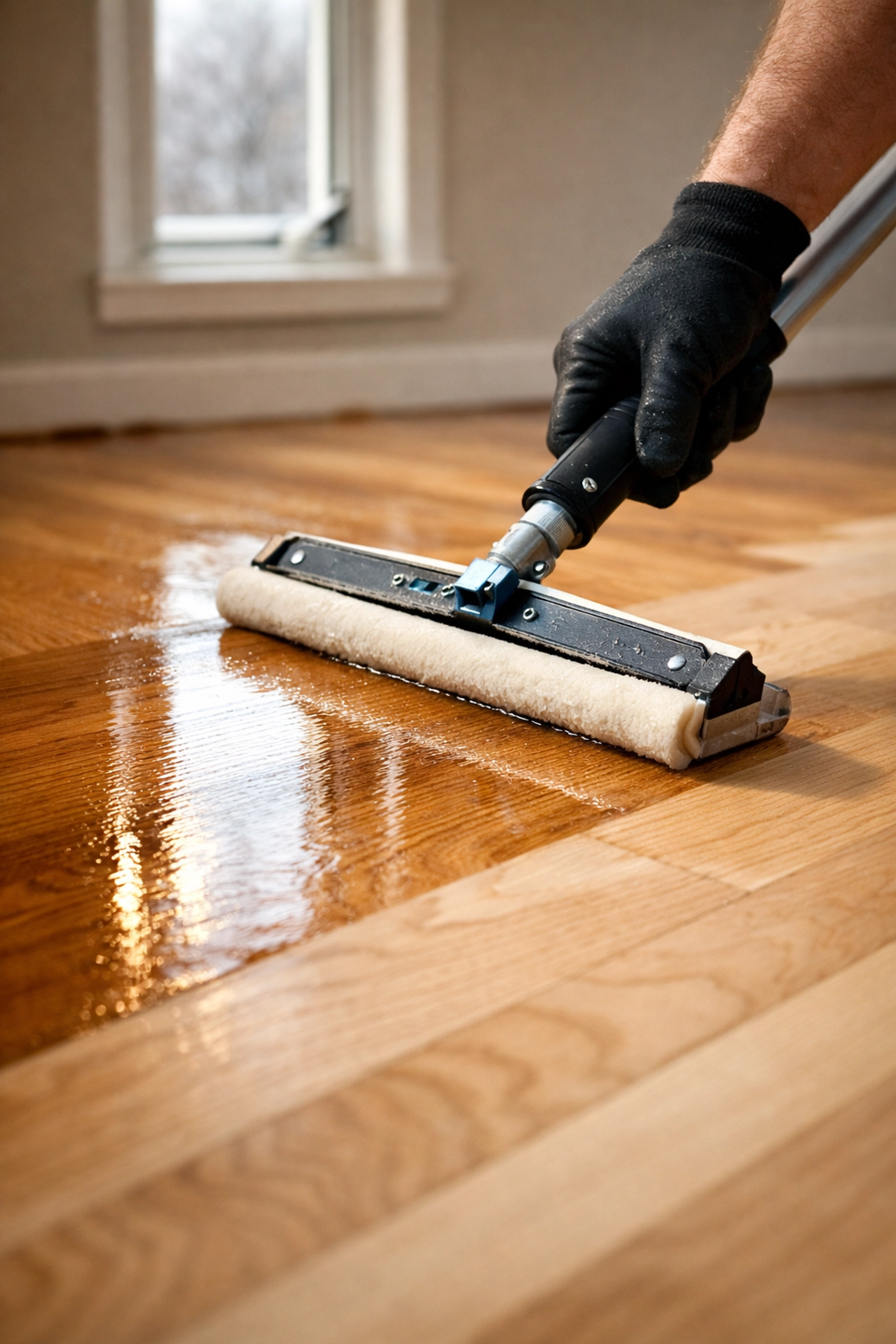
Mistake #4: Underestimating How Long the Project Actually Takes
In summer, you might walk on your newly refinished floors within 24-48 hours and move furniture back in after a few days. Winter? Add time to everything.
Cold, dry air can actually slow down the curing process for some finishes. And since you can't ventilate as aggressively, you need to be more patient. Rushing back onto your floors too early can leave permanent footprints, scuff marks, or dull spots in the finish.
How to avoid it: Plan for at least 3-5 days before light foot traffic (with socks only), and a full week before moving furniture back. If you have a big event coming up, give yourself at least two weeks of buffer time. It's also worth reading up on fast-drying finishes and realistic timelines to set proper expectations.
Mistake #5: Skipping Proper Dust Control
Dust is always part of sanding hardwood floors. But in winter, you can't just open all the windows and doors to clear it out. That means dust lingers longer and settles everywhere: on furniture, in vents, on window sills.
Some homeowners think a regular shop vac is enough. Spoiler: it's not. Fine wood dust will coat everything in your home if proper containment isn't used.
How to avoid it: Hire a company that uses dustless refinishing equipment. Modern sanding machines have built-in vacuum systems that capture 95-99% of dust at the source. At Rovin's Flooring Inc, we use professional-grade dust containment systems specifically to make winter projects manageable. We also seal off work areas with plastic barriers to keep dust from migrating to other rooms.
Mistake #6: Not Planning for Kids, Pets, and Daily Life
This might sound obvious, but you'd be surprised how many homeowners forget that winter refinishing means you can't just "hang out in the backyard" while the floors cure. You're stuck inside, in close quarters, with wet polyurethane fumes and floors you can't walk on.
If you have kids, pets, or anyone with respiratory sensitivities, this gets complicated fast. Dogs need to go outside. Kids need to get to school. You need to use the bathroom. All of that becomes a logistical puzzle when half your house is off-limits.
How to avoid it: Map out a realistic plan before work begins. Can you sequester pets in one area? Can you stay with family for a couple nights? Can you work from home in a different room? Professional crews can often work in sections, refinishing bedrooms one day and living areas another, to minimize disruption. But you need to communicate your needs upfront.
Mistake #7: Forgetting About Temperature Requirements During Finish Application
This is the mistake that sneaks up on people. You keep your house warm during the day, but what about overnight? If temps drop below 50°F after a coat is applied: even for a few hours: it can ruin the finish.
Some homeowners also make the mistake of cranking the heat way up to "speed up drying." That doesn't work either. Rapid temperature changes can cause the finish to dry unevenly, leading to a hazy or rough texture.
How to avoid it: Maintain a steady temperature of 65-70°F throughout the entire refinishing process: day and night. Don't adjust your thermostat drastically. If your home has temperature inconsistencies (like cold basements or drafty rooms), mention it to your flooring contractor ahead of time so they can plan accordingly. You can read more about temperature requirements here.
Winter Refinishing Can Be Done Right
Look, refinishing hardwood floors in winter isn't impossible: we do it all the time throughout Chicago, Evanston, Skokie, Des Plaines, Park Ridge, and dozens of other communities North and West of the city. But it does require extra planning, the right equipment, and a realistic timeline.
The biggest takeaway? Don't DIY this in January. Winter refinishing demands professional equipment, climate control expertise, and an understanding of how cold, dry air affects wood and finishes. Small mistakes become big problems when you can't just "open a window and wait."
If you're thinking about refinishing your hardwood floors this winter: or anytime, really: reach out to Rovin's Flooring Inc for a free consultation. We'll assess your home's conditions, walk you through realistic timelines, and make sure the job is done right the first time. No guesswork, no regrets, no floors that look worse in March than they did in December.
Winter projects don't have to be stressful. They just need to be done by people who know what they're doing.