
If you've been eyeing your cool-toned gray hardwood floors with regret, you're not alone. After nearly a decade of dominance, the gray floor trend is finally giving way to something warmer, more natural, and frankly, more timeless. Chicago homeowners are increasingly reaching out to us at Rovin's Flooring to transition their spaces from that cold, modern gray to honey-toned oaks, rich walnuts, and classic natural finishes.
But here's the thing: restaining hardwood isn't as simple as picking a new color and slapping it on. We've seen plenty of DIY disasters and even some contractor missteps that turn a simple refresh into a costly redo. After working with hardwood floors across Chicago and within a 60-mile radius extending North and West for years, we've identified seven critical mistakes homeowners make when restaining their floors, and more importantly, how to avoid them.
The Return to Warm Wood Tones
Before we dive into the mistakes, let's talk about why this shift is happening. Gray floors were marketed as modern and sophisticated, but they've aged poorly in many homes. They can make spaces feel cold and institutional, especially during Chicago's long winters when natural light is already limited. Warm tones like honey, natural oak, and medium walnut create inviting spaces that feel both classic and contemporary, the kind of finish that won't look dated in five years.
Mistake #1: Not Testing Stains on Your Actual Floor
This is the number one mistake we see, and it's completely understandable. You browse a Minwax color chart online, fall in love with "Special Walnut," and assume that's exactly how it'll look on your floor. Wrong.
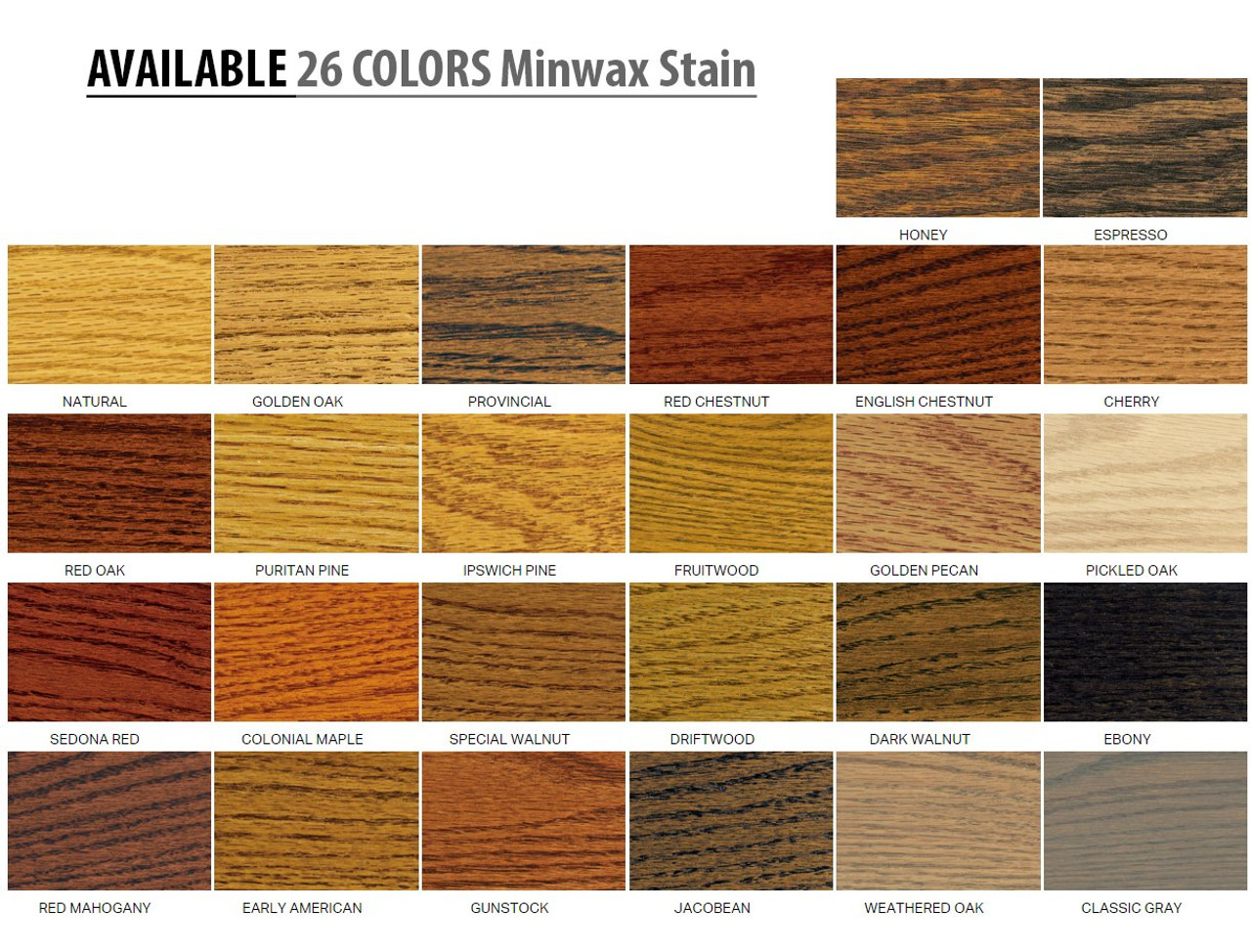
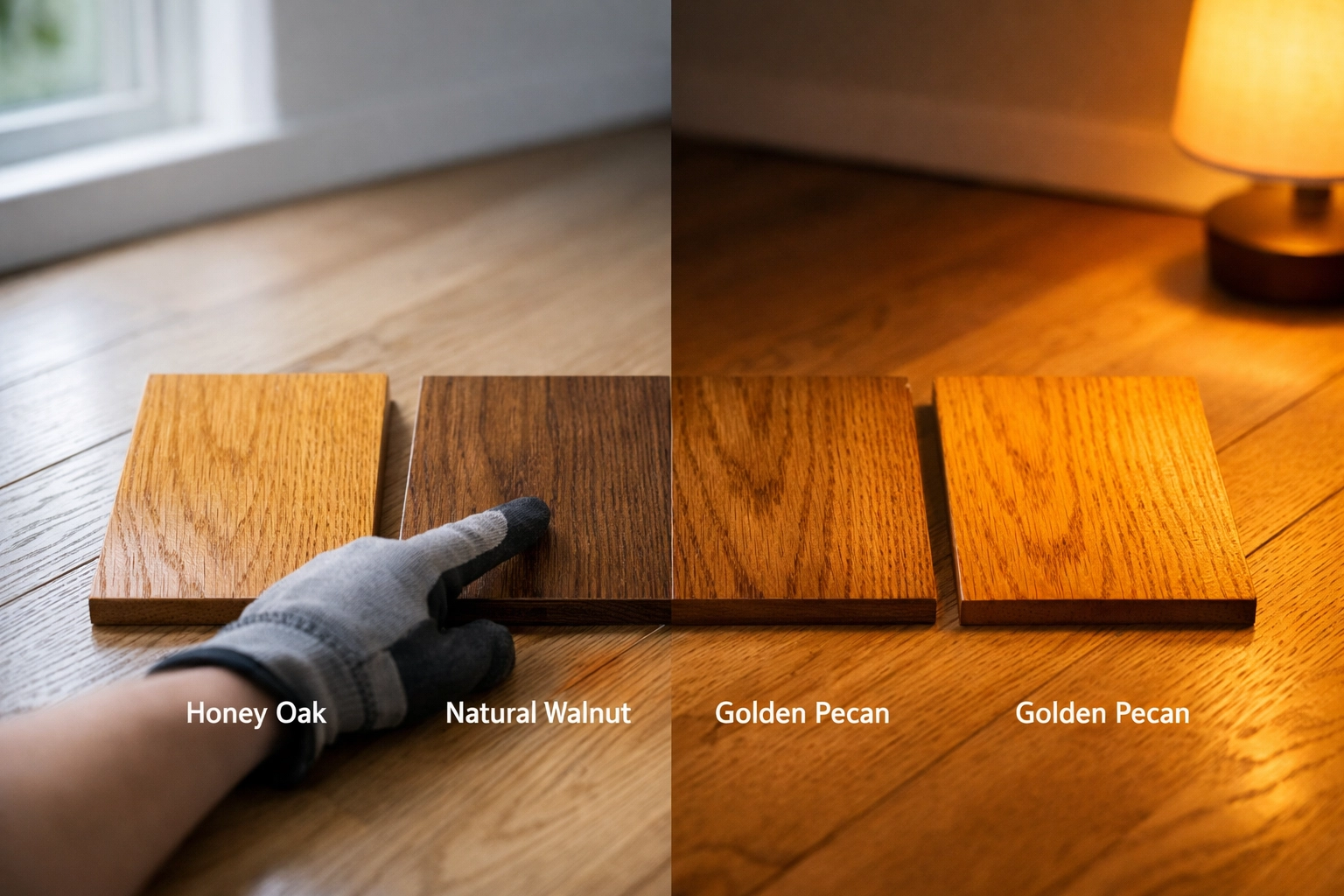
The fix: Always test stain colors on your actual floor in an inconspicuous area like a closet or under where furniture will sit. Wood species, grain patterns, and existing wood age all affect how stain absorbs. What looks like a warm honey on white oak might turn orange on red oak. At Rovin's Flooring, we always conduct on-site testing in multiple lighting conditions before committing to a full floor.
Mistake #2: Ignoring Your Home's Lighting
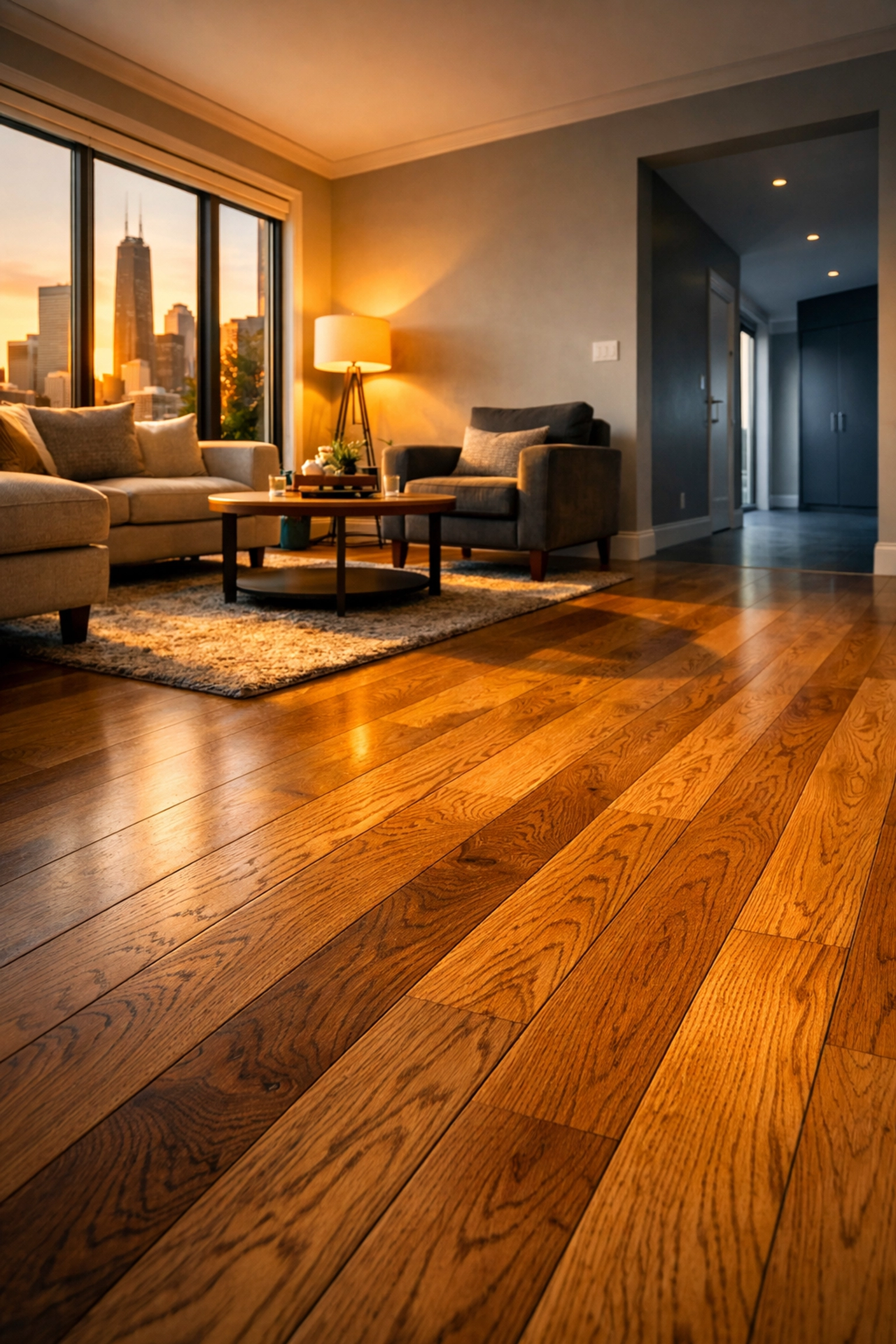
Chicago homes vary dramatically in natural light exposure. A north-facing bungalow in Jefferson Park gets vastly different light than a south-facing condo in Lincoln Park. Artificial lighting matters too, warm LEDs, cool fluorescents, and natural daylight all change how your floor color appears.
The fix: Test your stain samples at different times of day and under your home's actual lighting. A stain that looks perfect at 2 PM might look muddy at 7 PM under your kitchen pendants. Consider both your primary light sources and how the room is used throughout the day.
Mistake #3: Skipping Proper Sanding Grit Sequence
Here's where things get technical. Proper sanding isn't about going from rough to smooth in two steps. It's a progressive refinement that directly impacts how your stain looks.
Jumping grits, say, going from 60 to 150, leaves swirl marks that become glaringly obvious once stain hits the wood. These scratches absorb more stain than smooth wood, creating dark streaks across your floor. On the flip side, sanding too fine (beyond 120-grit) before staining actually prevents proper stain absorption, leaving you with a washed-out, inconsistent color.
The fix: Follow the proper progression: 40-60 grit for initial sanding, 80 grit to refine, and finishing with 100-120 grit before staining. Never skip more than one grit in the sequence. This is one reason why professional equipment and expertise make such a difference, Rovin's Flooring uses commercial-grade dustless sanding equipment that maintains precision across every grit stage.
Mistake #4: Not Considering Wood Species and Natural Undertones
This mistake often compounds mistake #1. Red oak and white oak are completely different animals when it comes to staining. Red oak has warm, pinkish undertones that can turn orange or even salmon-colored with the wrong stain. White oak has cooler, more neutral undertones that accept warm stains beautifully without fighting you.
If you're trying to transition from gray (which probably looked decent on white oak) to warm honey tones, you might be thrilled with the results. But if you have red oak and choose the wrong warm stain, you could end up with something that looks like a 1990s kitchen floor.
The fix: Identify your wood species first. If you have red oak and want warm tones without orange, consider stains with brown or walnut bases rather than golden or honey tones. White oak owners have more flexibility. A professional can help you select stains that work with, not against, your wood's natural character.
Mistake #5: Over-Saturating the Wood
More stain does not equal richer color. In fact, applying too much stain creates a host of problems: extended drying times, tacky surfaces that never fully cure, and "bleed back" where excess stain pools between boards and seeps out as it dries, leaving visible droplets along every seam.
We've seen floors still tacky 11 days after staining because the homeowner applied multiple heavy coats thinking it would deepen the color.
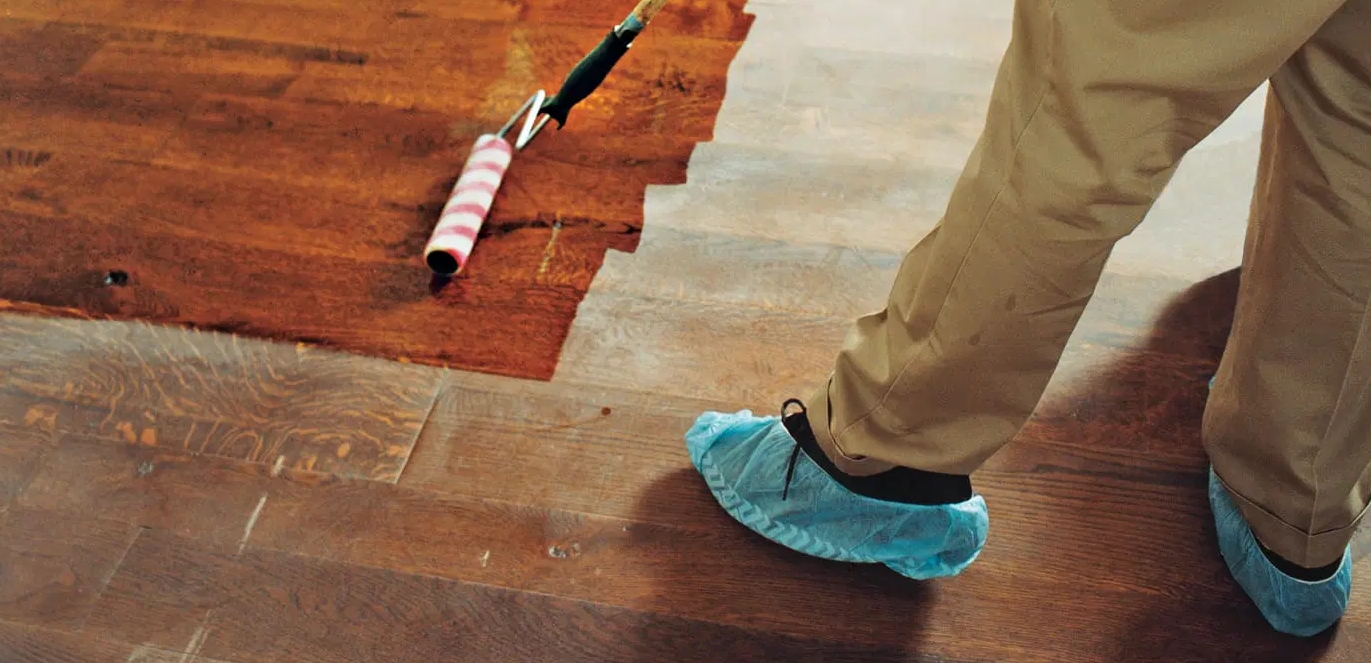
The fix: Apply stain in manageable sections, work it into the wood, then wipe off all excess. The color comes from what penetrates the wood fibers, not what sits on top. For deeper color, consider water-popping (lightly misting the floor before staining to raise the grain) rather than applying extra coats. This technique creates more uniform absorption and richer tones without over-saturation.
Mistake #6: Not Using Professional-Grade Finishing Agents
You've invested in beautiful new stain color. Don't cheap out on the finish. Big-box store polyurethane might save you $50, but it won't have the durability, clarity, or application characteristics of professional products.
Oil-based finishes offer rich amber tones that enhance warm stains, while water-based finishes stay crystal clear and dry faster. Both have their place depending on your goals, but quality matters significantly.
The fix: Invest in professional-grade finishing products. At Rovin's Flooring, we work with both oil-based and water-based finishing systems depending on the client's timeline and desired aesthetic. Professional finishes also level better, resist yellowing, and hold up to Chicago's humidity fluctuations and winter heating cycles. These aren't minor differences, they're the difference between a floor that looks great for 2 years versus 10+ years.
Mistake #7: Choosing a Trend Without Considering Long-Term Value
Yes, we're encouraging you to move away from gray floors, but not just to chase the next trend. The shift to warm tones isn't about being fashionable: it's about returning to what's proven timeless.
When you restain your floors based solely on what's trending on Instagram or HGTV, you risk repeating the gray floor mistake in a different color. Natural wood tones: whether light honey, medium walnut, or deep espresso: have remained desirable for decades because they're rooted in the material's inherent beauty.
The fix: Consider your home's architectural style, your neighborhood's character, and your own long-term plans. Classic Chicago bungalows and vintage homes often look best with medium to dark warm tones that honor their original era. Modern spaces can handle lighter natural finishes. Think about resale value too: hardwood flooring trends show buyers consistently prefer warm, natural wood tones over trendy grays.
The Rovin's Flooring Difference
Restaining hardwood floors is part art, part science. It requires understanding wood species, proper surface preparation, application techniques, and finishing chemistry. It's why we've built our reputation on doing it right the first time.
Our process includes comprehensive on-site testing, proper grit-sequence sanding with dustless equipment, professional-grade stains and finishes, and the experience to navigate Chicago's unique climate challenges. We serve homeowners throughout Chicago and within a 60-mile radius extending North and West, bringing decades of expertise to every project.
If you're ready to transition from gray to gorgeous, or if you're simply looking to refresh your hardwood with a classic warm tone that'll stand the test of time, reach out to Rovin's Flooring. Let's discuss your vision, test some options on your actual floors, and create a finish you'll love for years to come.
Because your floors deserve better than a trend. They deserve craftsmanship.