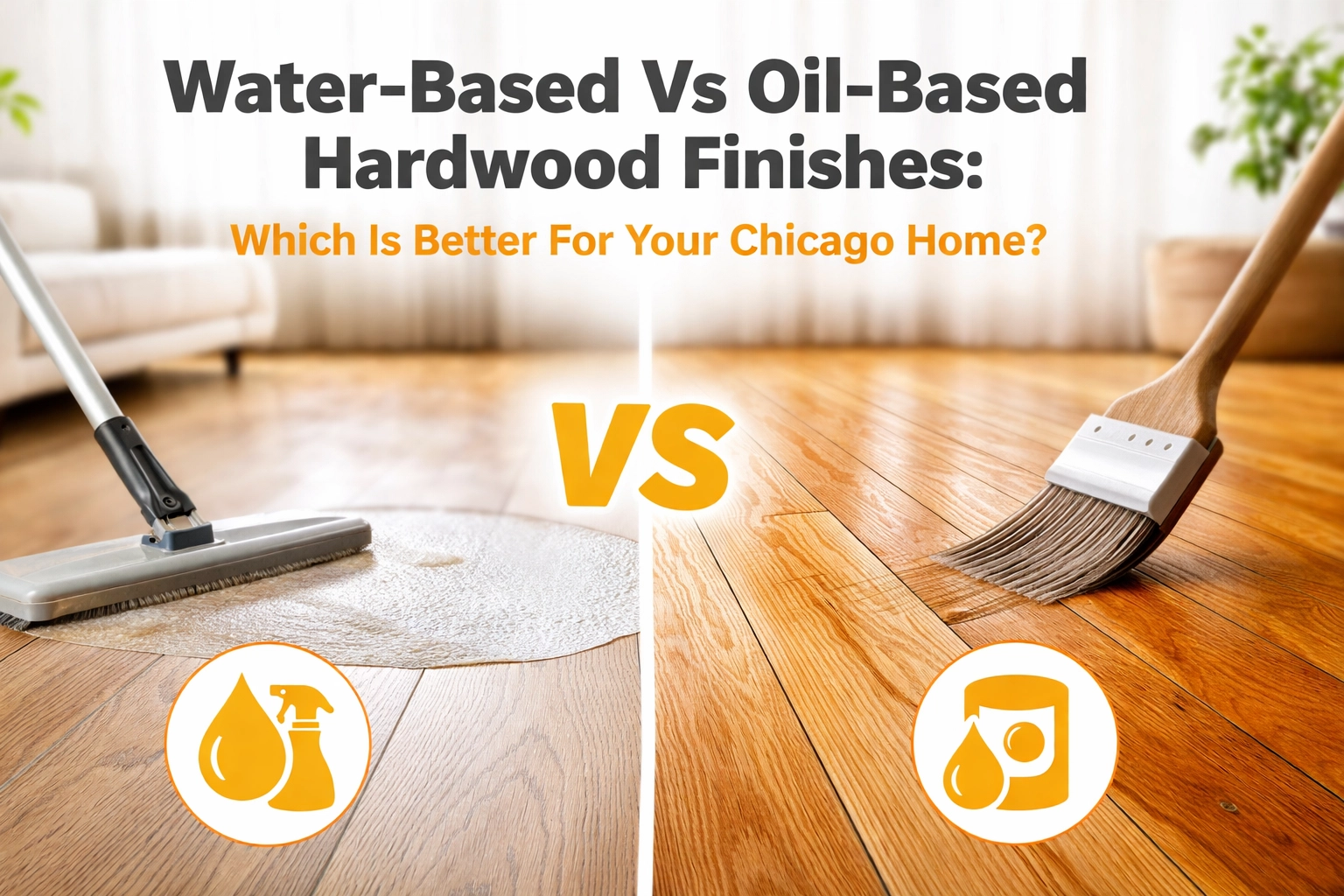
So you've decided to refinish your hardwood floors. Great choice! But now comes the question that trips up almost every Chicago homeowner: should you go with a water-based or oil-based finish?
It's not a simple "this one is better" situation. Both finishes have their strengths, and the right choice depends on your lifestyle, your budget, and honestly, how long you're willing to stay off your floors. At Rovin's Flooring, we've applied thousands of coats of both finishes across Chicago and the surrounding 60-mile radius (particularly in communities north and west of the city), so we've seen firsthand how each performs in real homes.
Let's break it down so you can make the best decision for your space.
The Quick Answer: What's the Main Difference?
Here's the simplest way to think about it:
Water-based finishes dry fast, stay clear, and have almost no smell. Oil-based finishes take longer to cure, develop a warm amber tone over time, and cost less upfront.
That's the 30-second version. But if you're investing in Chicago hardwood refinishing, you'll want to understand the details before committing.
Drying Time: This Is Where It Gets Real
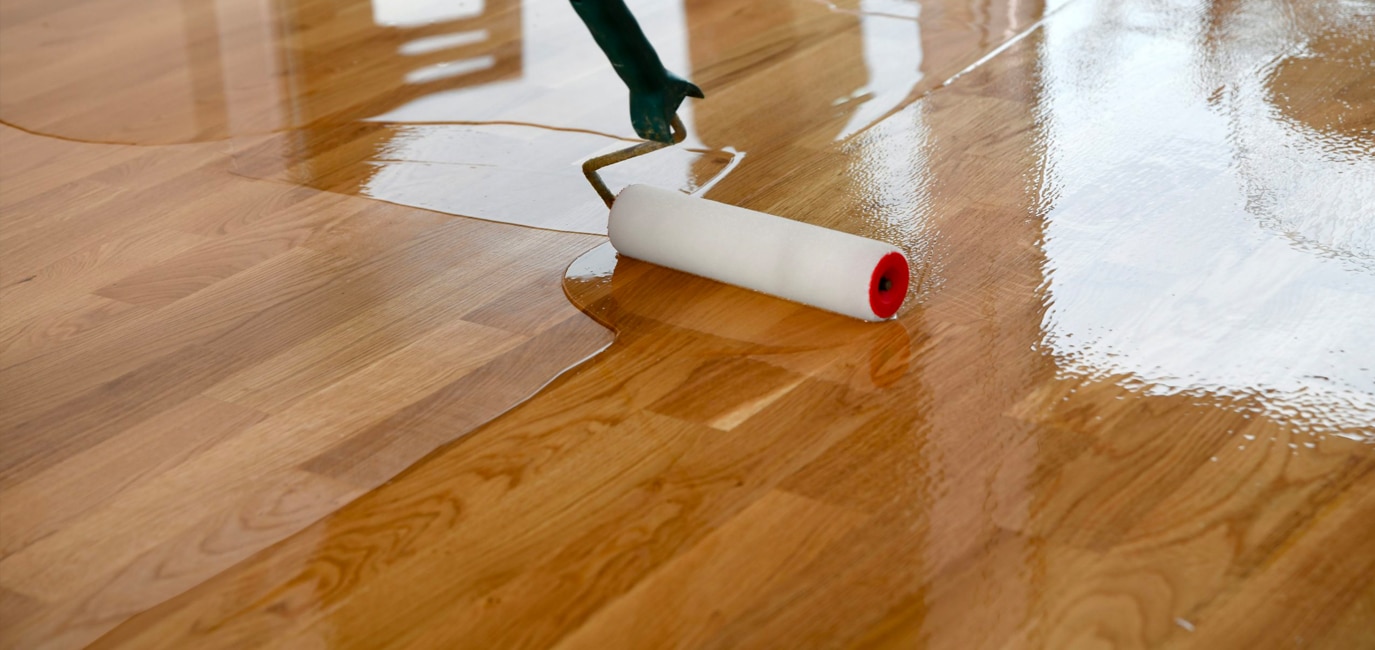
If you've got kids running around, pets who don't understand "stay off the floor," or you just can't afford to vacate your home for weeks, drying time matters a lot.
Water-based finishes need only 2-3 hours between coats and reach full cure in about 4-7 days. You can typically walk on your floors (carefully, with socks) within a day or two.
Oil-based finishes require around 12 hours of drying time between coats and take 14-30 days to fully cure. That means nearly a month of being extra careful with your floors.
For busy Chicago families juggling work, school drop-offs, and everything else, water-based finishes are often the practical winner here. You get your life back faster.
Cost: Upfront vs. Long-Term
Let's talk money, because that's always part of the equation.
Oil-based finishes are cheaper upfront, sometimes by $0.50 to $1.00 per square foot compared to water-based options. If you're refinishing a large home, that savings adds up quickly.
But here's what a lot of folks don't consider: water-based finishes tend to wear faster and may need reapplication sooner. So while you save money today with oil-based, you might end up paying similar amounts over the long haul.
The real question is: do you want lower costs now or spread out over time? There's no wrong answer, just different priorities.
Appearance: Crystal Clear vs. Warm Amber
This is where personal taste really comes into play.
Water-based finishes dry virtually clear. Your floor's natural color stays exactly as you see it after sanding. Five years from now? Still the same color. Ten years? Same deal.
Oil-based finishes add a warm, amber glow to your wood. And here's the thing, they continue to yellow and deepen over time. Some people love this look. It gives floors that classic, traditional hardwood warmth.
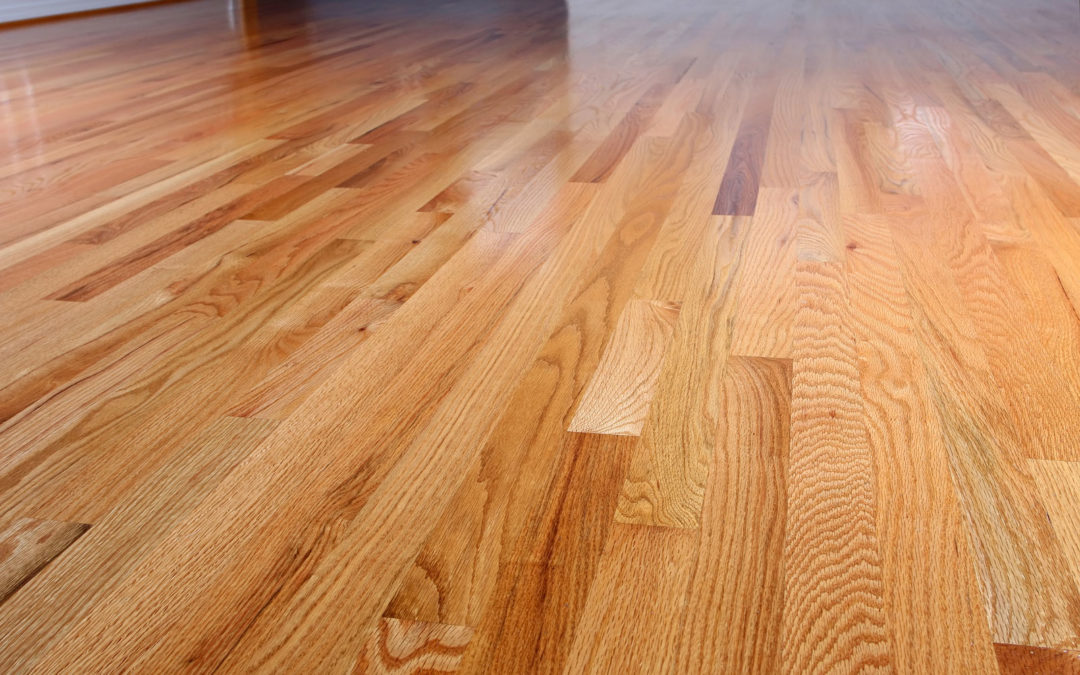
But if you've got lighter wood, especially gray-stained, white-stained, or whitewashed floors, oil-based is generally not recommended. That amber tone will turn your carefully chosen light finish into something yellowish. Not the look you were going for.
Pro tip: If you're going for a modern, Scandinavian-inspired aesthetic with light woods, stick with water-based. If you want that rich, traditional look on red oak or darker species, oil-based might be your jam.
Durability: Scratches, Dents, and Everyday Life
Chicago homes see a lot of action. Between winter boots tracking in salt, kids sliding across the floor, and pets with untrimmed nails, your finish needs to hold up.
Here's where it gets interesting:
Water-based finishes form a thinner but harder coating. That hardness makes them more scratch-resistant, great news if you've got dogs or high foot traffic.
Oil-based finishes are thicker but actually softer. They're more prone to denting from dropped items or pet claws.
However, oil-based finishes have better chemical resistance. If you're worried about pet accidents sitting on the floor for extended periods (hey, it happens), oil-based handles those situations better than standard water-based options.
The compromise? Two-component water-based finishes offer better chemical resistance while keeping the scratch protection. Ask your flooring contractor about this option if you want the best of both worlds.
Application: How Many Coats?
The number of coats affects both cost and durability.
Water-based finishes typically require a minimum of 3 coats for proper protection.
Oil-based finishes usually need only 2 coats.
If you have large pets, we recommend bumping those numbers up: at least 3 coats of water-based or 4 coats of oil-based. More layers mean more protection against those inevitable scratches.
The Smell Factor
Let's be honest: nobody wants their house smelling like a chemical plant.
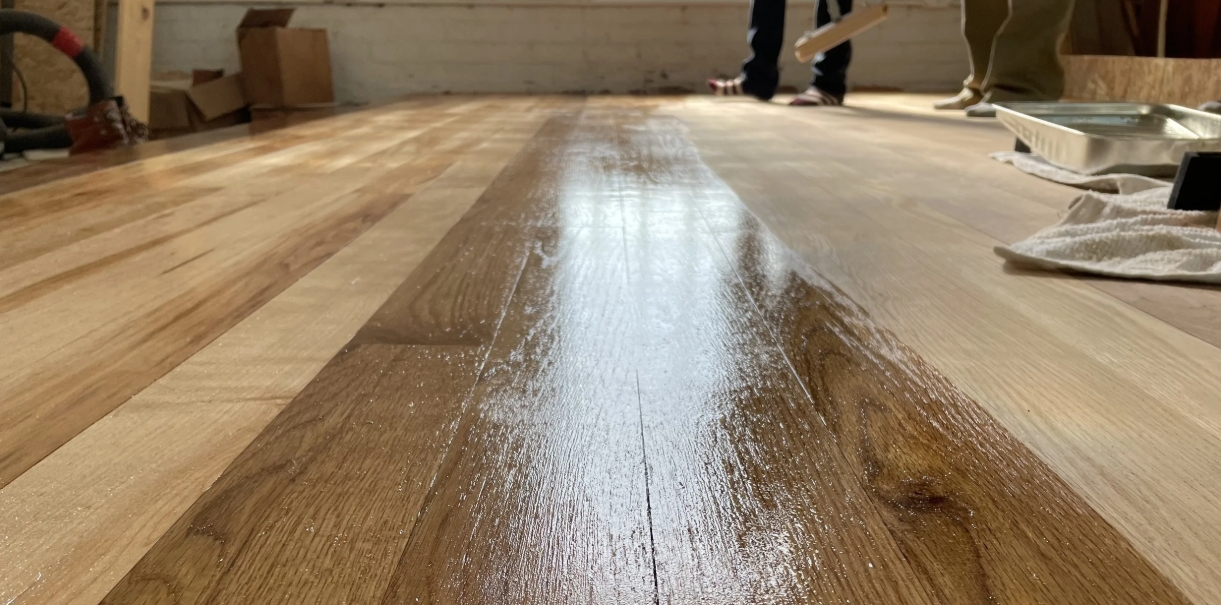
Water-based finishes have minimal odor. You might notice a slight smell during application, but it dissipates quickly. Most families can stay home during the process with proper ventilation.
Oil-based finishes produce strong, pungent fumes that require serious ventilation. Many homeowners choose to stay elsewhere for a few days during application. If you have family members with respiratory sensitivities, this is worth considering.
Chicago-Specific Considerations
Living in Chicago means dealing with some unique challenges for your hardwood floors. Our brutal winters, humidity swings, and everything in between affect how finishes perform.
Humidity fluctuations: Chicago's humidity can swing dramatically between seasons. Both finishes handle this reasonably well, but proper acclimation before installation and maintaining appropriate humidity levels in your home will extend the life of either finish.
Salt and snow: Winter means salt tracked into your home. Water-based finishes' scratch resistance helps here, but regular cleaning is essential regardless of which finish you choose. Check out our winter survival guide for more tips on protecting your floors during the colder months.
Temperature during application: Both finishes have temperature requirements for proper application and curing. Chicago's unpredictable weather means timing your refinishing project matters. We typically recommend spring or fall for the most consistent results, though we can work year-round with proper climate control.
So Which Should You Choose?
After all that information, here's a simple framework:
Choose water-based if you:
- Need your floors ready quickly
- Want to preserve your wood's natural color
- Have lighter-colored or stained floors
- Have pets (especially larger dogs)
- Are sensitive to strong chemical odors
- Prefer a modern, natural aesthetic
Choose oil-based if you:
- Have a tighter budget upfront
- Love that warm, amber wood look
- Want fewer coats applied
- Need strong chemical resistance
- Have darker wood species like walnut or mahogany
- Prefer a traditional hardwood appearance
Neither option is universally "better." Both provide excellent protection when properly applied by experienced professionals. The key is matching the finish to your specific situation.
The Bottom Line
Choosing between water-based and oil-based finishes comes down to your priorities. Speed and low odor? Water-based. Budget and warmth? Oil-based. Scratch resistance? Water-based. Chemical resistance? Oil-based.
At Rovin's Flooring, we work with Chicago homeowners throughout the city and within a 60-mile radius north and west to find the perfect solution for each project. We've seen what works in our climate, with our lifestyles, and in our homes.
Not sure which direction to go? Get in touch with us for a consultation. We'll assess your floors, talk through your lifestyle and preferences, and recommend the finish that'll make you happiest for years to come.
Your hardwood floors are an investment. Let's protect them the right way.