
Beautiful hardwood floors are an investment: but in Chicago's unique climate, they can also become an expensive headache if you're not careful. Between our brutal winters, humid summers, and century-old homes with their own quirks, wood floors face challenges that homeowners in milder climates never deal with.
Over our years serving Chicago and the 60-mile radius extending North and West, we've seen it all. And trust me, the most expensive floor failures are almost always preventable. Let's walk through the seven costliest problems we encounter: and more importantly, how to avoid them.
Problem #1: Cupping and Buckling from Moisture Imbalances
The Issue: Cupping happens when the edges of your floorboards curl upward, creating a concave surface. Buckling is even worse: entire sections of flooring lift away from the subfloor, creating dangerous trip hazards and requiring complete replacement.
Why It's Expensive: Minor cupping might be fixable with humidity adjustments and professional sanding. But severe cupping or any buckling usually means tearing out and replacing the affected areas. We're talking $8-15 per square foot for materials and labor: and that's assuming the subfloor wasn't damaged.
The Chicago Factor: Our dramatic seasonal humidity swings are brutal on hardwood. Summer humidity can hit 80%, while winter indoor air drops to 15-20% with forced-air heating. That's a recipe for constant expansion and contraction.
Prevention Strategy:
- Invest in a whole-home humidifier to maintain 30-50% humidity year-round
- Run dehumidifiers in basements during muggy summer months
- Address any water intrusion immediately: leaky windows, foundation seepage, plumbing issues
- Ensure proper ventilation in crawl spaces and basements
Problem #2: Warping from Water Damage
The Issue: Unlike cupping, warping affects the entire plank. Boards twist, crown, or develop permanent waves that make your floor look like a funhouse attraction.
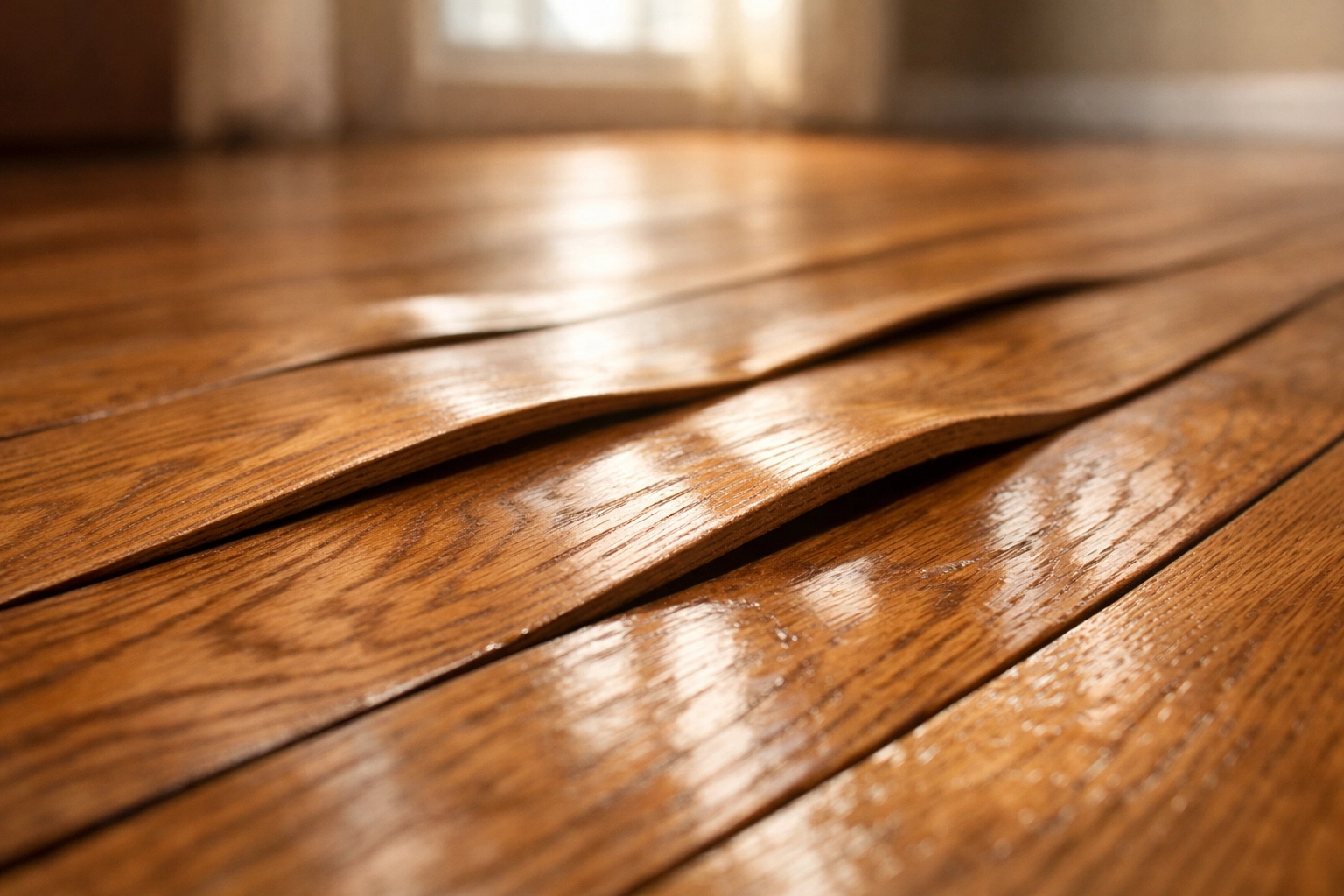
Why It's Expensive: Warped boards can't be sanded flat. You're looking at selective plank replacement, which is labor-intensive and challenging if your flooring has been discontinued. Expect $200-500 per affected area, and it rarely stops at just one spot.
The Chicago Factor: Older Chicago homes weren't built with modern vapor barriers. Basement moisture, radiator leaks, and winter condensation from poor insulation create perfect conditions for warping.
Prevention Strategy:
- Install vapor barriers over concrete subfloors
- Check radiators and pipes regularly for slow leaks
- Clean up any spills within minutes: not hours
- Use area rugs near entryways during winter to catch snow and salt
For more insight on saving water-damaged floors, check out our guide on whether water damaged floors can really be saved.
Problem #3: Gaps and Cracking from Humidity Fluctuations
The Issue: Those unsightly gaps between floorboards that appear every winter? They're caused by wood shrinkage in dry air. In extreme cases, boards actually crack along the grain.
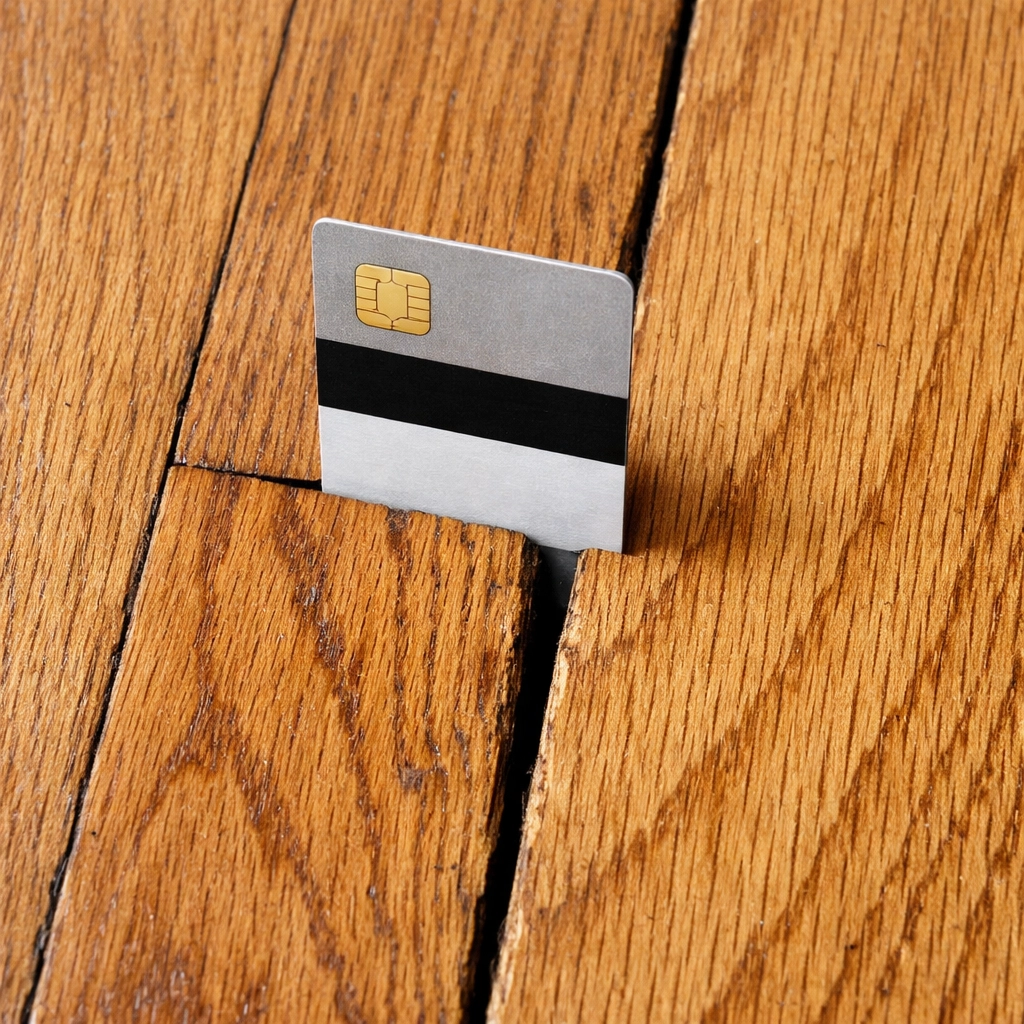
Why It's Expensive: Small seasonal gaps are normal and close back up in summer. But persistent gaps wider than a credit card indicate serious humidity problems. Cracked boards need replacement, and fixing the humidity issue might require HVAC upgrades or whole-home humidification systems ($1,500-3,500).
The Chicago Factor: Our forced-air heating systems suck moisture out of indoor air faster than anywhere. Combined with airtight modern windows (or drafty old ones that let cold air in), it's a perfect storm for wood shrinkage.
Prevention Strategy:
- Maintain consistent indoor humidity (use a hygrometer to monitor)
- Add moisture to forced-air systems with bypass humidifiers
- Avoid placing floors directly over heating vents when possible
- Consider switching to radiant heating for additions or renovations
Problem #4: Installation Failures from Poor Workmanship
The Issue: Inadequate expansion gaps, wrong fastener spacing, incorrect subfloor prep, or skipped vapor barriers create problems that might not show up for months or years.
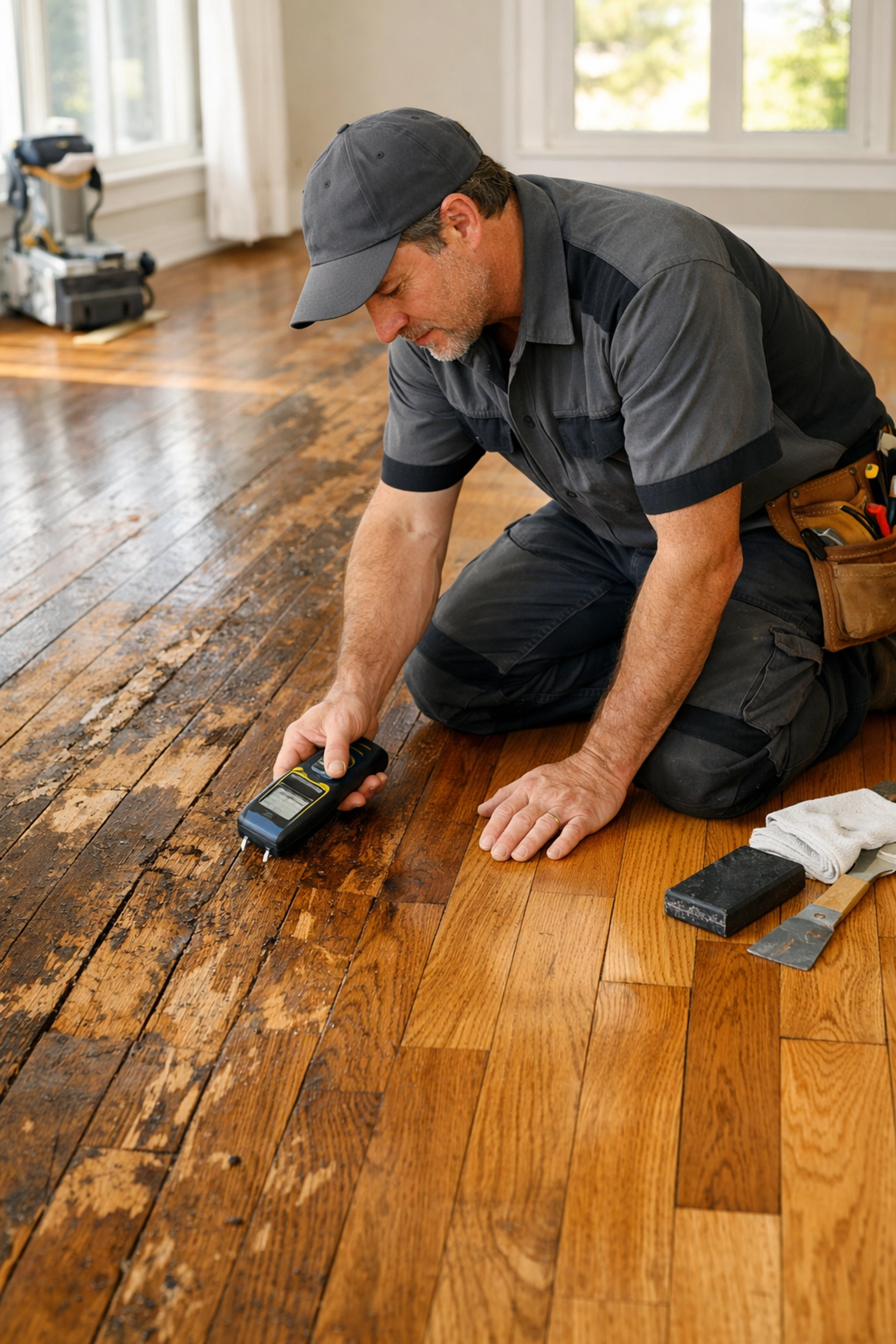
Why It's Expensive: Poor installation voids most manufacturer warranties. Fixing it means tearing out the entire floor and starting over. For a 500-square-foot room, you're looking at $4,000-8,000 in wasted materials and duplicate labor costs.
The Chicago Factor: Chicago has plenty of experienced flooring contractors, but also plenty of handymen who think they can figure it out. Our older homes often have uneven subfloors, unlevel joists, and challenging layouts that require real expertise.
Prevention Strategy:
- Hire experienced professionals (like us!) with verifiable references
- Ask about their approach to subfloor preparation and moisture testing
- Ensure they're using proper expansion gaps (3/4 inch minimum around perimeters)
- Verify they understand Chicago's climate challenges
- Get everything in writing, including warranty details
Problem #5: Improper Wood Acclimation
The Issue: Hardwood needs to adjust to your home's temperature and humidity before installation. Skip this step, and the wood will expand or contract dramatically after installation, causing all sorts of problems.
Why It's Expensive: Floors installed with improperly acclimated wood can develop severe gaps, cupping, or buckling within weeks. There's no fix except complete reinstallation. You're basically paying for the job twice.
The Chicago Factor: Wood shipped from other climates needs extra acclimation time here. A box of oak from North Carolina is used to 60% humidity: your Chicago home in January might be at 20%. That's a massive adjustment.
Prevention Strategy:
- Allow wood to acclimate in the installation room for 7-14 days minimum
- Maintain your target humidity level during acclimation
- Stack planks with spacers to allow air circulation on all sides
- Use a moisture meter to verify the wood has stabilized (should be within 2% of your subfloor)
- Don't rush the process: proper acclimation is worth the wait
Problem #6: Subfloor Moisture Migration
The Issue: Moisture traveling up through your subfloor: especially from concrete slabs or damp crawl spaces: wreaks havoc on hardwood. It causes adhesive failure, mold growth, and structural damage you can't see until it's serious.
Why It's Expensive: By the time you notice the problem (usually as cupping, odors, or visible mold), the damage is extensive. You're looking at floor removal, subfloor remediation, moisture barrier installation, and new flooring. Costs easily run $10,000+ for an average room.
The Chicago Factor: Many Chicago homes have old concrete foundations poured before vapor barriers were standard. Basement slabs especially tend to wick groundwater. Our clay-heavy soil also retains moisture longer than sandy soils.
Prevention Strategy:
- Test concrete subfloors for moisture before any installation (we use calcium chloride tests)
- Install proper vapor barriers: 6-mil polyethylene minimum, sealed at seams
- Ensure crawl spaces have ground covers and adequate ventilation
- Address exterior drainage issues: gutters, grading, and downspout extensions
- Consider waterproofing basement foundations if you're experiencing chronic dampness
Problem #7: Neglected Maintenance Leading to Cumulative Damage
The Issue: Hardwood floors need regular care. Skip it long enough, and you'll face finish breakdown, deep scratches, ground-in dirt that acts like sandpaper, and UV damage that can't be buffed out.
Why It's Expensive: Once the protective finish wears through to bare wood, moisture penetrates freely, dirt embeds in the grain, and damage accelerates exponentially. A floor that needed a simple $2-3 per square foot screen-and-recoat now requires full sanding and refinishing at $4-8 per square foot.
The Chicago Factor: Winter salt tracked in from sidewalks is particularly abrasive. Our freeze-thaw cycles also mean more water exposure near entries. And let's be honest: Chicago isn't known for being gentle on anything.
Prevention Strategy:
- Place commercial-grade mats at all entry doors (inside and outside)
- Sweep or vacuum at least weekly: daily in high-traffic areas
- Use hardwood-specific cleaners, never water or all-purpose products
- Recoat floors every 3-5 years before the finish wears through
- Address scratches and damage promptly rather than waiting
For detailed maintenance guidance, Rovin's Flooring offers specific recommendations for Chicago-area floors.
The Bottom Line: Prevention Pays
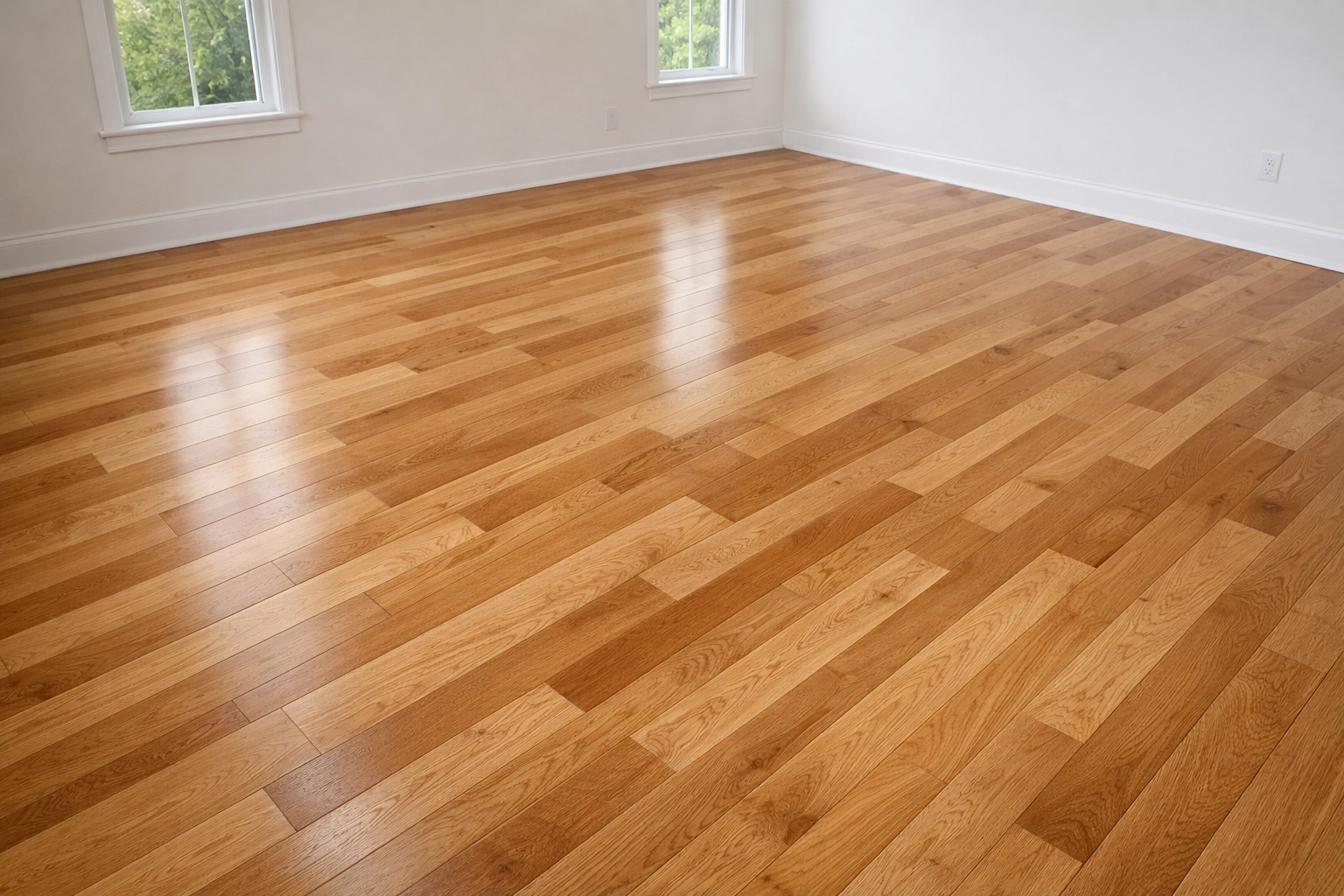
Here's the thing about hardwood floor failures: they almost always start small. A little moisture here, slightly low humidity there, a small scratch that goes untreated. But in Chicago's challenging climate, small problems become expensive disasters faster than in most places.
The good news? Every single one of these seven expensive problems is preventable with the right knowledge and proactive care. Whether you're installing new floors, maintaining existing ones, or dealing with concerning symptoms, acting early saves thousands.
At Rovin's Flooring Inc, we've been helping Chicago-area homeowners protect their hardwood investments for years. We serve Chicago and the surrounding 60-mile radius extending North and West, and we've learned exactly what works (and what doesn't) in our unique climate.
Don't wait until minor issues become major expenses. If you're noticing cupping, gaps, unusual sounds, or just want a professional assessment of your floors' condition, we're here to help. Because the best time to fix a floor problem is before you have one.