

You've finally decided to install hardwood floors in your Chicago home. Congratulations! It's one of the best investments you can make in your property. But before you sign that contract or start pulling up carpet, there are some crucial things you need to know: things that seasoned Chicago homeowners wish they'd understood from day one.
After years of installing and refinishing hardwood floors throughout Chicago and the surrounding 60-mile radius to the North and West, we've heard it all. Here are the ten most important insights that could save you time, money, and a whole lot of frustration.
1. Acclimation Isn't Optional in Chicago's Climate
Here's the thing: Chicago's humidity swings wildly between seasons. Your hardwood needs to adjust to your home's specific environment before installation, period.
At minimum, your flooring should sit in the room where it'll be installed for 48 hours. But honestly? In Chicago, we recommend 72 hours or even longer, especially during winter months when your heating system is cranking and indoor humidity drops dramatically.
Why does this matter? Wood expands and contracts with moisture changes. If you skip acclimation, you're setting yourself up for gaps in winter and buckling in summer. We've seen homeowners spend thousands fixing problems that proper acclimation would have prevented.
2. Your Subfloor Condition Makes or Breaks the Installation
Most homeowners focus entirely on choosing the perfect wood species and stain color. Meanwhile, what's underneath gets completely ignored: until it becomes a problem.
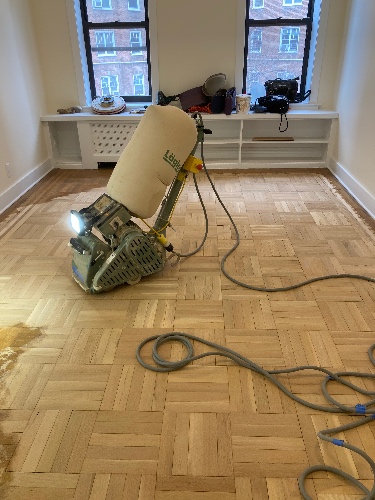
Before any planks go down, your subfloor needs to be level, dry, and structurally sound. Use a straight edge to check for high and low spots. Variations greater than 3/16 inch over a 10-foot span need correction. Low spots get filled with self-leveling compound; high spots get sanded down.
Skip this step, and you'll hear it. Literally. Squeaky floors, gaps between boards, and uneven surfaces all trace back to poor subfloor preparation. It's not glamorous work, but it's absolutely essential.
3. Expansion Gaps Aren't Suggestions: They're Requirements
Every hardwood installation needs space to breathe. In Chicago's climate, this is non-negotiable.
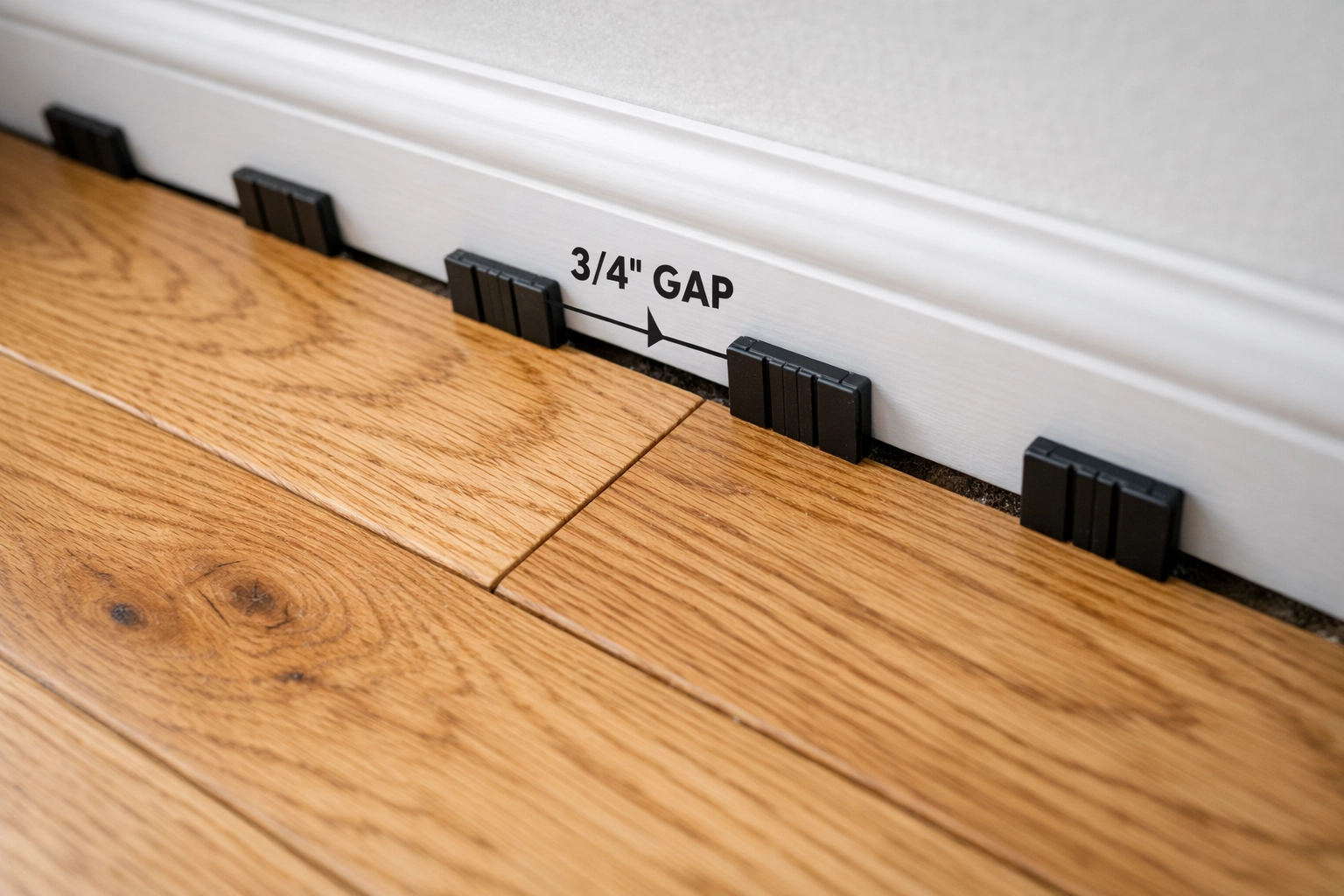
Maintain a minimum 3/4-inch gap around all walls, door frames, and vertical surfaces. Use spacers during installation to keep this consistent. These gaps allow your floor to expand during humid summer months without buckling.
"But won't I see the gap?" you might ask. Nope. Your baseboards and quarter-round molding cover it completely. The gap is your floor's insurance policy against seasonal movement: and in Chicago, seasonal movement is guaranteed.
4. Not All Hardwood Species Handle Chicago Weather Equally
Oak, maple, hickory, walnut: they all look beautiful in the showroom. But they don't all perform the same in Chicago homes.
White oak and red oak are classics for good reason. They're dimensionally stable, meaning they handle humidity changes without going crazy. Hickory is incredibly durable: great for high-traffic areas. Brazilian cherry (Jatoba) is gorgeous but more sensitive to humidity fluctuations.
If you're installing in a basement or room with higher moisture exposure, engineered hardwood often outperforms solid wood. It's constructed with multiple layers that resist expansion and contraction better than solid planks.
Want specifics on which species works best for your situation? Check out our guide to popular wood species for Chicago homes.
5. Installation Direction Actually Matters
This surprises people, but which way your planks run affects both aesthetics and structural integrity.
For best results, install perpendicular to your floor joists. This provides maximum stability and minimizes bounce. In rooms without basement access to identify joists, the general rule is to run planks perpendicular to the longest wall: but verify joist direction if possible.
Also consider natural light. Planks running toward your main light source tend to look longer and make rooms feel more spacious. It's a subtle detail that makes a noticeable difference.
6. The First Three Rows Are Critical
Professional installers know this: get the first three rows perfect, and the rest of the installation flows smoothly. Mess them up, and you're fighting problems the entire way.
For those first three rows, stagger end joints by at least 16 inches. After that, maintain a minimum 6-inch stagger to avoid creating a distracting stair-step pattern. This isn't just about looks: proper staggering distributes weight and stress more evenly across the floor.
Use blind nailing through the tongue at a 45-degree angle, placing fasteners 1-3 inches from end joints and every 4-6 inches along the length. This creates a secure, invisible attachment that allows for seasonal movement.
7. Winter Installation Requires Extra Attention
Installing hardwood during Chicago winters presents unique challenges. Indoor humidity often drops below 30% when heating systems run constantly. This means wood is at its driest: and smallest: dimension.
If you install in winter without accounting for this, you'll likely see gaps between boards come spring and summer when humidity rises and the wood expands back to normal size.
Professional installers adjust for seasonal conditions. Winter installations might use tighter board placement, while summer installations allow slightly more breathing room. The installer's experience with Chicago's climate makes all the difference.
Need tips on protecting floors once they're in? Our Chicago winter survival guide covers maintenance essentials.
8. Fastener Selection Impacts Long-Term Performance
Not all staples and nails are created equal. Use narrow-crowned staples (under 3/8 inch wide) in 18-20 gauge thickness, or properly sized flooring nails.
The wrong fasteners can split tongue edges, create squeaks, or fail to hold properly over time. Your installer should match fastener type and size to your specific flooring thickness and species hardness.
Power nailers and staplers need proper adjustment too. Too much pressure splits boards; too little creates loose floors. This is why installation isn't a DIY project unless you really know what you're doing.
9. Finishing and Curing Take Time: Plan Accordingly
Whether you're installing prefinished or unfinished hardwood, there's a waiting period before your floor is truly ready.
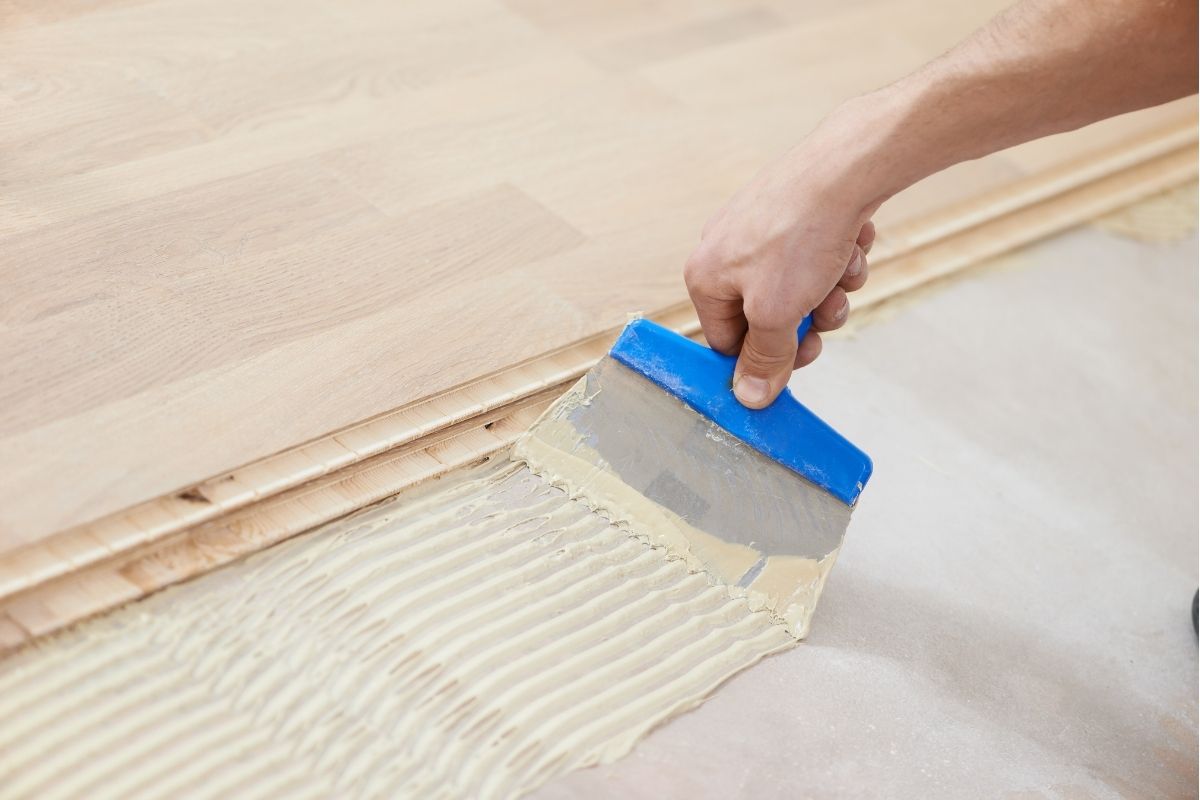
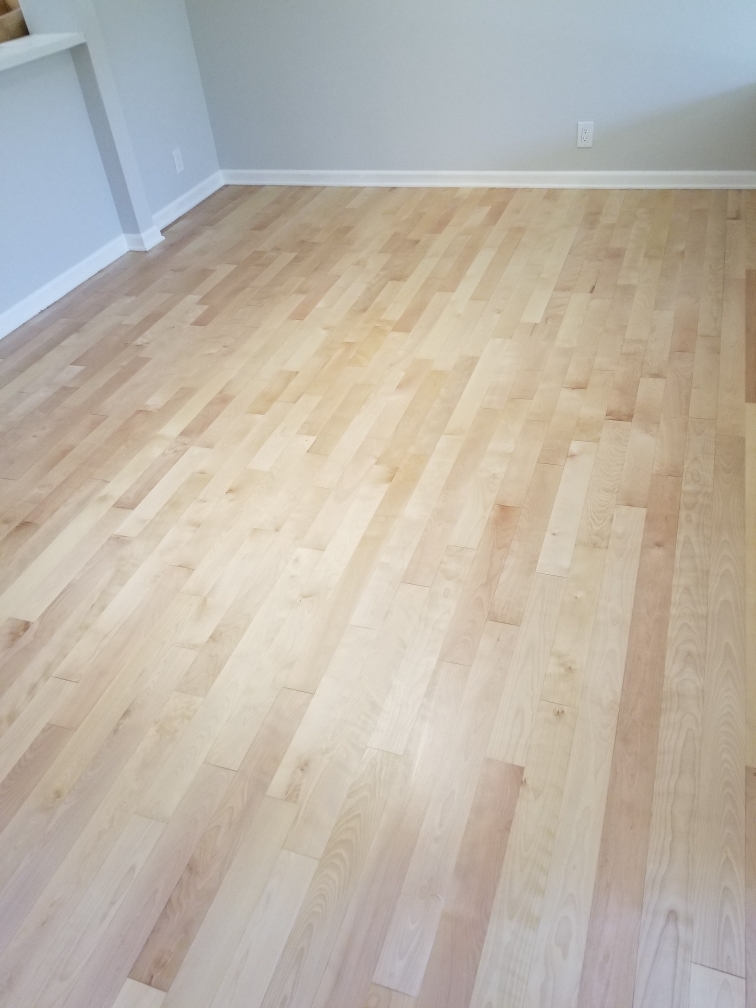
For glue-down installations, adhesive needs at least 24 hours to cure before foot traffic. For site-finished floors, the timeline extends significantly. After sanding, staining, and applying finish coats, you're looking at 3-5 days minimum before moving furniture back in.
Water-based finishes dry faster than oil-based, but both need proper curing time to reach full hardness. Rush this process, and you'll damage your brand-new floor. We've seen homeowners dent floors by moving heavy furniture too soon: patience pays off here.
Curious about finish options? We break down the water-based versus oil-based debate for Chicago homes.
10. Maintenance Starts on Day One
Your hardwood floor's lifespan depends largely on how you treat it from the beginning. Chicago's climate demands consistent care.
Maintain indoor humidity between 35-55% year-round. Use humidifiers in winter and dehumidifiers in summer if needed. Place mats at all exterior doors to catch salt, snow, and grit: Chicago's winter elements are hardwood's worst enemies.
Clean regularly with a microfiber mop and hardwood-specific cleaner. Avoid wet mopping, which introduces excess moisture. Trim pet nails, use furniture pads, and address spills immediately.
Think of maintenance as preventive medicine for your floors. A little consistent care prevents expensive repairs down the road. For detailed maintenance guidance, Rovin's Flooring provides specific care instructions for every floor we install.
Making Your Hardwood Investment Count
Installing hardwood floors in your Chicago home is a significant investment that pays dividends in beauty, comfort, and resale value. But that return depends on doing it right from the start.
The homeowners who are happiest with their hardwood floors five, ten, or fifteen years later? They're the ones who took time to understand these fundamentals before installation began. They chose experienced installers who know Chicago's climate challenges. They didn't cut corners on subfloor prep, acclimation, or proper installation techniques.
At Rovin's Flooring Inc., we've been helping homeowners throughout Chicago and the 60-mile radius to the North and West make smart hardwood decisions for years. We know the difference between a floor that looks good on installation day and one that performs beautifully for decades.
Whether you're ready to move forward or still gathering information, understanding these ten essentials puts you way ahead of most homeowners. Your floor: and your future self( will thank you for doing the homework upfront.)