
Walk into enough Chicago homes, and you'll start noticing patterns. Not the good kind, like a beautiful herringbone layout, but the kind that signals trouble. Gaps that shouldn't be there. Boards that buckle near entryways. Floors that creak like they're auditioning for a haunted house soundtrack.
Here's the thing: most of these problems aren't about bad wood. They're about bad decisions made during installation or maintenance. And in a climate like ours, where humidity swings wildly between January's dry freeze and July's sticky heat, those mistakes get amplified fast.
After decades of installing, repairing, and refinishing hardwood floors across Chicago and the surrounding areas to the North and West, we've seen these same issues repeat themselves. The good news? They're all fixable. Even better? They're all preventable.
Let's walk through the most common wood flooring mistakes we encounter in Chicago homes, and how experienced contractors actually solve them.
Mistake #1: Skipping Acclimation (Or Rushing It)
This one's at the top of the list for a reason. Wood is hygroscopic, it absorbs and releases moisture based on its environment. If you install planks straight from a warehouse without letting them adjust to your home's humidity levels, you're asking for trouble.
In Chicago, where relative humidity can drop below 20% in winter and climb above 60% in summer, skipping acclimation is basically guaranteeing future problems. Boards installed too wet will shrink and leave gaps. Boards installed too dry will expand and buckle.
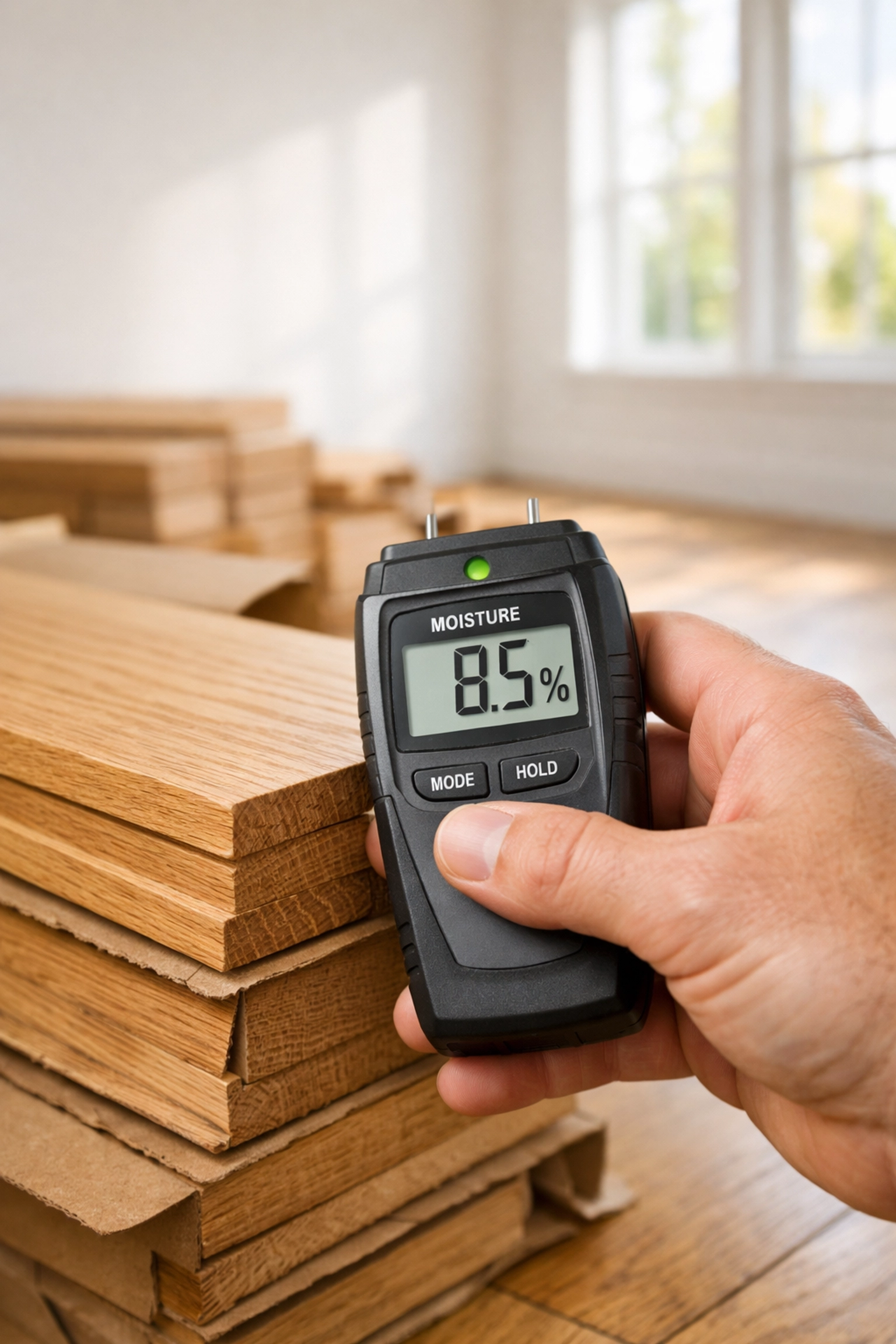
How contractors fix it: Professional installers check the wood's moisture content with specialized meters and compare it to the subfloor. The wood needs to stabilize within a safe range, typically between 6% and 9% for our climate, before installation begins. This usually takes at least 3–7 days with the flooring unpacked and stacked in the room where it'll be installed, with HVAC running at normal living conditions.
We also leave proper expansion gaps (more on that in a minute) and avoid over-fastening, which can restrict the wood's natural movement. Some installers use techniques like strategic fastener spacing to give planks room to breathe without compromising stability.
Mistake #2: Ignoring the Subfloor
Your hardwood floor is only as good as what's underneath it. Yet subfloor prep is where a surprising number of installations go sideways.
A subfloor that isn't clean, level, dry, or structurally sound creates a domino effect of problems. We've pulled up floors to find old adhesive blobs, uneven concrete, moisture-damaged plywood, or even particleboard used where it should never be. All of these issues telegraph straight through to the finished floor, you'll see lippage between boards, hollow spots that flex underfoot, or mysterious creaking that won't quit.
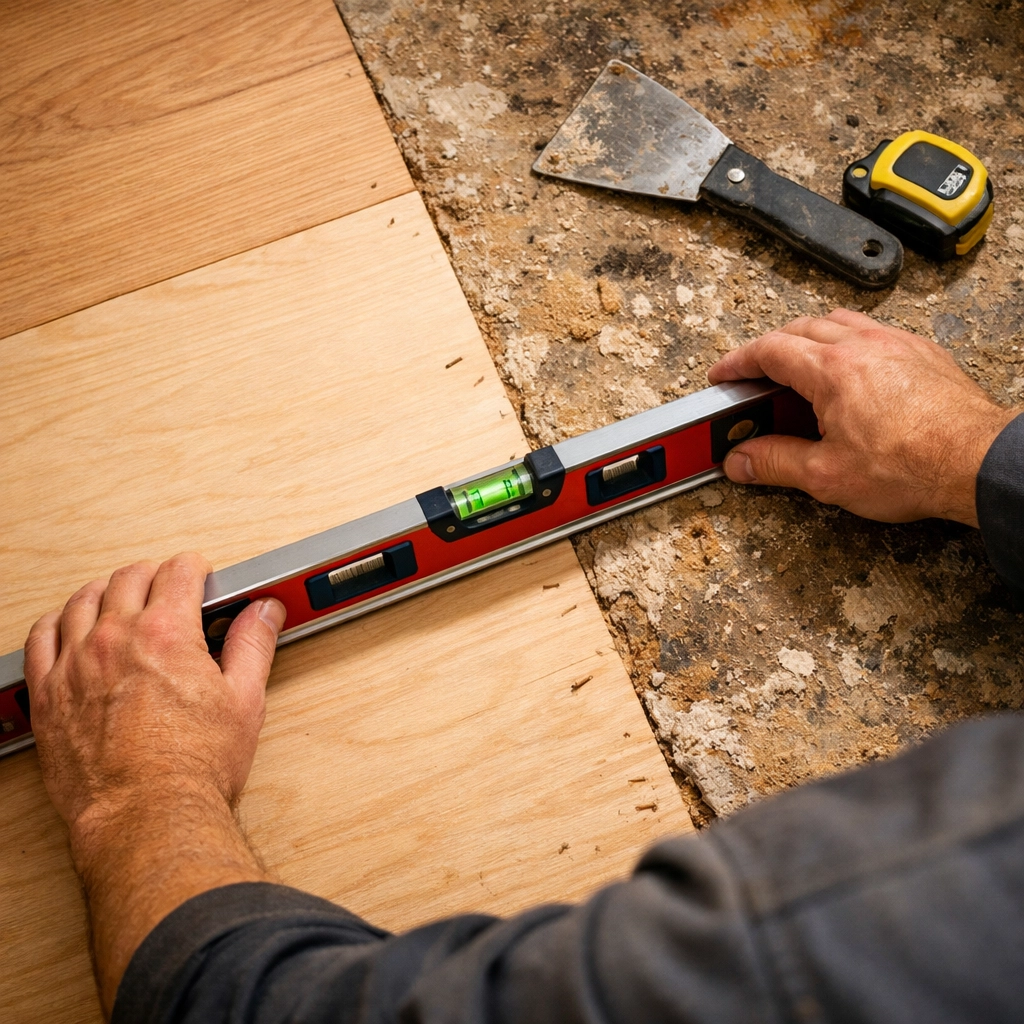
How contractors fix it: Before a single plank goes down, pros verify the subfloor is flat (within 3/16" over 10 feet), clean, and appropriate for the flooring type. Concrete gets checked for moisture using calcium chloride tests. Wood subfloors get inspected for loose panels, squeaks, and structural integrity.
High spots get ground down. Low spots get leveled. Contaminants get scraped off. If the existing subfloor material isn't compatible with the hardwood being installed, say, particleboard under solid 3/4" oak, it gets replaced. Yes, this adds time and cost upfront. But it prevents thousands in repair bills later.
Mistake #3: Forgetting Expansion Gaps
Wood expands and contracts. This isn't negotiable: it's physics. But you'd be surprised how many installations we see where planks are butted directly against walls, door jambs, or built-in cabinets with zero room to move.
When summer humidity hits and those boards swell, they have nowhere to go. The result? Buckling, cupping, or pressure ridges that peak in the middle of the room. In extreme cases, boards can actually push door frames out of square.
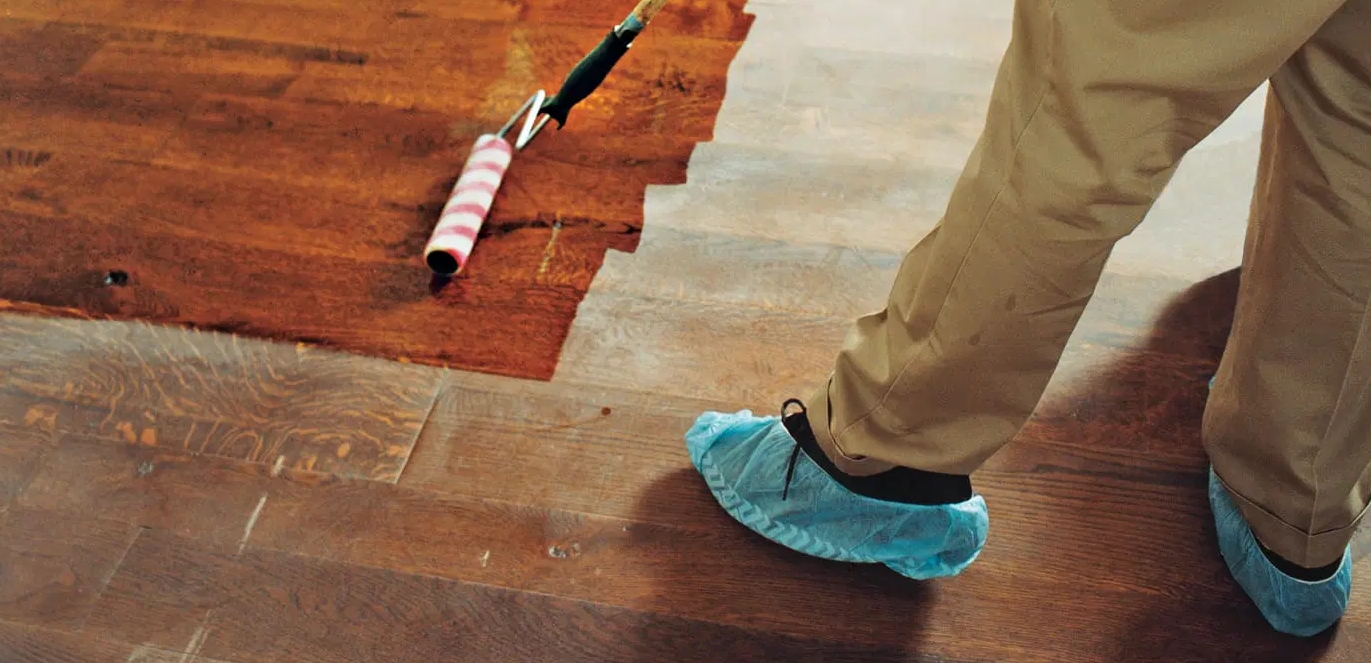
How contractors fix it: Every professional installation includes expansion space around the perimeter: typically 1/2" to 3/4" depending on the floor's width and the wood species. This gap gets hidden under baseboards or transitions, so you never see it, but the wood can breathe.
The same principle applies around fixed objects like kitchen islands, fireplace hearths, and stair newel posts. Cutting these details correctly takes extra time, but it's the difference between a floor that moves gracefully with the seasons and one that fights itself.
Mistake #4: Lazy Layout and Bad Racking
We call it "lazy layout." It's when installers start slapping down boards without thinking about how the pattern will look at key focal points: doorways, fireplaces, stair landings, or open sightlines into adjacent rooms.
The telltale signs? End joints that line up too close together, creating an H-pattern or stair-step effect. Crooked runs that veer noticeably away from square as you move across the room. Boards that hit doorways at awkward angles, making transitions look sloppy.
How contractors fix it: Good installers rack out the first few rows before fastening anything down. They plan where end joints will fall, ensuring they're spaced at least three times the board width apart in adjacent rows. They identify focal points and work the layout to hit those spots with full, clean boards rather than awkward cuts or short pieces.
This planning phase might add an hour or two to the job, but it's what separates an installation that looks right from one that looks "off" in a way most people can't quite articulate: they just know something's wrong.
Mistake #5: Wrong Fastening Methods (Or Not Enough of Them)
Here's a shortcut some installers take: fastening every other row, or using the wrong type of fastener for the wood species and subfloor. It seems fine during installation. Everything looks tight. But six months later, boards start squeaking, shifting, or showing gaps because they're not adequately secured.
We've also seen installations where the wrong adhesive was used: like a moisture-cure urethane on a subfloor that wasn't properly moisture-tested: leading to bond failure and loose planks.
How contractors fix it: The fastening schedule isn't optional. Solid 3/4" hardwood gets nailed or stapled per the manufacturer's spec: usually every 8–10 inches along each plank, into every joist or at approved on-center spacing. Engineered flooring might get glued, floated, or nailed depending on thickness and construction.
The fastener type matters too. Cleats for some species, staples for others. The subfloor material determines penetration depth. These aren't guesses: they're specifications that prevent callbacks and complaints.
Mistake #6: The DIY Gamble
Look, we get it. YouTube makes hardwood installation look straightforward. And for small repairs or simple projects, capable DIYers can pull it off. But whole-house installations in Chicago's climate? That's where experience separates success from expensive do-overs.
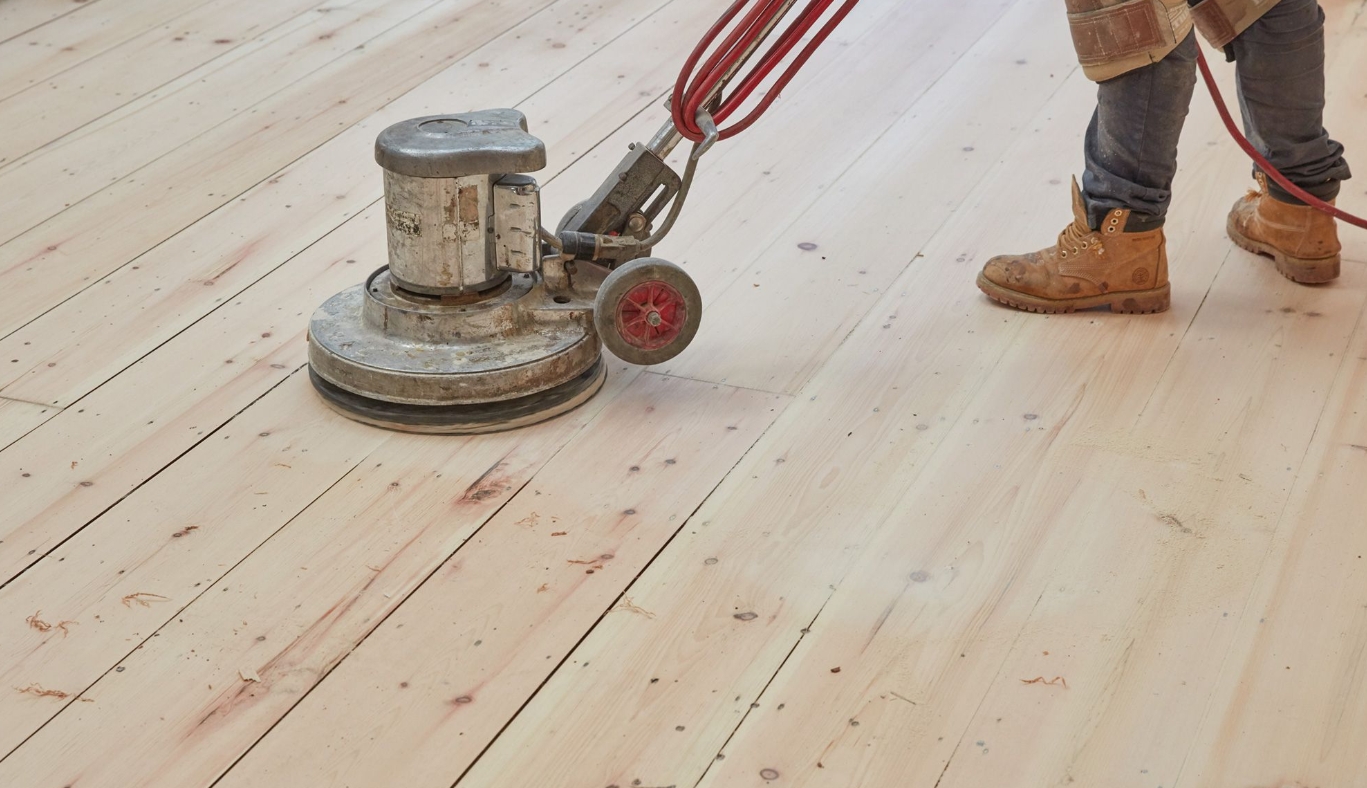
The mistakes we see in DIY jobs usually aren't obvious right away. They show up six months later when seasonal changes hit. Gaps appear. Boards cup. Finishes wear unevenly because sanding wasn't quite flat. Transitions don't line up. The nailer left dents because someone didn't adjust the air pressure correctly.
How contractors fix it: Professional installers bring more than tools: they bring pattern recognition from doing this hundreds of times. They know how white oak behaves differently than hickory. They anticipate seasonal movement. They understand Chicago's specific climate challenges because they've worked through multiple seasonal cycles in local homes.
They also carry insurance, offer warranties, and use commercial-grade equipment that produces better results than rental tools. When you're investing thousands in materials, the installation labor isn't where you want to cut corners.
The Chicago Climate Factor
Everything we've covered gets amplified by our weather. A mistake that might cause minor issues in a stable climate becomes a major problem when indoor humidity drops to 15% in February and climbs to 65% in August.
That's why moisture management: acclimation, subfloor prep, proper HVAC operation during installation: matters so much here. Wood flooring can absolutely thrive in Chicago homes. But it needs to be installed with our climate in mind, not generic best practices from milder regions.
What to Do If You Spot These Problems
If you're reading this and recognizing issues in your own floors, don't panic. Many of these problems can be corrected without full replacement.
Minor gapping often improves when humidity stabilizes. Buckling near walls might just need the baseboards pulled and expansion gaps cut in. Loose boards can be re-fastened. Finishes that wore unevenly can be refinished to look like new.
The key is addressing issues before they cascade into bigger damage. A few cupped boards today can become a moisture disaster tomorrow if the underlying cause isn't identified and fixed.
Get It Right the First Time
Chicago homeowners deserve floors that last decades, not years. That means getting the fundamentals right during installation: proper acclimation, solid subfloor prep, correct fastening, smart layout planning, and adequate expansion space.
It also means working with contractors who understand local conditions and don't cut corners on the invisible stuff that matters most.
At Rovin's Flooring Inc., we've been installing and refinishing hardwood floors across Chicago and extending North and West for over 30 years. We've seen what works and what doesn't in our specific climate. If you're planning a new floor installation or dealing with existing problems, we're here to help.
Ready to discuss your flooring project? Call us at (773) 704-1550 or visit rovinsflooring.com to schedule a consultation. We serve Chicago and the surrounding areas within a 60-mile radius to the North and West: bringing professional installation, honest assessments, and floors that stand up to whatever our weather throws at them.