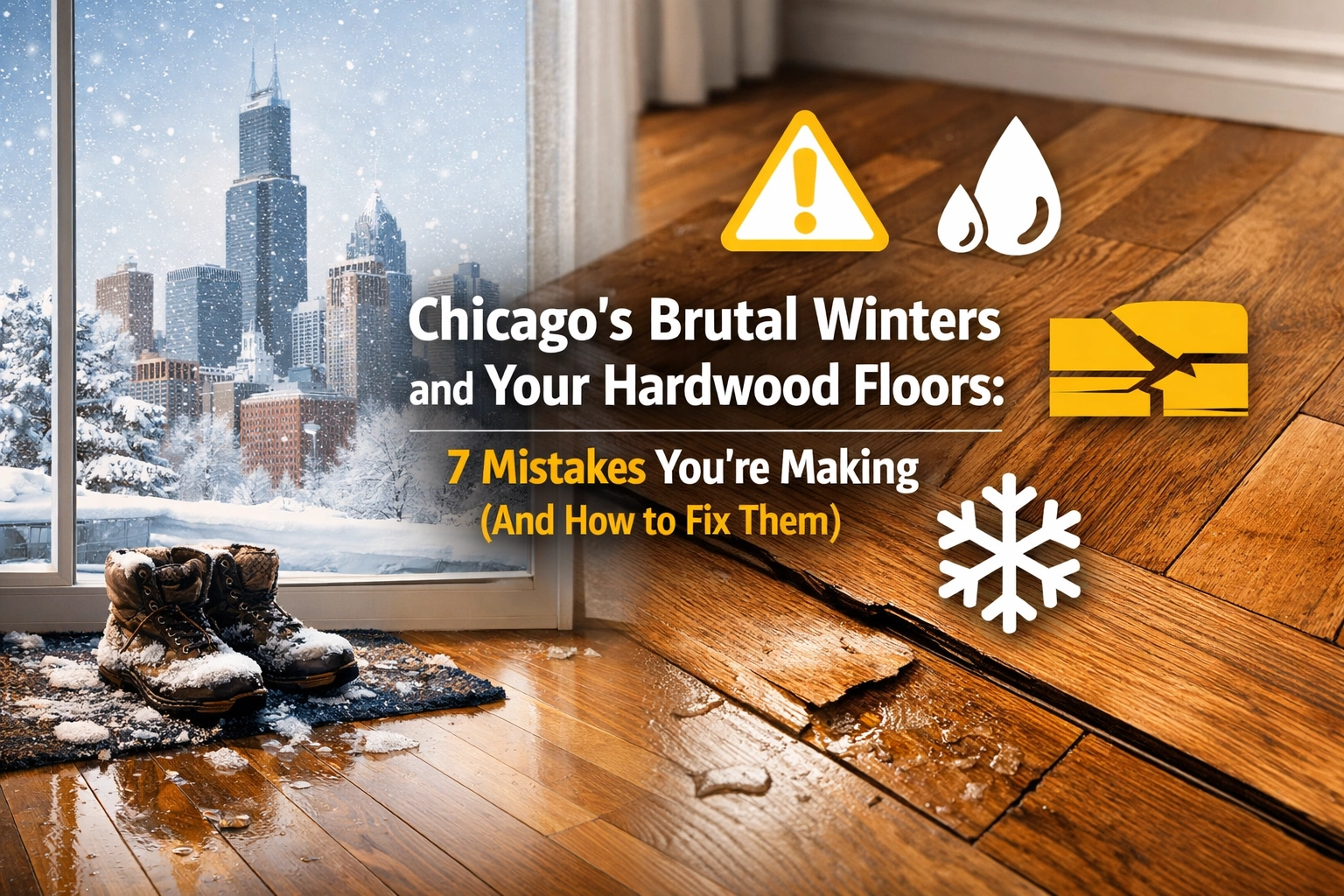
Look, we get it. Chicago winters are no joke. When the polar vortex rolls in and Lake Michigan decides to weaponize its wind, the last thing on your mind is your hardwood floors. You're too busy trying to figure out if frostbite is a real concern during your walk from the parking lot to the office.
But here's the deal: while you're battling the Windy City's wrath, your hardwood floors are fighting their own silent war. And chances are, you're making mistakes that are costing you money and shortening the lifespan of your beautiful wood flooring.
After working with homeowners throughout Chicago and the surrounding 60-mile radius (especially to the North and West), we've seen it all. The good news? Most winter hardwood damage is preventable. Let's dive into the seven most common mistakes we see, and more importantly, how to fix them.
Mistake #1: Treating Your Entryway Like a Free-for-All
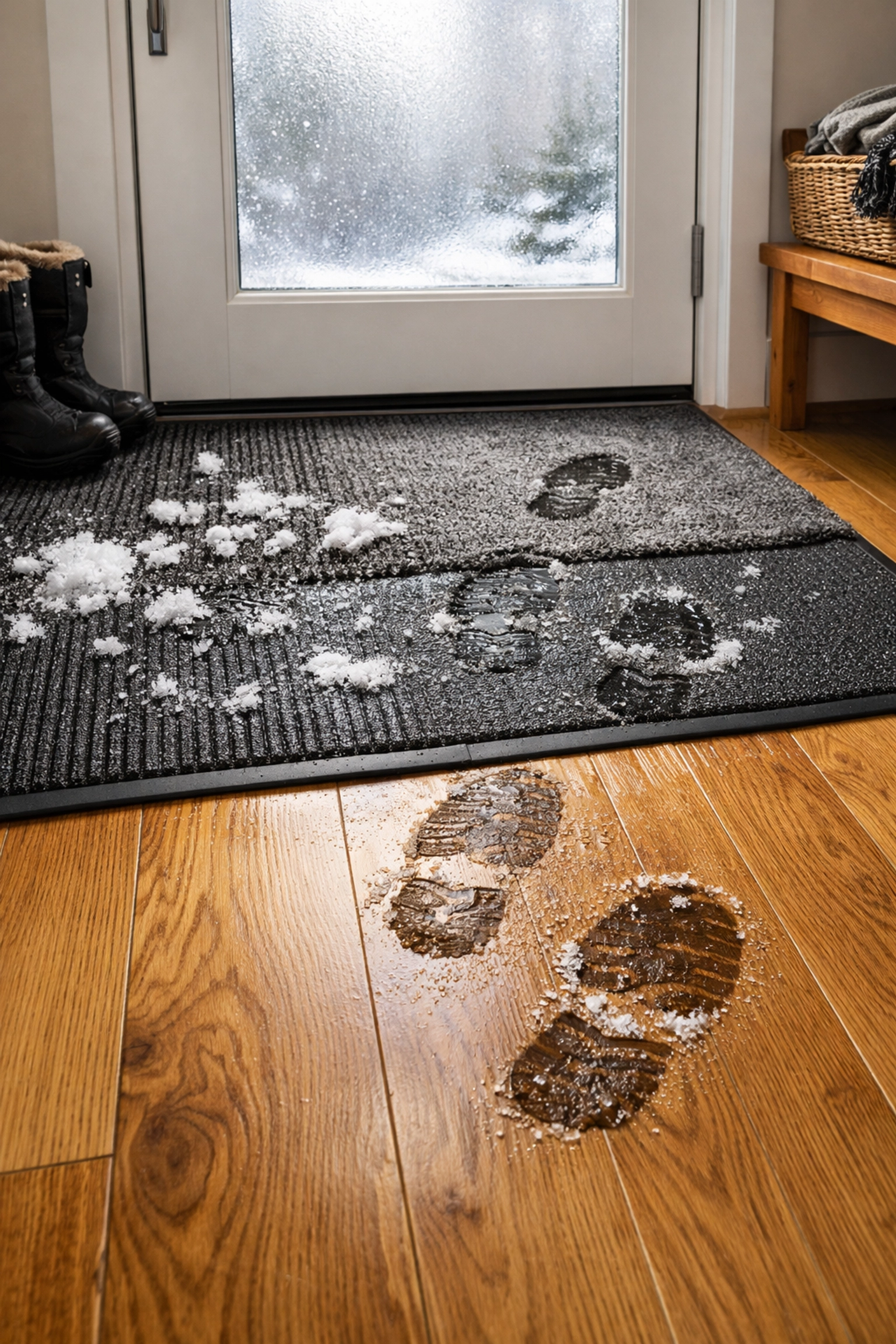
You wouldn't let someone drag a saltwater-soaked sponge across your floors, right? Well, that's basically what happens every time someone walks through your front door in winter without proper protection.
Chicago uses roughly 400,000 tons of road salt each winter. And guess where a good chunk of that ends up? On your floors. Salt isn't just corrosive to cars, it's murder on hardwood finishes.
The Fix: Strategic mat placement is your first line of defense. We're not talking about those flimsy decorative mats you picked up at a home goods store. You need industrial-strength, water-absorbent mats at every entry point. Place them both outside and inside your doors, creating a double barrier. For high-traffic areas like your main entrance, consider extending mat coverage 30 feet into your home. Secondary entrances should have at least 15 feet of coverage.
And here's the kicker, clean those mats regularly. A salt-crusted mat is just redistributing the problem.
Mistake #2: Using Mats That Do More Harm Than Good
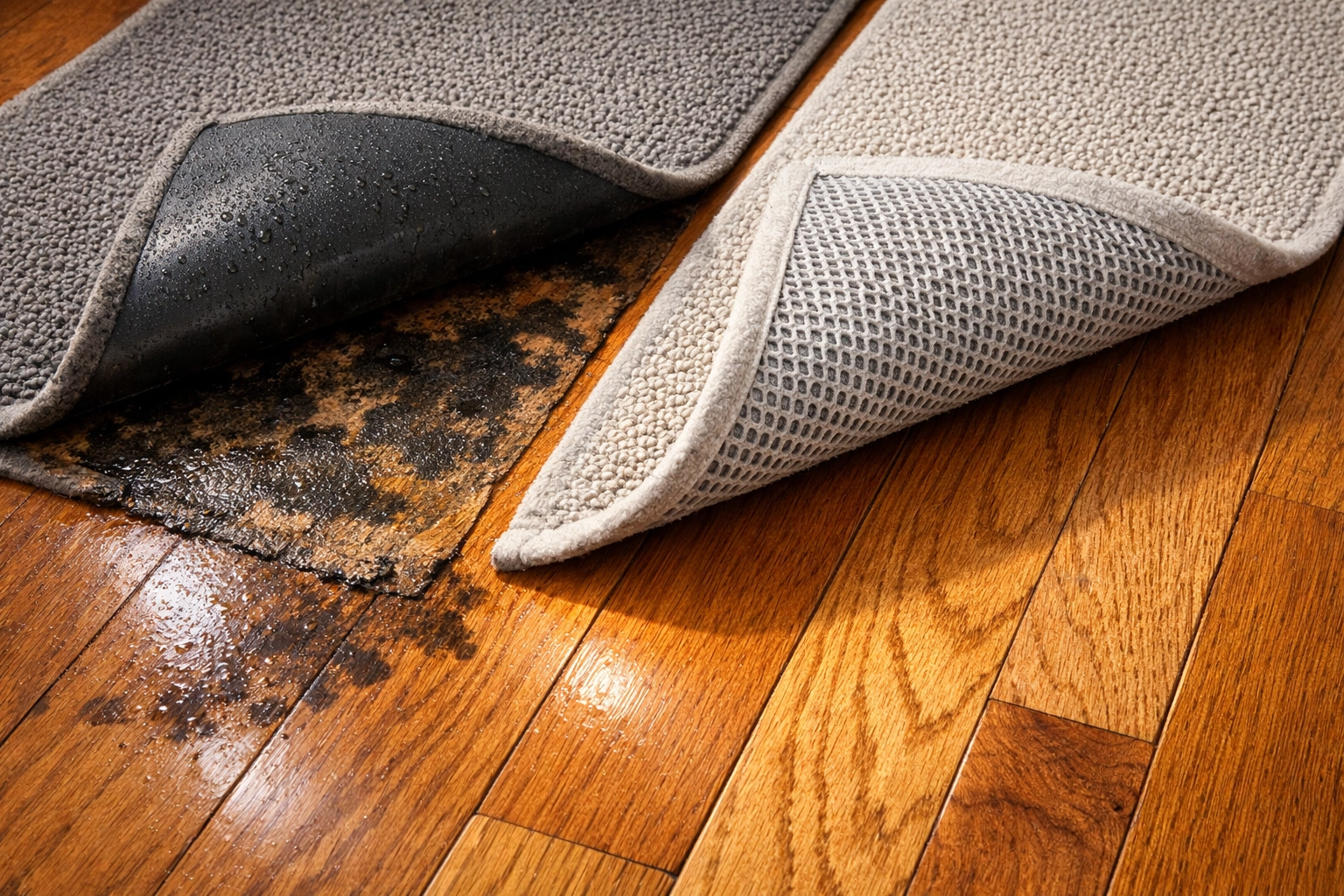
Not all mats are created equal. That cute rubber-backed rug from your favorite big-box store? It might be destroying your floors.
Rubber-backed mats and rugs can trap moisture underneath, creating the perfect environment for finish degradation, discoloration, and even mold growth. During Chicago winters, when you're tracking in snow, slush, and salt daily, trapped moisture becomes a serious problem.
The Fix: Invest in mats specifically designed for hardwood floors. Look for options with ventilated backing that allows airflow underneath. Felt-backed rugs are generally safe, but make sure they're kept dry. If a mat or rug gets wet, lift it up and let both the mat and the floor underneath dry completely before placing it back down.
Mistake #3: The "I'll Clean It Tomorrow" Approach
We're all busy. But letting salt, debris, and moisture sit on your hardwood floors is like letting water damage simmer, it compounds over time.
Salt is particularly insidious because it doesn't just sit on the surface. It can work its way into micro-scratches in your finish, accelerating wear and creating cloudy, damaged areas that are expensive to repair.
The Fix: Make sweeping part of your daily routine during winter months. Use a soft-bristle broom or a microfiber dust mop to capture salt particles and debris before they scratch your finish. When snow or slush gets tracked in (and it will), address it immediately, wipe it up with a towel, then follow up with a damp mop using a pH-neutral hardwood cleaner. The key word here is "damp," not "soaking wet."
For deeper cleaning, use professional-grade hardwood floor cleaners monthly. And whatever you do, avoid those tempting steam mops, they're overkill for hardwood and can drive moisture into the wood grain.
Mistake #4: Ignoring Your Home's Humidity Levels
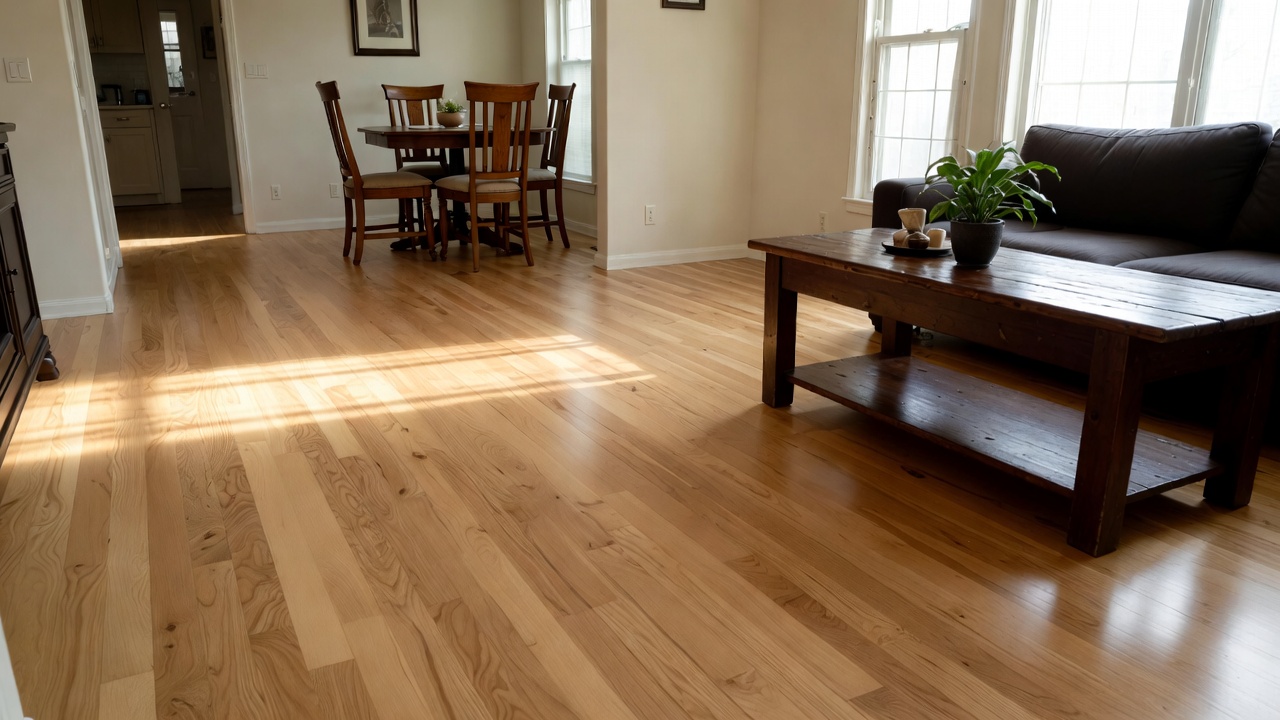
Chicago winters are dry. Like, Sahara Desert dry. When humidity drops (which it does dramatically during heating season), your hardwood floors react by shrinking. This creates those annoying gaps between planks that you swear weren't there in summer (spoiler: they weren't).
Wood is hygroscopic, meaning it gains and loses moisture based on its environment. During Chicago winters, indoor humidity can drop to 15-20%, while hardwood floors are happiest at 30-50% humidity. That's a huge gap, literally.
The Fix: Run a humidifier. Not just a tiny tabletop model, but a whole-home system if possible. Maintain indoor humidity between 35-50% throughout winter. Your floors will thank you, and as a bonus, you'll breathe easier and your skin won't feel like sandpaper.
Get a hygrometer (they're cheap) to monitor humidity levels. Place it in the same room as your floors and check it weekly. If you're consistently below 30%, it's time to add more moisture to your air. You can learn more about humidity management on our dedicated humidity page.
Mistake #5: Playing Thermostat Roulette
Chicago weather is bipolar. One day it's 15 degrees, the next it's 40 and raining. Many homeowners compound this problem by cranking their heat when it's frigid, then turning it way down when temperatures moderate, or when they're gone during the day.
These temperature swings cause wood to expand and contract repeatedly, leading to cupping, crowning, and permanent structural damage. Your floors hate this rollercoaster as much as you hate Chicago's spring weather.
The Fix: Consistency is key. Maintain a steady indoor temperature between 60-80 degrees Fahrenheit year-round. Yes, even when you're on that winter vacation to somewhere tropical (we're jealous). Set your thermostat to stay within this range, and resist the urge to make dramatic adjustments.
Pair temperature control with proper humidity levels for maximum floor protection. Think of it as creating a controlled environment where your floors can just… exist peacefully. Check out our temperature guidelines for more detailed recommendations.
Mistake #6: Getting Creative with Cleaning Methods
Water is not your friend when it comes to hardwood floors: especially during winter when moisture issues are already elevated. Yet we constantly see homeowners breaking out the water bucket or, worse, steam mops.
Steam mops might seem like a miracle solution for cutting through salt residue and grime, but they're forcing moisture into your wood and potentially degrading your finish. Water-soaked mops aren't much better.
The Fix: Stick to the pros' playbook. Use a microfiber dust mop for daily maintenance, and when you need to actually clean (not just dust), use a pH-neutral hardwood floor cleaner applied sparingly with a barely damp mop. The floor should dry almost immediately: if it's staying wet for more than a minute or two, you're using too much liquid.
For tough spots or salt residue, apply cleaner directly to a cloth rather than the floor, then wipe the affected area. This gives you better control and prevents over-wetting. Our maintenance page has product recommendations and detailed cleaning protocols.
Mistake #7: Furniture Gymnastics
Rearranging your living room for that winter gathering? Sliding your couch across hardwood floors is a quick way to create scratches, gouges, and worn paths in your finish. And during winter, when your floors are already stressed from humidity and temperature changes, they're even more vulnerable to surface damage.
The scraping action can cut through protective coatings and expose raw wood to all those moisture and salt issues we've been talking about.
The Fix: Lift, don't slide. Recruit help for heavy items (pizza and beer work as effective payment). For furniture you need to move regularly, invest in felt pads for the bottom of legs: but check and replace these frequently, as dirt and grit can get embedded in the felt, turning your protective pads into sandpaper.
For really heavy pieces, use furniture sliders specifically designed for hardwood floors, or place a thick blanket underneath and slide the blanket rather than the furniture itself.

The Bottom Line
Chicago winters are tough on everything: your car, your heating bill, your will to leave the house. But your hardwood floors don't have to be another casualty of polar vortex season.
The mistakes we've outlined are common, but they're also completely preventable with the right knowledge and a bit of routine maintenance. Think of winter floor care as preventive medicine: a little effort now saves you from expensive repairs or premature refinishing down the road.
Already seeing gaps, dullness, or damage from winters past? Don't panic. Professional refinishing can restore most floors to their former glory. At Rovin's Flooring Inc, we've been helping homeowners throughout Chicago and the 60-mile radius to the North and West protect and restore their hardwood investments for years.
And if you're curious about what's trending in Chicago hardwood right now, check out our post on hardwood flooring trends Chicago homeowners are loving in 2026.
Your floors are an investment. With the right winter care strategy, they'll keep looking beautiful through decades of Chicago's wildest weather. Now go forth and protect that wood: your future self (and your wallet) will thank you.
Need professional help with floor maintenance, repair, or refinishing? Get in touch with us and let's talk about keeping your floors gorgeous through every Chicago season.