
Listen, we get it. Chicago winters are brutal. Between the sub-zero temperatures, relentless snowfall, and enough road salt to preserve an entire civilization, it's a wonder any of us make it through February with our sanity intact. But while you're busy layering on sweaters and fighting for parking spots after street cleaning, your hardwood floors are quietly suffering.
After decades of installing and refinishing hardwood floors across Chicago and within a 60-mile radius to the North and West, we've seen it all. And trust me, the damage that comes through our doors every spring? It's almost entirely preventable. Most homeowners mean well, but they're making the same mistakes year after year, mistakes that lead to warped boards, permanent staining, and refinishing bills that could've funded a weekend getaway.
So let's talk about the seven biggest winter hardwood floor mistakes we see in Chicago homes, and more importantly, how to fix them before you're calling us for an emergency restoration.
Mistake #1: Treating Your Entryway Like Any Other Floor Space
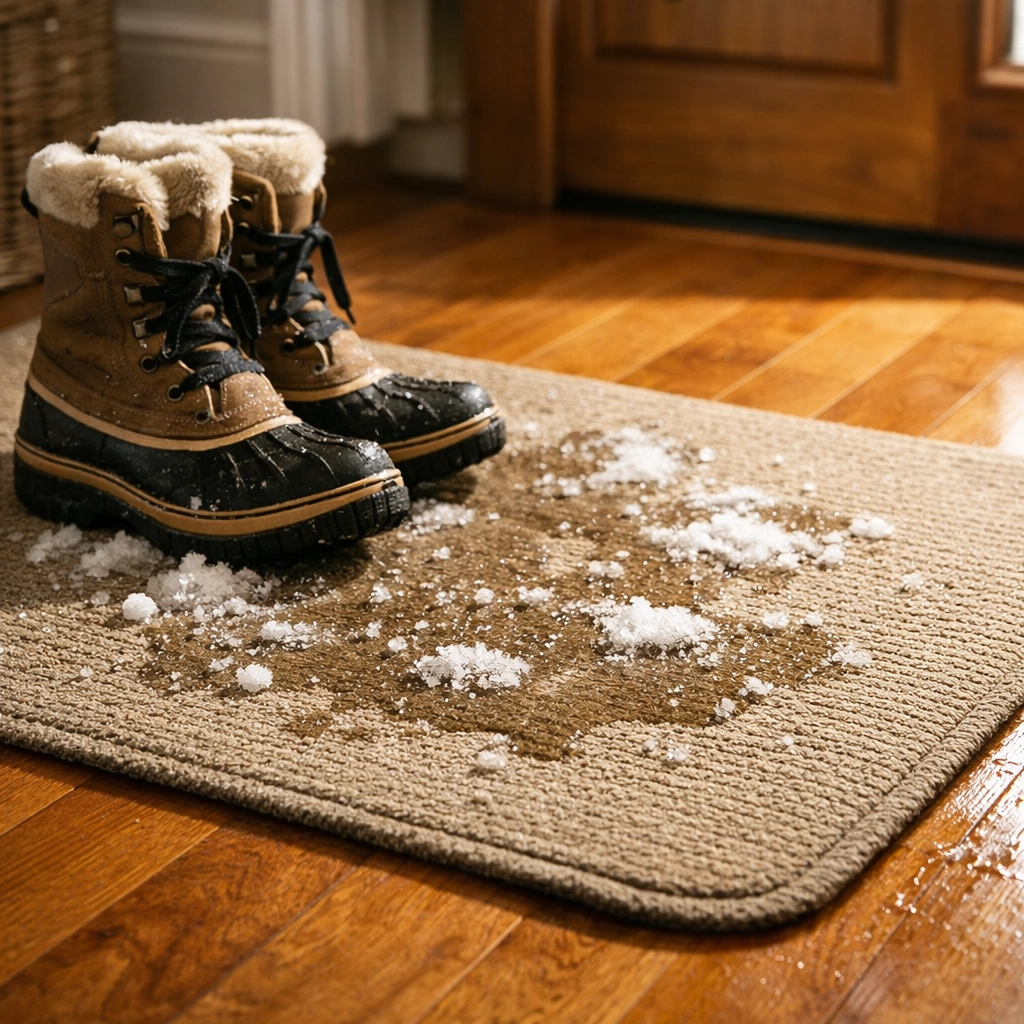
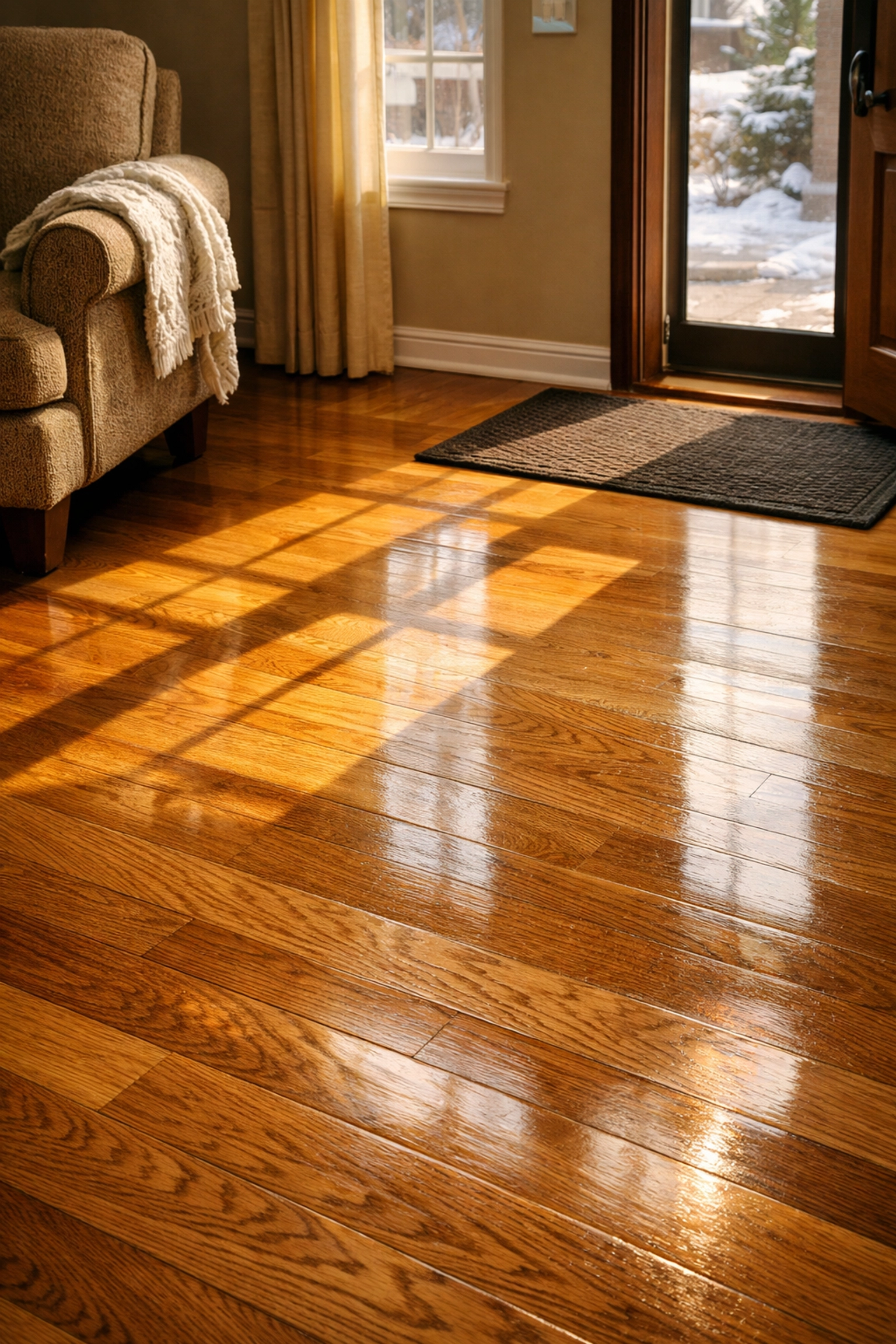
Your front door is ground zero for winter floor damage. Every time someone walks in from a snowy sidewalk, they're bringing a cocktail of ice melt, rock salt, sand, and moisture directly onto your hardwood. That white powdery residue you see? It's not just unsightly, it's actively eating away at your floor's finish.
The Fix: Place quality floor mats at every entrance, extending at least 30 feet into your main entryway and 15 feet into secondary doors. But here's the catch: those mats need to be designed for hardwood floors. Rubber-backed mats can trap moisture and damage your finish. Look for breathable options that you can actually wash and dry regularly. Think of these mats as sacrificial zones, they take the beating so your floors don't have to.
Mistake #2: Your "Good Enough" Cleaning Routine
Sweeping once a week might cut it in summer, but winter demands more attention. Salt residue and grit act like sandpaper, grinding away at your floor's protective finish with every footstep. The longer it sits there, the more damage it does.
The Fix: Switch to daily sweeping or dust mopping during winter months. Yes, daily. When you see wet snow tracked inside, don't just let it dry, grab a towel, wipe it up immediately, then mop that spot with a proper hardwood cleaner and dry it completely. Weekend deep cleaning should include vacuuming with the bare floor setting (no beater bars!) to get what your broom missed. It's a pain, but it's a lot less painful than refinishing your floors every five years instead of every decade.
Mistake #3: Using Whatever Cleaner You Have Under the Sink
We've seen floors ruined by well-meaning homeowners who grabbed the all-purpose cleaner or, even worse, broke out the steam mop because it "seemed thorough." Water is not your hardwood floor's friend, and neither are harsh chemicals that strip away protective coatings.
The Fix: Invest in a pH-neutral cleaner specifically formulated for hardwood floors. Our maintenance page at rovinsflooring.com/maintenance.html has recommendations, but the key is to use products designed for sealed wood. Skip the steam mops entirely, the moisture penetrates into the wood, causing swelling and warping that no amount of drying will fix. A lightly dampened (not wet) microfiber mop with the right cleaner is all you need.
Mistake #4: Ignoring the Invisible Enemy: Indoor Humidity
This is the big one. When you crank up your furnace to survive January, you're creating a desert inside your home. Wood is hygroscopic, it absorbs and releases moisture based on the environment. In Chicago's winter, your hardwood floors are literally shrinking, and those gaps between boards? They're not temporary.
Extreme dryness can lead to cracks, splits, and permanent structural damage. Meanwhile, if you overcompensate with humidity (we've seen this too), you risk cupping and warping. Finding that sweet spot is crucial.
The Fix: Maintain indoor humidity between 35-50% throughout winter. A quality whole-home humidifier is worth every penny. Monitor levels with a hygrometer, they're cheap and available at any hardware store. Keep your thermostat between 60-80°F, and avoid dramatic temperature swings. Your floors (and your sinuses) will thank you. We go into more detail about this on our temperature management page and humidity control guide.
Mistake #5: The DIY Gap-Filling Disaster
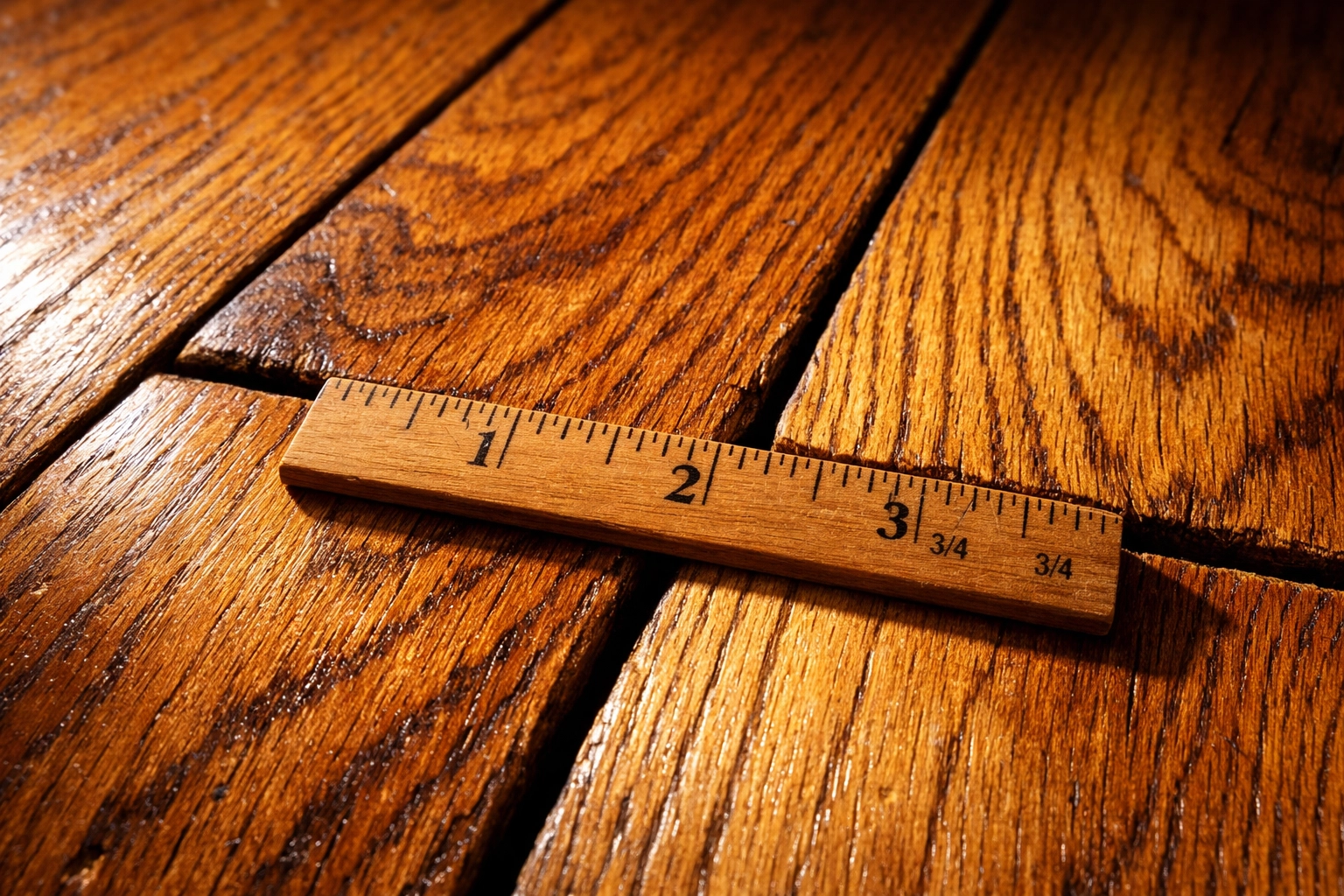
When homeowners see those winter gaps opening up between floorboards, the instinct is to fill them with wood filler. We get calls about this constantly. Here's the problem: when spring hits and humidity returns, those boards expand again. That filler you meticulously applied? It pops out, falls into the now-closing gaps, or creates pressure points that cause new damage.
The Fix: In most cases, small seasonal gaps are normal and don't require intervention. Proper humidity control will minimize them. If gaps exceed 1/8 inch or persist year-round, that's a sign of a bigger issue that requires professional assessment. Some gaps indicate installation problems or subfloor issues that no amount of filler will fix. Before you start filling gaps, give us a call, a quick consultation can save you from making a problem worse.
Mistake #6: Postponing Professional Maintenance Until There's Visible Damage
By the time you notice dullness, scratches, or discoloration, your floor's finish is already compromised. Winter accelerates wear because of increased foot traffic (no one's outside enjoying the weather), tracked-in debris, and moisture exposure. Waiting until spring to address winter damage means you're living with deteriorating protection all season.
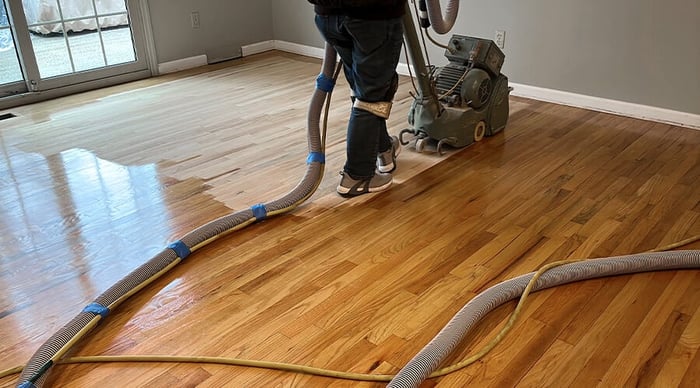
The Fix: Schedule an annual inspection with flooring professionals. A maintenance coat every 3-5 years adds a protective layer without the time and expense of full refinishing. Think of it like changing your car's oil, regular small investments prevent catastrophic failures. We work with water-based finishes that dry quickly (check out our fast-drying options), so you won't be displaced from your home for days.
Mistake #7: Assuming All Hardwood is Created Equal
Not all hardwood species handle Chicago winters the same way. If you're in an older home with original floors, you might be dealing with wood that's more susceptible to moisture damage. Conversely, if you cheaped out on installation years ago, improper acclimation or subpar finish could be setting you up for winter failure.
The Fix: Know what you have. Oak is relatively stable and forgiving. Maple is harder but more sensitive to humidity changes. Exotic species can be beautiful but temperamental. If you're considering new floors or replacement, talk to professionals about options that work with Chicago's climate. Our material selection guide can help you understand the differences, and we're always happy to discuss what makes sense for your specific situation.
The Bottom Line for Chicago Homeowners
Your hardwood floors are an investment, often one of the most expensive features in your home. Chicago winters are inevitable, but winter floor damage isn't. The mistakes we've outlined here are fixable with awareness and consistent effort.
Most of the solutions we've discussed are straightforward and inexpensive. A good humidifier, proper mats, and daily sweeping cost far less than emergency repairs. Where professional help makes sense, getting it early prevents the kind of extensive damage that requires full refinishing or replacement.
We've been serving Chicago and the surrounding areas to the North and West for years, and we've seen what winter can do to neglected hardwood floors. We've also seen beautiful floors that are decades old and still gorgeous because their owners understood these principles and acted on them.
If you're worried about your floors, or if this winter has already done some damage, don't wait until spring thaw reveals the full extent of the problem. Reach out to us at rovinsflooring.com/contact.php for an assessment. Sometimes what looks like a disaster can be addressed with maintenance. Other times, what seems fine is hiding issues that will get exponentially worse.
Your floors put up with a lot during Chicago winters. Give them the protection and attention they deserve, and they'll reward you with beauty and durability for generations. And if you mess up? Well, that's what we're here for.
Stay warm out there, and keep those floors warmer.