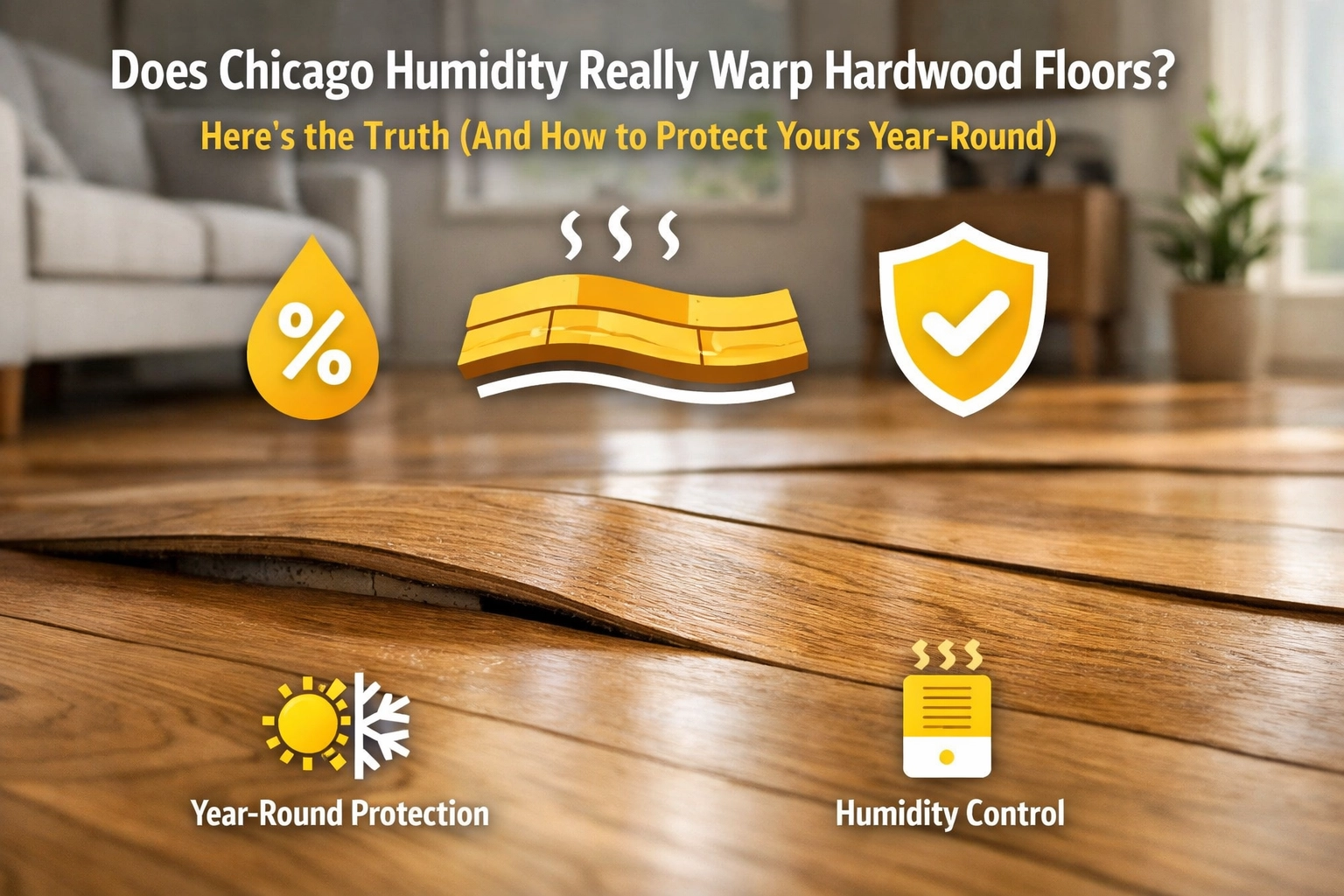
If you've lived in Chicago for more than a year, you already know: our weather is bipolar. We swing from bone-dry January mornings (when your lips crack and static shocks are constant) to swampy July afternoons (when stepping outside feels like walking into a wet towel). And if you have hardwood floors, that humidity roller coaster isn't just uncomfortable, it's actively damaging your investment.
The short answer? Yes, Chicago humidity absolutely warps hardwood floors. But the longer, more useful answer involves understanding why it happens, when you're most at risk, and exactly what you can do to protect your floors year-round without spending a fortune or stressing every time the weather changes.
The Science Behind Warped Hardwood (It's Actually Pretty Simple)
Hardwood is what scientists call a hygroscopic material, a fancy term that means it absorbs moisture from the air like a sponge. When humidity levels rise, your floors pull moisture out of the air. When humidity drops, they release it back. This wouldn't be a huge problem if Chicago stayed at a consistent 45% humidity year-round. But we don't. Not even close.
In January, your indoor relative humidity can plummet to 15-20% (thanks to furnace heat). By July, it can spike to 70-80% during those sticky stretches where the air conditioning can't keep up. Your hardwood floors are constantly expanding and contracting with these swings, and over time, that stress leads to visible damage.
The magic threshold to remember: permanent damage risk starts when humidity exceeds 55%. Below 30%, you're looking at cracks and gaps. Above 55%, you're dealing with cupping, buckling, and boards that may never fully recover.
The Three Types of Humidity Damage You'll Actually See
Walk through enough Chicago homes during August, and you'll start recognizing the telltale signs of humidity damage. Here's what to look for:
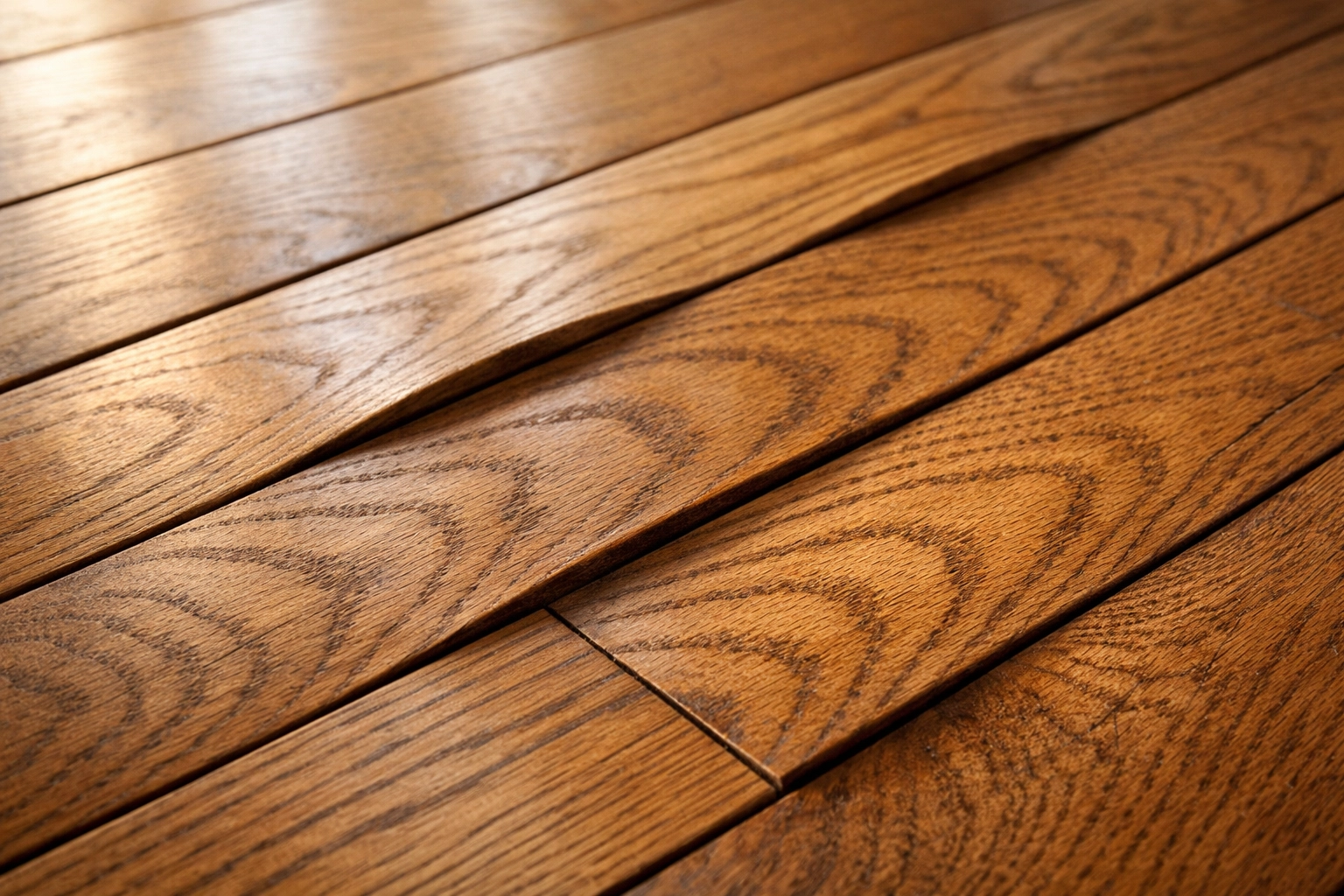
Cupping is the most common issue. The edges of your floorboards rise higher than the center, creating a concave "cup" shape. Run your hand across the floor, and you'll feel the ridges. This happens because the bottom of the board absorbs moisture faster than the top, causing uneven expansion. Mild cupping sometimes reverses naturally when humidity drops in fall, but repeated seasonal cupping eventually becomes permanent, and the finish starts to crack along those stress lines.
Buckling is the nightmare scenario. This is when boards don't just curve, they actually lift several inches off the subfloor, creating dramatic peaks and valleys. Buckling usually means you've had a major moisture event (like a basement flood or a long-term plumbing leak), but prolonged extreme humidity can cause it too. Once boards buckle, they're done. You're looking at replacement, not repair.
Cracking and gaps happen during dry months but are worsened by humidity swings. When boards expand and contract repeatedly, the pressure creates stress fractures and separations. You'll see cracks running along or across the grain, and gaps between boards that open wider every winter.
Why Chicago's Climate Makes This Problem Worse
Let's be real: humidity affects hardwood floors everywhere. But Chicago homeowners deal with a uniquely brutal combination of factors.
Our 70-degree temperature swings throughout the year mean your HVAC system is constantly running, furnace in winter, AC in summer. That continuous mechanical climate control creates wild indoor humidity fluctuations. Add in our proximity to Lake Michigan (which pumps moisture into the air, especially on the North and Northwest sides), and you've got a recipe for hardwood stress.
Older Chicago homes, especially bungalows and two-flats built in the 1920s and '30s, often lack proper moisture barriers in the subfloor. Many basements are damp or semi-finished, which means ground moisture is constantly wicking up through your flooring system. Even newer construction in the suburbs (Naperville, Schaumburg, Evanston, anywhere within 60 miles North and West of downtown) can have issues if builders skipped vapor barriers or used low-quality underlayment.
Here's the thing nobody tells you: even if summer humidity causes cupping and the boards flatten out again in fall, the repeated expansion and contraction cycle causes permanent damage over time. Your finish develops micro-cracks. The wood fibers compress and don't fully recover. Five years of Chicago summers, and you're looking at floors that need refinishing, or worse, replacement.
Your Summer Game Plan: Humidity Control When It Matters Most
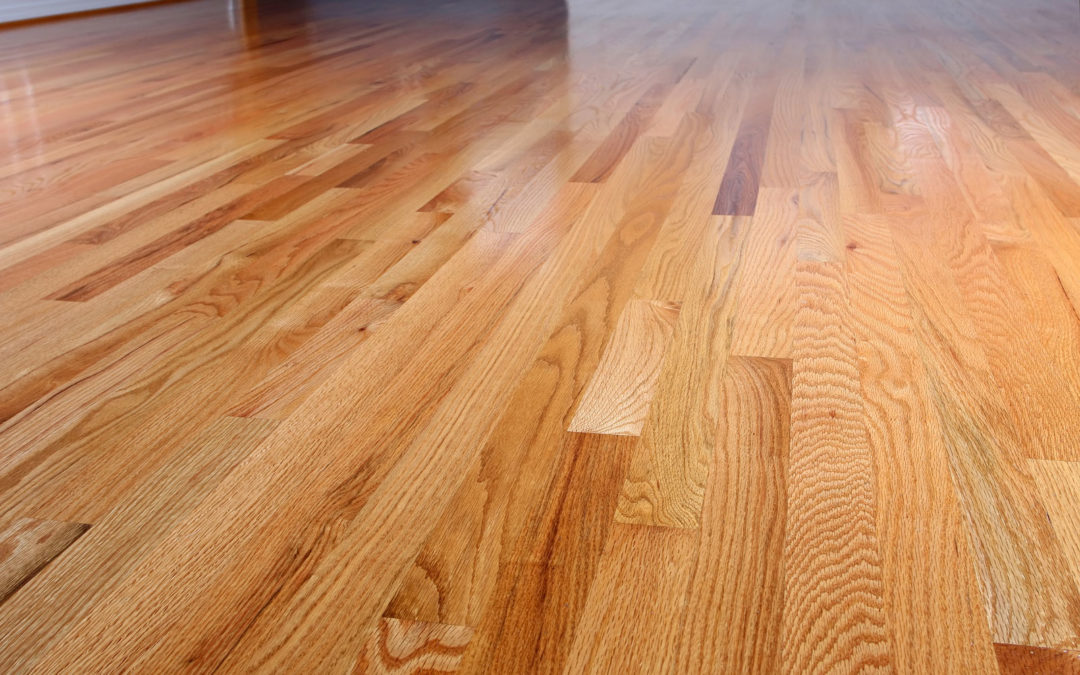
June through September is when Chicago humidity does the most damage. Here's your defense strategy:
Get a hygrometer. You can pick one up for $15-20 on Amazon. Place it in the room with the most hardwood flooring and check it daily. Your target range: 30-50% relative humidity. If you're consistently hitting 60% or higher, you've got a problem that needs addressing immediately.
Run a dehumidifier religiously. This is non-negotiable if you have a basement or lower-level hardwood. Even on the main floor, a portable dehumidifier can pull surprising amounts of moisture out of the air during humid stretches. Empty it daily, or get a model with a drain hose so it runs continuously.
Use your AC strategically. Air conditioning doesn't just cool, it dehumidifies. On humid days, keep your AC running even if the temperature is comfortable. Set it a few degrees cooler than normal and use ceiling fans to circulate the drier air. Yes, your electric bill will be higher. But it's cheaper than replacing warped floors.
Change your cleaning routine. Stop wet mopping. Seriously, put down the soaking mop and bucket. During summer, use only a dry microfiber mop or a very lightly dampened (not wet) cloth. Every drop of water you put on your floors is moisture the wood will absorb. If you need to clean a sticky spot, spray a tiny amount of cleaner on your cloth, never directly on the floor.
Improve air circulation. Stagnant, humid air settles and concentrates moisture. Run ceiling fans on low year-round. Keep furniture a few inches away from walls to allow airflow. Don't block floor vents with rugs or furniture.
The Forgotten Season: Winter Humidity Protection
Most Chicago homeowners obsess about summer humidity (rightfully so), but completely ignore winter, which brings its own set of problems.
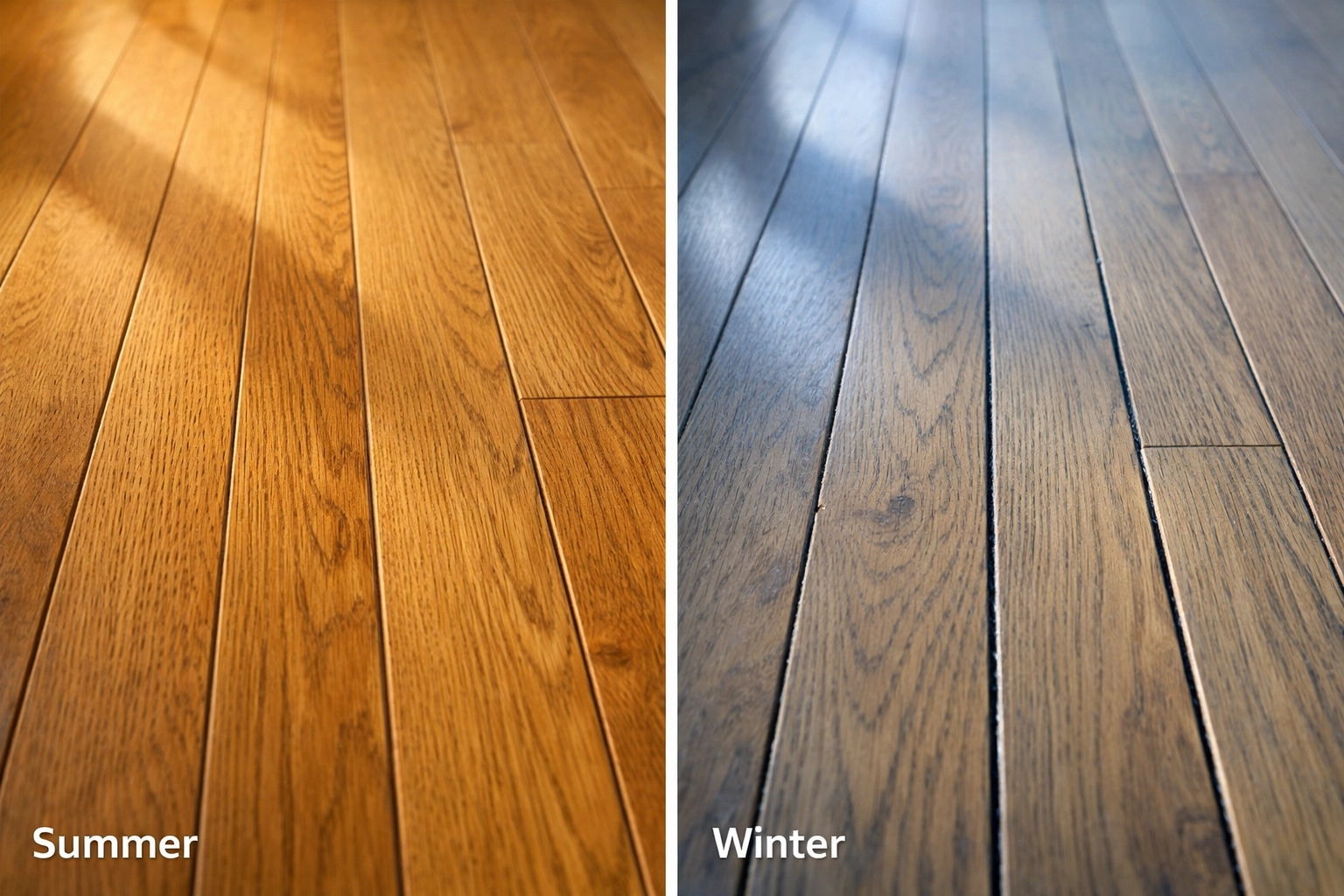
When your furnace runs constantly in January and February, indoor humidity can drop to desert levels. Below 30% humidity, your hardwood floors shrink, creating gaps between boards and surface cracks along the grain. If you've ever noticed your floors "breathe" (gaps opening in winter, closing in summer), low humidity is the culprit.
The fix: install a whole-home humidifier on your furnace. This automatically adds moisture to the air when your heat runs, keeping humidity in that safe 30-50% range. If you have radiator or baseboard heat (common in older Chicago buildings), use portable humidifiers in rooms with hardwood.
The goal isn't to eliminate seasonal changes, wood naturally expands and contracts a bit, and that's fine. The goal is to minimize the dramatic swings that cause permanent damage.
Year-Round Monitoring: The Lazy-But-Effective Approach
Look, you're busy. You're not going to check a hygrometer three times a day or obsess over every humidity reading. Here's the realistic, low-effort approach that still protects your floors:
Check humidity once a week. Set a recurring calendar reminder. Sunday morning with coffee, Wednesday after work, doesn't matter when, just make it consistent. If you're outside the 30-50% range, adjust your dehumidifier or humidifier settings.
Look at your floors monthly. Literally just walk through your house and look down. Are boards cupping? Gaps opening? Finish looking dull or cracked? Catching problems early means easier (and cheaper) fixes.
Schedule professional inspections. If you're within our service area (Chicago and 60 miles North and West), we offer free floor assessments. We'll check for early signs of humidity damage, test your floor's moisture content, and give you a realistic timeline for when you might need refinishing or repairs.
React to weather extremes. When Chicago gets hit with a week of 80+ degree days and 70%+ humidity (happens every July and August), bump up your dehumidifier settings. During polar vortex stretches in January, add more humidification. You don't need to micromanage daily, just respond to the obvious extremes.
The Bottom Line
Yes, Chicago humidity warps hardwood floors. It's not a myth, and it's not rare: it's a predictable consequence of wood flooring in a climate with massive seasonal humidity swings. But it's also preventable with consistent (not obsessive) humidity management.
Keep your indoor humidity between 30-50% year-round. Use dehumidifiers in summer, humidifiers in winter. Clean without excess water. And pay attention to what your floors are telling you before minor cupping becomes major buckling.
If your floors are already showing damage: or if you're not sure whether what you're seeing is normal seasonal movement or something worse: get them checked. We've refinished thousands of hardwood floors across Chicago, the northern suburbs, and extending west to Naperville and beyond. Most humidity damage is fixable if you catch it early.
Want us to take a look? Get in touch and we'll schedule a time to assess your floors and give you straight answers about what (if anything) needs to be done.