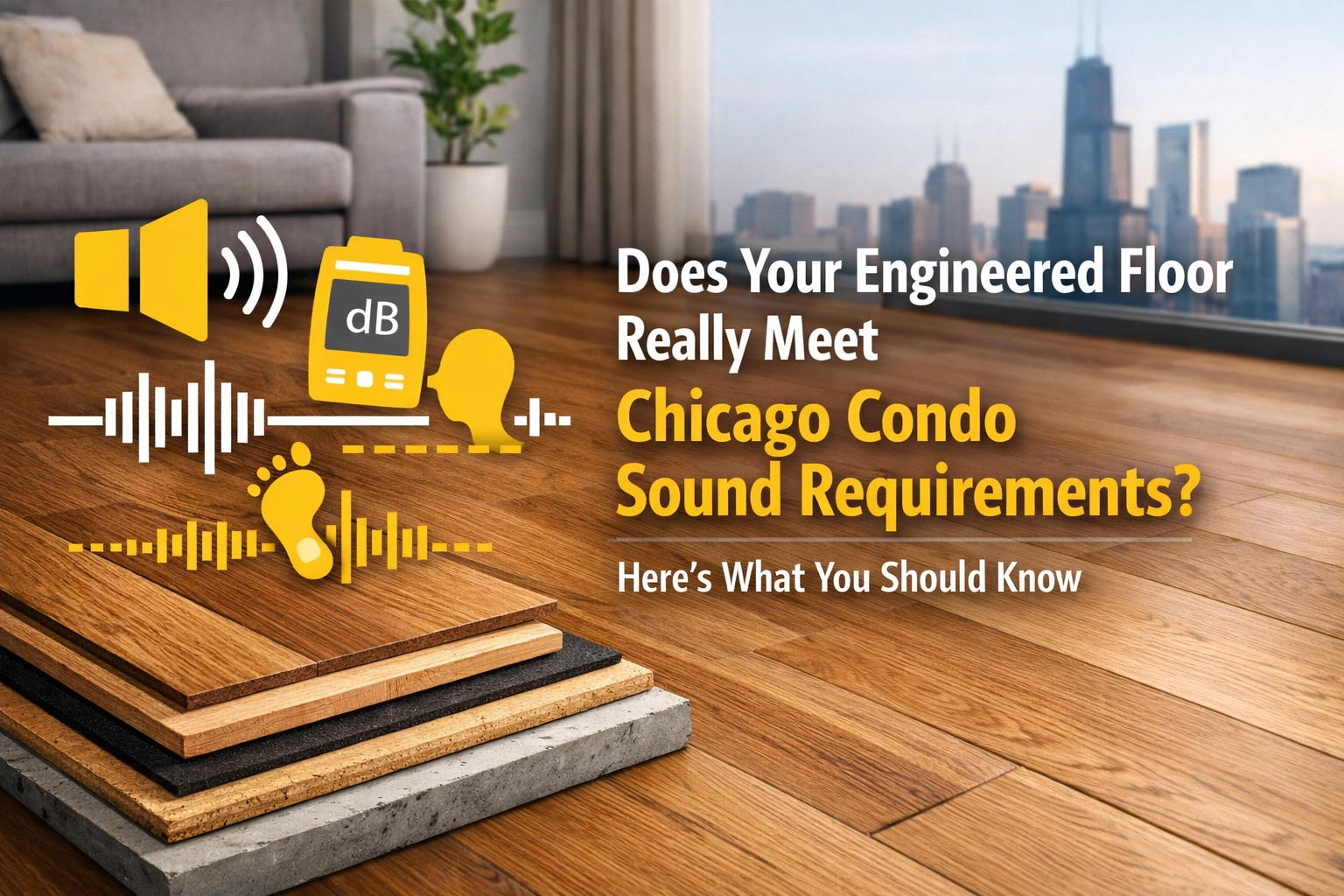
You just bought a gorgeous condo in a Chicago high-rise. You're ready to ditch that builder-grade carpet and upgrade to beautiful engineered hardwood. You pick out the perfect planks, hire a contractor, and two weeks later… your downstairs neighbor is pounding on your door complaining about every footstep.
Worse? Your HOA sends you a notice demanding you rip everything out and start over.
This nightmare scenario plays out more often than you'd think in Chicago condos. Here's the thing most homeowners don't realize: your engineered hardwood floor alone won't meet your building's sound requirements. Not even close.
Let's break down what you actually need to know before you start any wood floor installation in Chicago's condo buildings.
What the Heck Are STC and IIC Ratings?
Before we dive into requirements, let's decode the alphabet soup. When condo associations talk about sound ratings, they're referring to two measurements:
STC (Sound Transmission Class) measures airborne sounds: voices, TV noise, music. Think of it as how well your floor blocks the sound of you blasting your favorite playlist.
IIC (Impact Insulation Class) measures impact sounds: footsteps, dropped objects, your dog's nails clicking across the floor. This is the big one for flooring, and it's what your downstairs neighbors care about most.
Here's the reality: Most Chicago condo associations require a minimum IIC rating of 50 for any flooring system. Some newer buildings or luxury developments are pushing for ratings in the 60s. The higher the number, the better the sound insulation.
Chicago's Concrete Jungle (and Why That Matters)
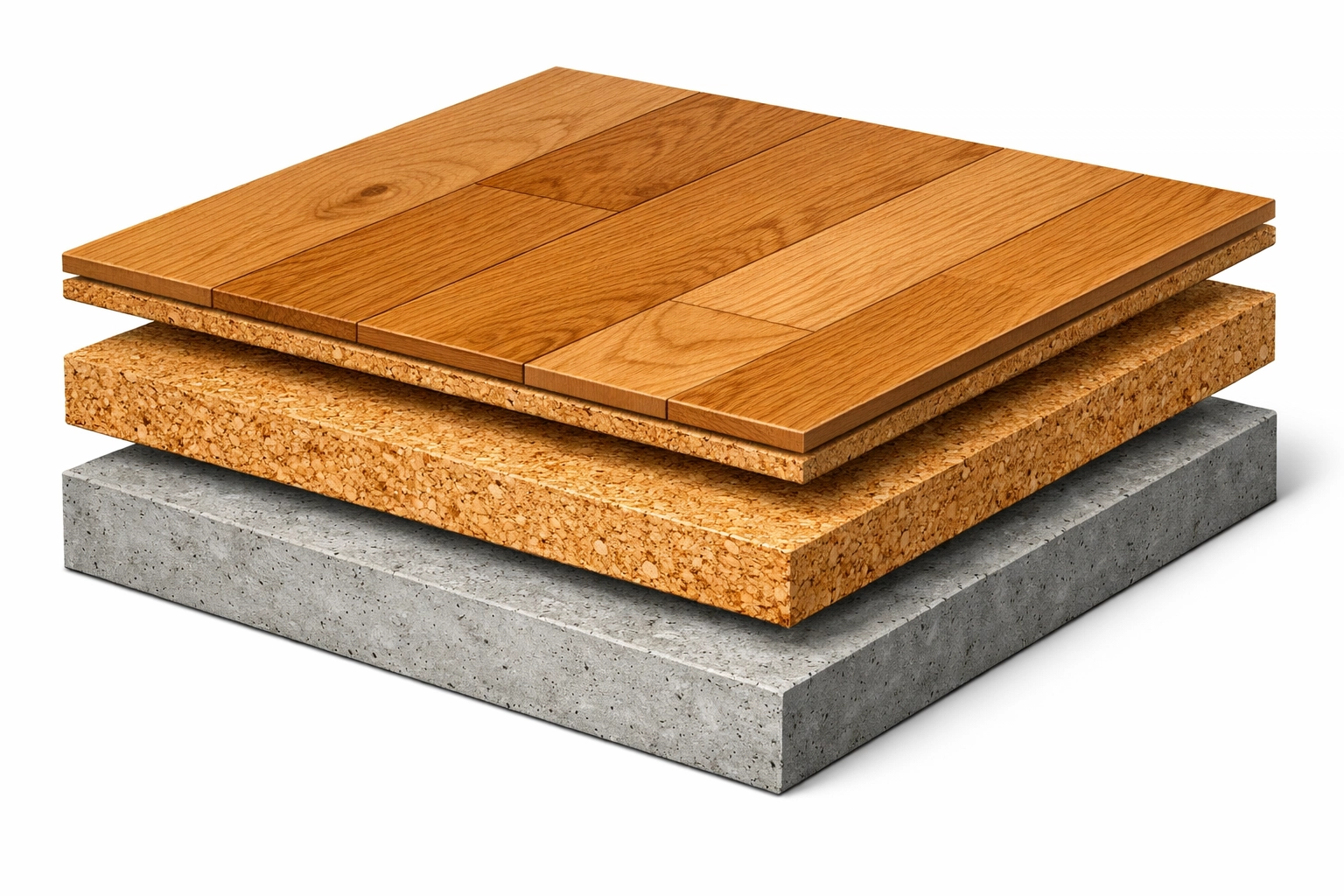
The good news? Most Chicago high-rises are built with concrete subfloors, which already provide decent sound control. The bad news? That's not enough on its own, and your engineered hardwood actually makes things worse compared to carpet.
When you install hard flooring directly on concrete without proper underlayment, you're essentially creating a drum. Every footstep reverberates through the building structure. Your neighbor below isn't just being sensitive: they're genuinely hearing every move you make.
This is exactly why condo associations don't mess around with flooring approvals. They're protecting quality of life for everyone in the building.
The Underlayment Game-Changer
Here's what most DIYers and even some flooring contractors get wrong: the engineered hardwood itself provides almost zero sound control. You could install the most expensive engineered oak on the market, and it won't make a dent in impact noise without the right underlayment beneath it.
Chicago condo associations mandate sound-absorbing underlayment as a non-negotiable condition of approval. It's not optional, it's not a "nice to have": it's required. Period.
The three most common underlayment materials that actually work:
Cork underlayment is the eco-friendly favorite. It naturally dampens sound, resists moisture, and adds a slight cushion underfoot. Many of our clients in Lincoln Park and River North condos go this route because it checks all the boxes: performance and sustainability.
Rubber underlayment is the heavy-duty option. It's practically indestructible, offers excellent moisture barriers (important for concrete slabs), and provides top-tier sound reduction. If your building has strict IIC requirements in the 60s, rubber is often the answer.
Foam underlayment is the budget-friendly choice. It's lightweight, easy to install, and provides decent sound insulation. However, it's not as durable or effective as cork or rubber for high-traffic areas or buildings with stricter sound requirements.
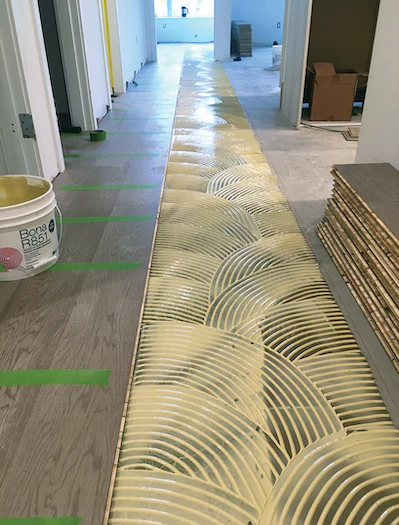
The Devil's in the Details: Perimeter Isolation
Even with the perfect underlayment, there's one installation detail that makes or breaks your sound ratings: perimeter isolation barriers.
These barriers go around the entire room's edges, between your flooring and the walls. They prevent sound from transmitting through the structure at the seams. Sounds simple, right?
You'd be shocked how often this step gets botched. We've been called in for engineered hardwood floor repair on projects where the original installer either skipped the perimeter barriers entirely or installed them incorrectly. The result? Sound ratings that don't meet code, and expensive do-overs.
This is probably the single biggest installation mistake we see in Chicago condo projects, and it dramatically reduces system effectiveness.
Getting Approval (Before You Spend a Dime)
Here's where homeowners get into trouble: They order materials, schedule installation, and then check with their HOA. By that point, they've already bought the wrong products.
Every Chicago condo association has specific approved underlayment products and minimum IIC ratings. These requirements are in your building's rules, but they're not always easy to find or interpret.
Before you order a single plank, get your condo association's requirements in writing. Ask specifically:
- What's the minimum IIC rating required?
- Which underlayment products are pre-approved?
- Do you need to submit installation plans for approval?
- Are there specific contractors the building recommends or requires?
Some associations have streamlined approval processes if you're using certain pre-approved systems. Others require detailed documentation and inspections. Know what you're dealing with upfront.
What Happens If You Ignore the Rules?
Let's say you skip the approval process, install your beautiful new floor, and hope for the best. What's the worst that could happen?
Your HOA can legally require you to remove the entire floor and reinstall it correctly. We're talking thousands of dollars down the drain: materials, labor, the whole nine yards. Plus you'll need to pay for proper installation the second time around.
We've seen this happen to homeowners across Chicago's North and Northwest sides. It's heartbreaking because it's completely avoidable with proper planning.
Beyond the financial hit, you'll likely face fines from your association, strained relationships with neighbors, and weeks of living in a construction zone while everything gets redone.
How Rovin's Flooring Navigates Condo Projects
Over our decades serving Chicago and the 60-mile radius extending North and West, we've worked with practically every major condo association in the city. We know which buildings are sticklers for paperwork and which ones have straightforward approval processes.
When you work with us on a condo project, here's what happens:
We start by reviewing your association's specific requirements before recommending any products. We're not going to sell you materials that won't get approved: that wastes everyone's time and money.
We coordinate directly with your property management to submit required documentation and get approval in writing. We've learned the hard way that verbal approvals don't cut it.
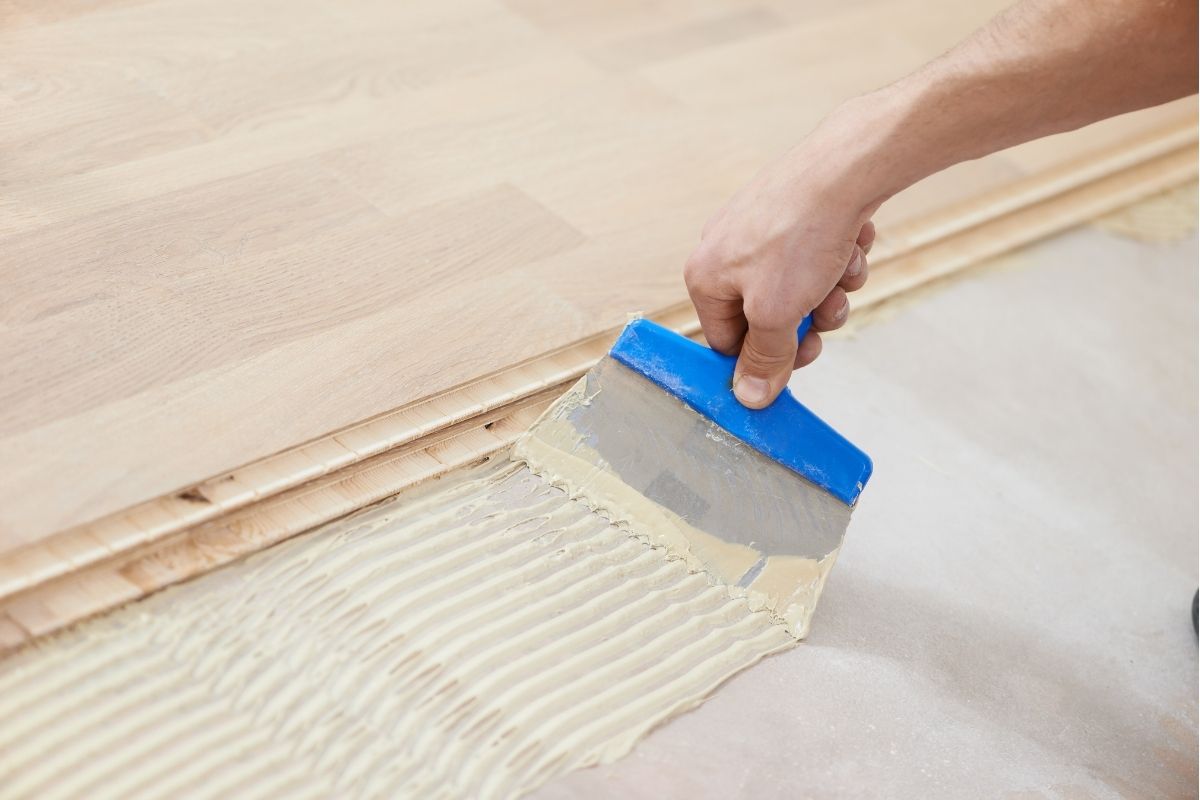
During installation, we use proven sound-rated systems with the appropriate underlayment for your building's requirements. Perimeter isolation? That's standard on every condo job we do, no shortcuts.
When Existing Floors Need Help
Already dealing with engineered hardwood in your condo that's causing problems? Engineered hardwood floor repair is trickier in condos than in single-family homes because you're often dealing with underlying soundproofing issues, not just surface damage.
Sometimes the floor itself is fine, but the underlayment has compressed or degraded over time. Other times, boards have been damaged by moisture coming through the concrete slab. We can assess whether repair is viable or if sections need replacement: always keeping HOA requirements in mind.
The good news? If you're dealing with localized damage, targeted repairs with proper sound-rated underlayment can often solve the problem without a full replacement.
Your Next Steps
If you're planning wood floor installation in a Chicago-area condo, start with your HOA requirements. Get them in writing, understand the specific IIC ratings and approved products, and factor proper underlayment into your budget from day one.
Engineered hardwood can absolutely work beautifully in condo living: when it's installed correctly with the right sound-control systems. The homes we've worked on throughout Lincoln Park, Lakeview, Evanston, and Oak Park prove it's possible to have gorgeous floors and happy neighbors.
Want to make sure your condo flooring project is done right the first time? Contact us to discuss your building's requirements and get a detailed proposal that accounts for all the sound-control details that matter.
Because nothing ruins a new floor faster than having to rip it out and start over.