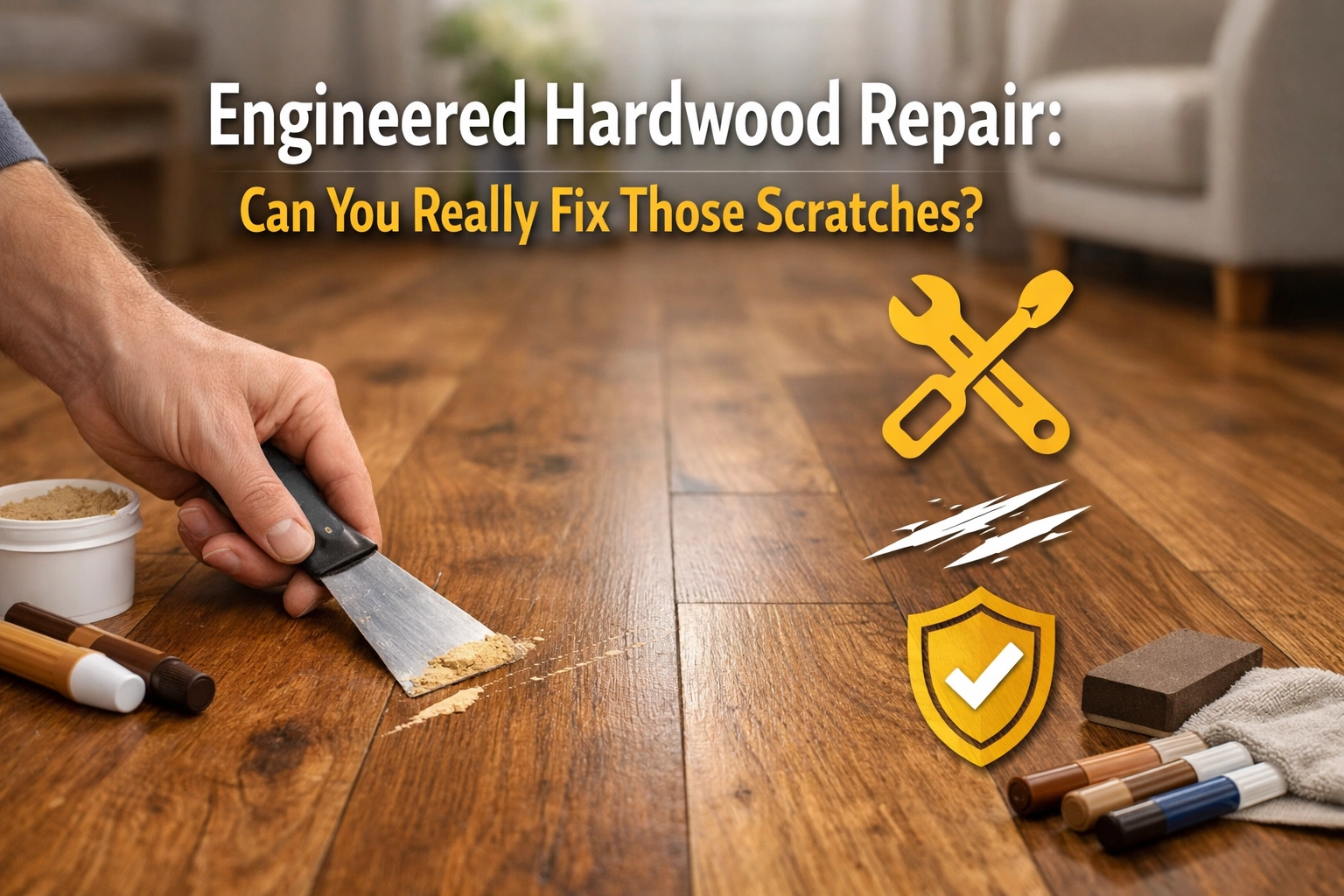
You're standing in your living room, looking down at that fresh scratch across your beautiful engineered hardwood floor. Maybe the dog skidded across it chasing a toy. Maybe you dragged furniture without those felt pads. Whatever happened, you're now wondering: Can this actually be fixed, or am I looking at a costly replacement?
Here's the good news: yes, you can repair most scratches in engineered hardwood floors. The not-so-good news? The answer isn't quite as simple as "yes" or "no." It depends entirely on how deep that scratch goes and what you're working with.
Let's break down exactly what's possible when it comes to engineered hardwood repair in Chicago homes, and when you should call in the pros versus trying a DIY fix.
Understanding the Wear Layer: Why It Matters
Unlike solid hardwood that's wood all the way through, engineered hardwood is built in layers. The top layer: what you actually see and walk on: is real wood veneer. Underneath that is a plywood or high-density fiberboard core that gives the flooring its stability.
That top layer of real wood is called the wear layer, and it's typically only 1/16 to 1/8 of an inch thick. Some premium engineered hardwood products have thicker wear layers (up to 5/16 inch), while budget options might be paper-thin.
Why does this matter for repairs? Because once a scratch goes through that wear layer and hits the plywood core beneath, your repair options become limited. The wear layer is where all the magic happens: it's the only part you can actually sand, stain, or refinish.
Light Scratches: The Easy Wins
If you're dealing with light surface scratches that haven't penetrated deep into the veneer, you're in luck. These are usually the easiest to address.
The Fine-Grit Sandpaper Method
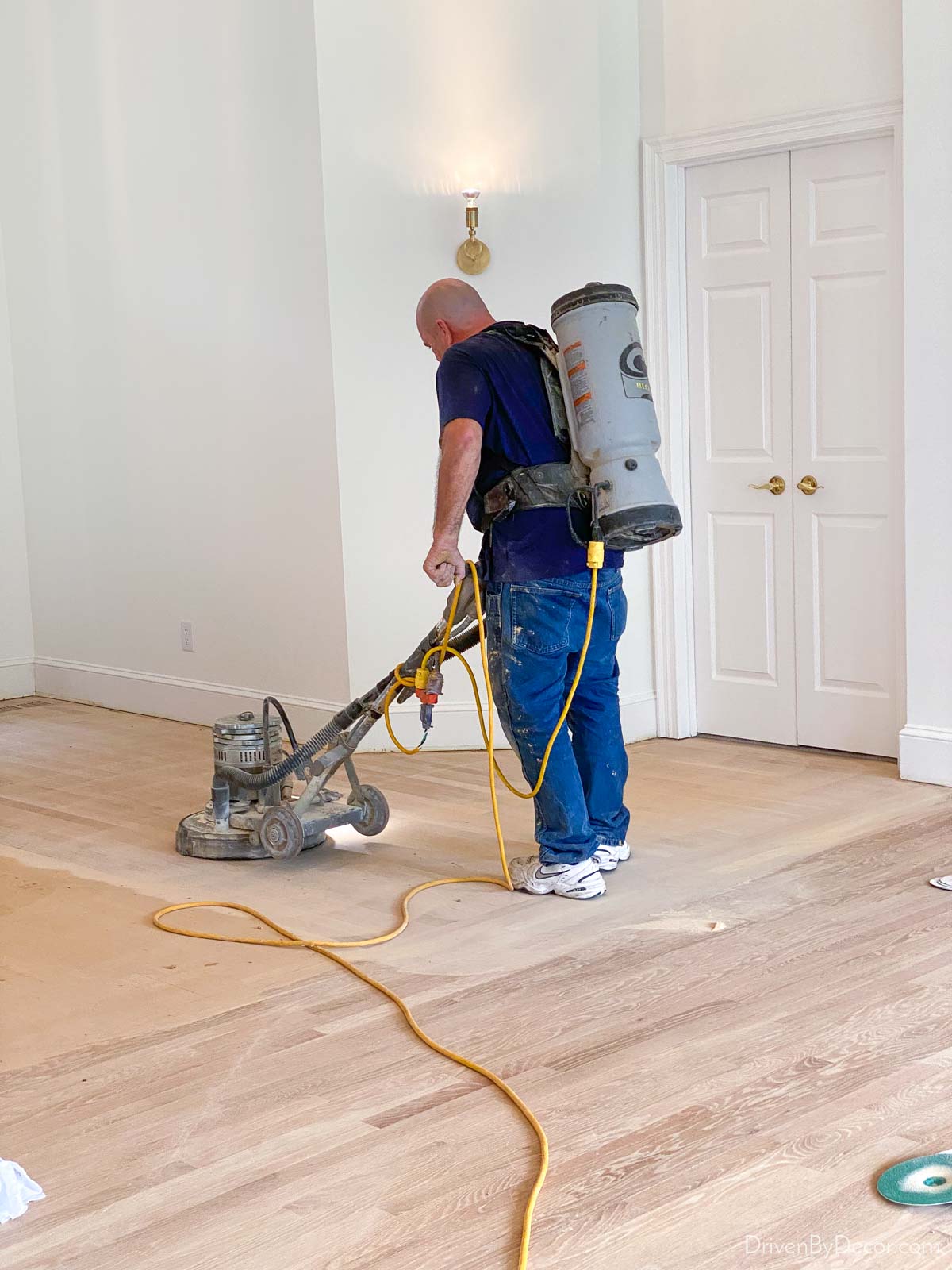
For very shallow scratches, you can gently buff them out using fine-grit sandpaper (220-grit or higher). The key word here is gently. You want to work in the direction of the wood grain, applying minimal pressure.
The challenge? With engineered hardwood's thin wear layer, you need to be extremely careful. Go too hard or too long, and you'll sand right through that veneer. Test in an inconspicuous area first: like inside a closet or under furniture.
After buffing, you'll need to seal the area to prevent moisture damage. This is where many DIY attempts go wrong. If you don't reseal properly, you've just created a vulnerable spot in your floor.
Scratch Concealers and Touch-Up Markers
These are your quick-fix allies. Scratch concealers work like makeup for your floors: they fill in and disguise minor scratches while adding a protective coating. Touch-up markers are basically felt-tip pens filled with wood-colored stain.
They won't make scratches disappear entirely, but they'll significantly reduce visibility. They're perfect for those times when you have guests coming over and want your floors to look decent without a major repair project.
Medium Scratches: Time for Wax Kits
When scratches are more noticeable but haven't gouged all the way through the veneer, wax repair kits are your best bet. You can find these at most hardware stores, and they're surprisingly effective when used correctly.
Here's the process:
- Clean the area with rubbing alcohol to remove any dirt, oils, or residue
- Choose the right color wax that matches your floor (most kits come with multiple shades you can blend)
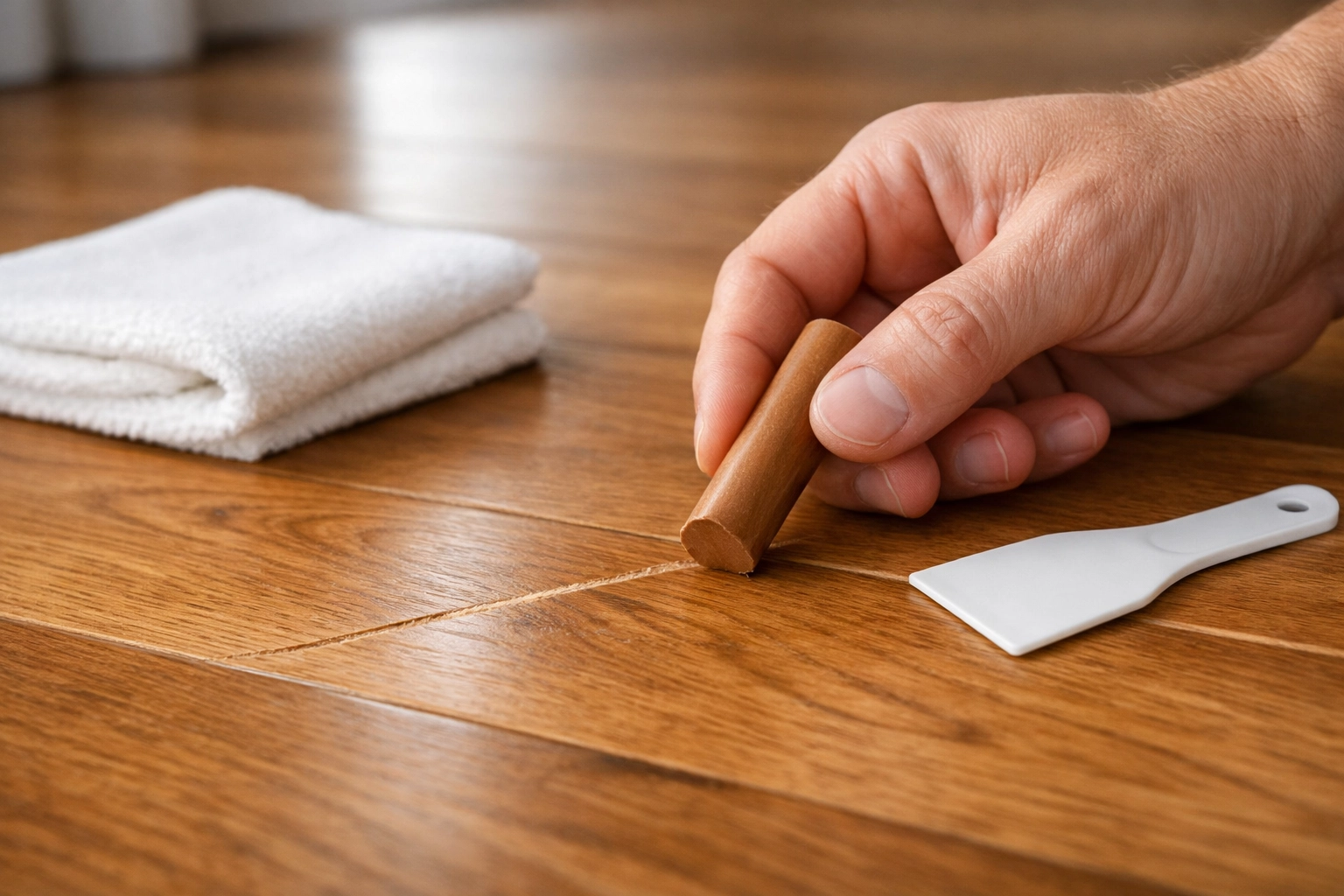
- Fill the scratch using a plastic putty knife, working the wax into the damaged area
- Remove excess wax with a clean cloth, buffing until smooth
- Let it cure according to package directions
The reason this works so well is that you're dealing with real wood veneer on engineered hardwood, just like solid hardwood. The wax bonds with the wood fibers and creates a protective seal.
Deep Scratches and Gouges: When Things Get Complicated
This is where engineered hardwood repair gets tricky. If a scratch or gouge has penetrated through the wear layer into the plywood core, you're looking at more serious intervention.
Wood Putty and Filler Compounds
For deep damage, wood putty or specialty filler compounds can temporarily address the problem. You'll follow a similar process to wax kits, but with more substantial filling material.
The catch? If the damage extends into the core, these repairs often don't last long-term. The plywood beneath doesn't bond with fillers the same way real wood does. You might get a few months or even a year or two out of the repair, but it's rarely a permanent solution.
When Replacement Makes More Sense
Sometimes, the most cost-effective and longest-lasting solution is replacing the damaged boards. This is especially true if:
- Multiple planks are damaged
- Scratches have penetrated the core in high-traffic areas
- You're dealing with water damage in addition to scratches
- The floors are already showing wear in other areas
At Rovin's Flooring Inc, we've helped countless homeowners in Chicago and throughout our 60-mile service area to the North and West make this decision. Sometimes replacing a few boards now prevents having to replace the entire floor in a couple of years.
Can You Sand and Refinish Engineered Hardwood?
This is the million-dollar question. The answer is: it depends on the wear layer thickness.
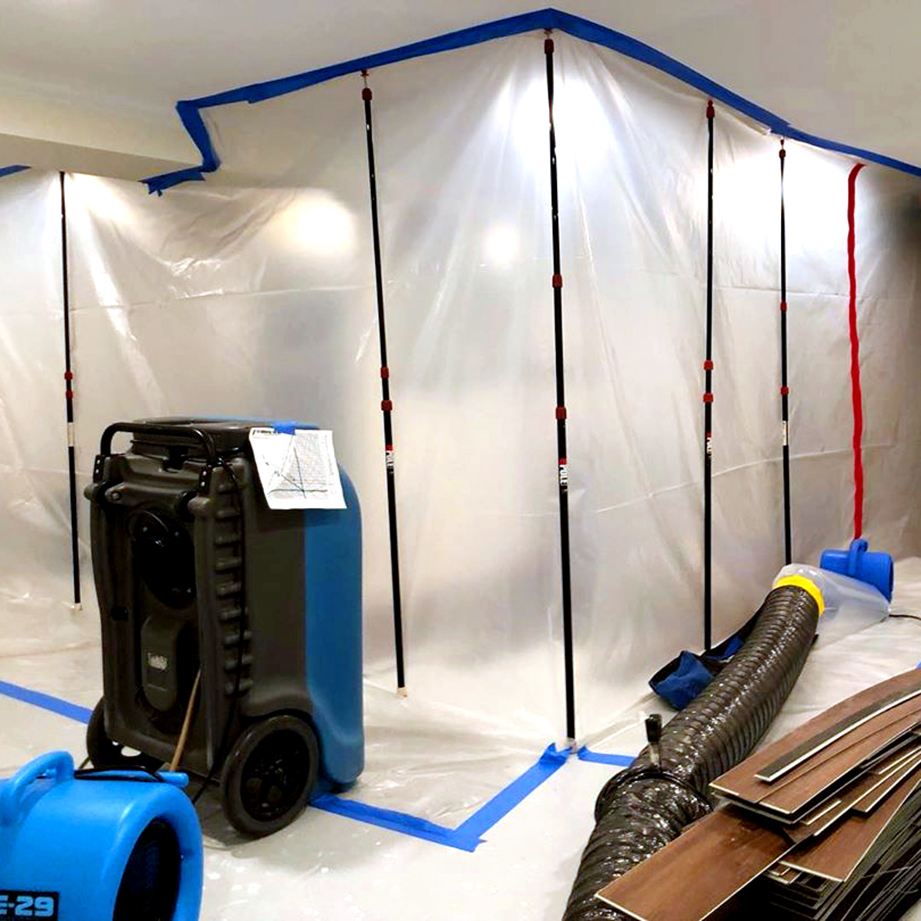
If you have engineered hardwood with a wear layer of 3/16 inch or thicker, light sanding and refinishing is usually possible: once, maybe twice in the floor's lifetime. But this is drastically different from solid hardwood, which can be refinished 6-10 times over its lifespan.
For thinner wear layers, attempting to sand and refinish is playing with fire. You might get away with a very light buff and coat, but full sanding? You're likely to sand right through to the plywood, creating an irreparable mess.
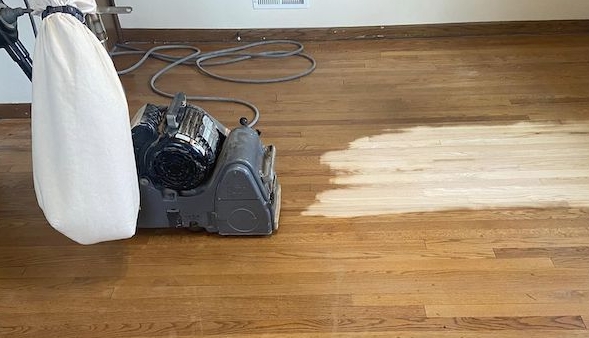
This is why professional assessment matters. We've seen too many DIY disasters where homeowners rented a drum sander and destroyed floors that could have been saved with a targeted repair approach.
Rovin's Flooring Approach to Engineered Hardwood Repair in Chicago
When you call us about scratched or damaged engineered hardwood, we don't immediately jump to refinishing or replacement. We start with an assessment:
- How thick is your wear layer?
- What's the extent of the damage?
- What caused the damage, and is it likely to reoccur?
- What are your goals and budget?
For light to medium scratches, we can often perform targeted repairs using professional-grade products that outlast consumer options. We have access to color-matching systems that can blend repairs seamlessly with your existing floor.
For water damage: which often accompanies scratching in Chicago homes dealing with winter salt and snow: we evaluate whether the core is compromised. Sometimes the surface looks salvageable, but moisture has already begun warping the plywood beneath.
And when replacement is necessary, we're transparent about it. We can match new boards to your existing floor and perform installations that are virtually invisible, especially in lower-traffic areas.
The Bottom Line on Repairing Hardwood Floors
Engineered hardwood scratches can be repaired: but success depends on catching them early and using the right approach for the depth of damage.
Light scratches? You might be able to handle them yourself with the right products and a gentle touch. Medium scratches? Wax kits are your friend. Deep gouges that have penetrated the core? It's time to have a professional evaluate whether repair or replacement makes more sense.
The biggest mistake we see Chicago homeowners make is waiting too long or attempting repairs that are beyond their skill level. A $200 professional repair can prevent a $3,000 floor replacement down the road.
If you're dealing with scratched engineered hardwood and aren't sure what's possible, we're here to help. Serving Chicago and extending 60 miles North and West, Rovin's Flooring Inc has been helping homeowners make informed decisions about their floors for years.
We'll tell you honestly whether your floors can be saved, what it will take, and what you can expect in terms of longevity. Because the goal isn't just fixing today's scratch: it's keeping your floors beautiful for years to come.
Ready to discuss your specific situation? Reach out at rovinsflooring.com and let's take a look at what's possible with your floors.