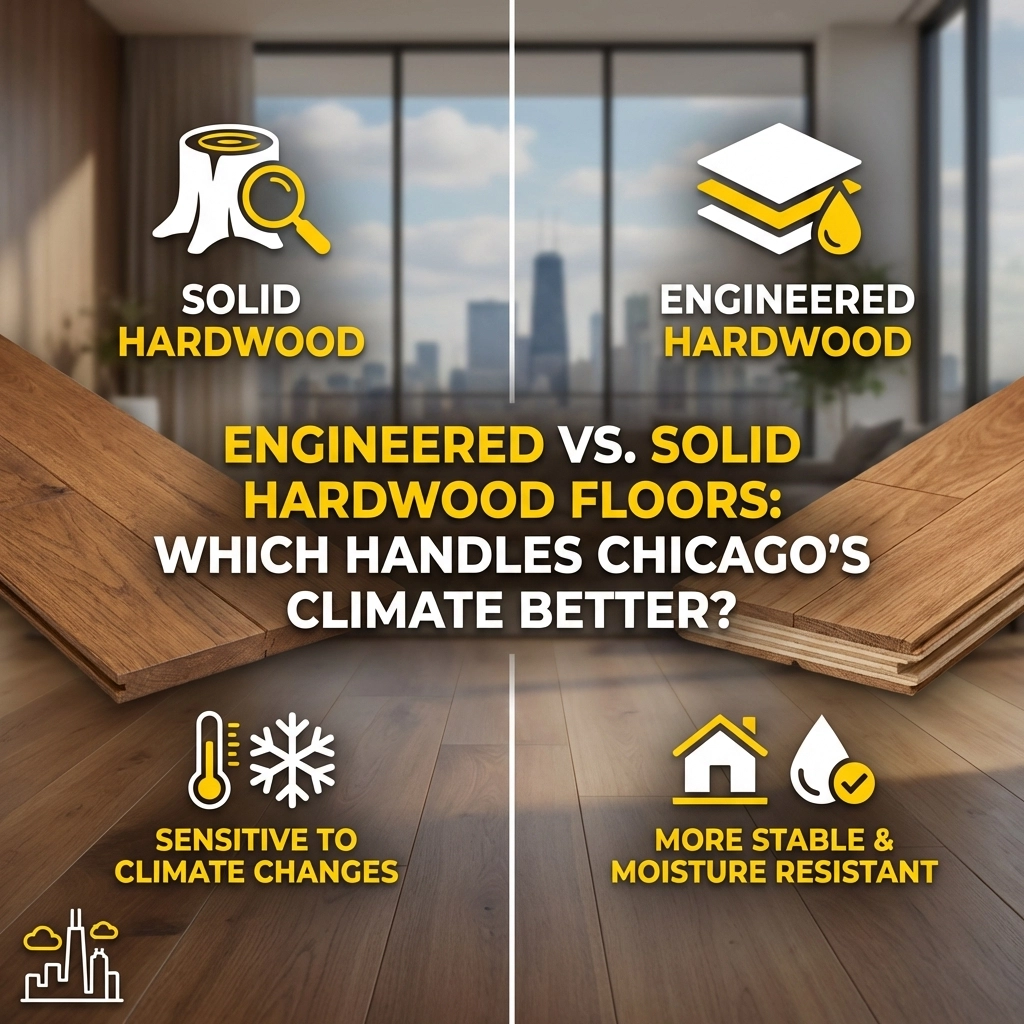
If you're a Chicago homeowner thinking about new hardwood floors, you've probably found yourself stuck on one big question: engineered or solid? Both options look gorgeous and add serious value to your home. But here's the thing: our Windy City climate throws some curveballs that can make or break your flooring investment.
Chicago's weather is… let's just say dramatic. We go from bone-dry, freezing winters to sticky, humid summers. That kind of seasonal swing isn't just uncomfortable for us: it's tough on hardwood floors, too. So before you commit, let's break down how each type of hardwood handles our unique climate and help you make the right call.
Understanding the Basics: Engineered vs. Solid Hardwood
Before we dive into climate considerations, let's make sure we're on the same page about what these two flooring types actually are.
Solid hardwood is exactly what it sounds like: planks milled from a single piece of wood, typically ¾-inch thick. It's the traditional choice that's been around for centuries. You can sand and refinish it multiple times over its lifetime, which is why many older Chicago homes still have their original solid hardwood floors looking beautiful decades later.
Engineered hardwood features a real hardwood veneer on top (usually 2-6mm thick) bonded to multiple layers of plywood or high-density fiberboard beneath. Think of it like a layered sandwich where each layer runs in a different direction. This cross-grain construction is the secret sauce that gives engineered floors their stability.
Why Chicago's Climate Is Tough on Hardwood Floors
Let's talk about what your floors are really up against here. Chicago has a continental climate, which means we experience significant temperature and humidity swings throughout the year. In January, your furnace is blasting and indoor humidity can drop below 20%. Come July, humidity levels can spike above 60%.
Why does this matter? Wood is a natural material that absorbs and releases moisture from the air. When humidity is high, wood expands. When it's low, wood contracts. This constant expanding and contracting can lead to some frustrating problems:
- Gaps between planks during dry winter months
- Cupping or buckling during humid summers
- Cracking from repeated stress over time
Understanding how humidity affects your hardwood floors is crucial for any Chicago homeowner. The same goes for temperature fluctuations, which add another layer of stress to your flooring.
Engineered Hardwood: Built for Chicago's Swings
Here's where engineered hardwood really shines for our area. That cross-layered construction we mentioned earlier? It allows engineered floors to expand and contract approximately 50% less than solid wood. That's a massive difference when you're dealing with Chicago's seasonal extremes.
Engineered hardwood can handle a relative humidity range of 20% to 65%: which pretty much covers what most Chicago homes experience throughout the year. Solid hardwood, on the other hand, prefers a narrower sweet spot of 35% to 55% relative humidity. Step outside that range, and you're likely to see problems.
Additional Benefits of Engineered Hardwood
Beyond climate performance, engineered hardwood offers some practical advantages for Chicago homes:
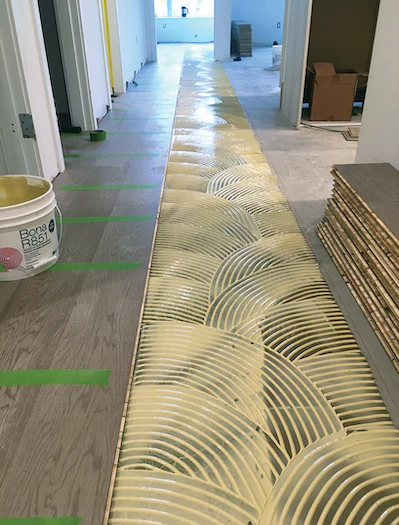
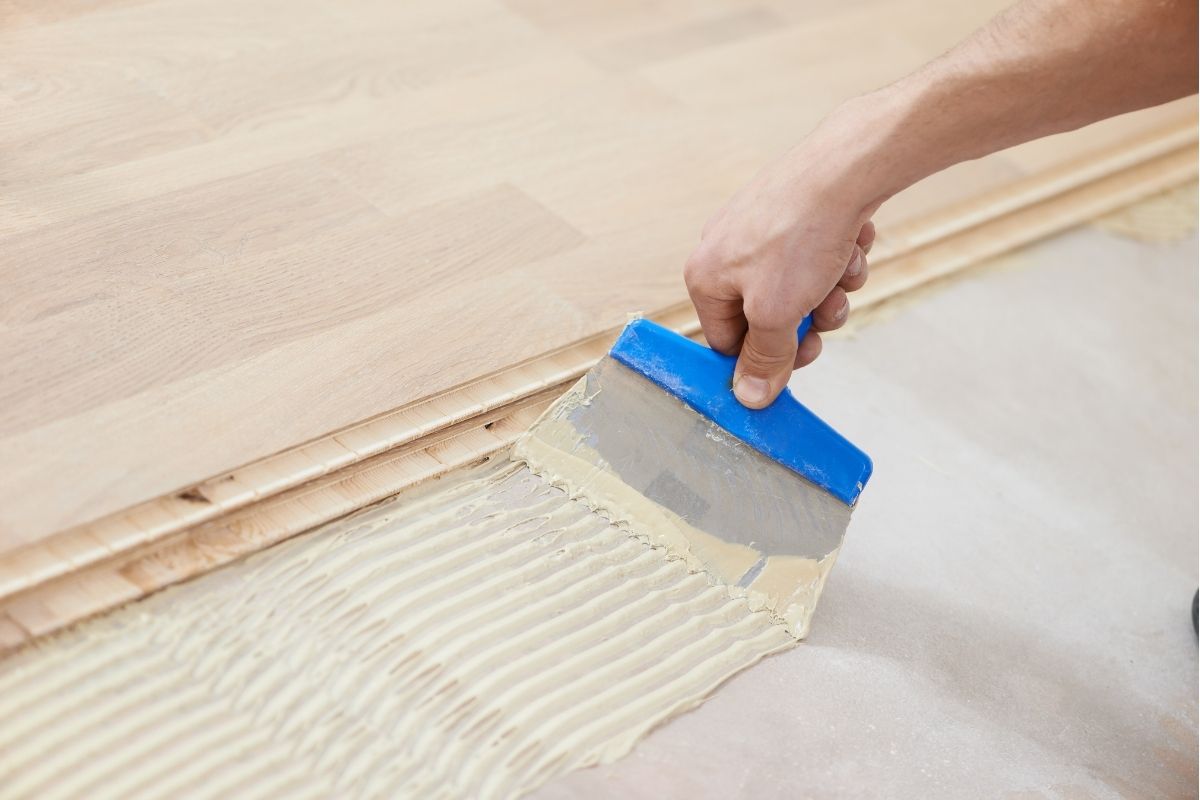
- Installation flexibility: Can be installed over concrete (great for basements) and works well with radiant heating systems
- Lower cost: Generally 10-20% less expensive than comparable solid hardwood
- Faster installation: Often uses click-lock systems or glue-down methods
- Less acclimation time: Requires less time to adjust to your home's environment before installation
For many Chicago homeowners: especially those with concrete subfloors or basement installations: engineered hardwood is the only practical option.
Solid Hardwood: The Classic Choice
Now, don't count solid hardwood out just yet. There are still plenty of reasons Chicago homeowners choose this traditional option.
Longevity is the biggest selling point. Solid hardwood can be sanded and refinished 8-10 times over its lifetime (sometimes more), while most engineered floors can only handle 2-3 refinishes, depending on the veneer thickness. If you're thinking generationally: floors that'll last 100+ years: solid hardwood has the edge.
That authentic feel is another factor. Many homeowners simply prefer the look and feel of solid wood underfoot. There's something special about knowing your floors are made from a single piece of natural material.
Making Solid Hardwood Work in Chicago
If your heart is set on solid hardwood, it can absolutely work in Chicago: it just requires more effort. Here's what you'll need:
- Invest in a quality HVAC system that maintains consistent temperature year-round
- Use humidifiers in winter to keep indoor humidity above 35%
- Use dehumidifiers or AC in summer to keep humidity below 55%
- Monitor humidity levels with a hygrometer and adjust as needed
This ongoing climate control represents an additional expense and effort, but for many homeowners, it's worth it for the benefits solid hardwood provides.
The Head-to-Head Comparison
Let's break down how each option stacks up across the factors that matter most:
Stability & Moisture Resistance
Winner: Engineered Hardwood
Engineered floors are roughly 50% more stable in high-moisture environments and handle humidity swings with minimal movement. For Chicago's climate, this is a significant advantage.
Cost
Winner: Engineered Hardwood
Both upfront costs and long-term expenses (factoring in humidity control systems for solid hardwood) typically favor engineered options. Quality engineered hardwood provides excellent value without sacrificing appearance.
Installation Options
Winner: Engineered Hardwood
Engineered flooring can be installed over concrete, below grade, and with radiant heating. Solid hardwood requires a wood subfloor and isn't recommended for basements. Learn more about proper subfloor installation for both options.
Longevity & Refinishing
Winner: Solid Hardwood
With proper care and humidity control, solid hardwood can last over a century and be refinished many times. Engineered floors have a shorter overall lifespan but still provide 25-50+ years of service.
Appearance
Winner: Tie
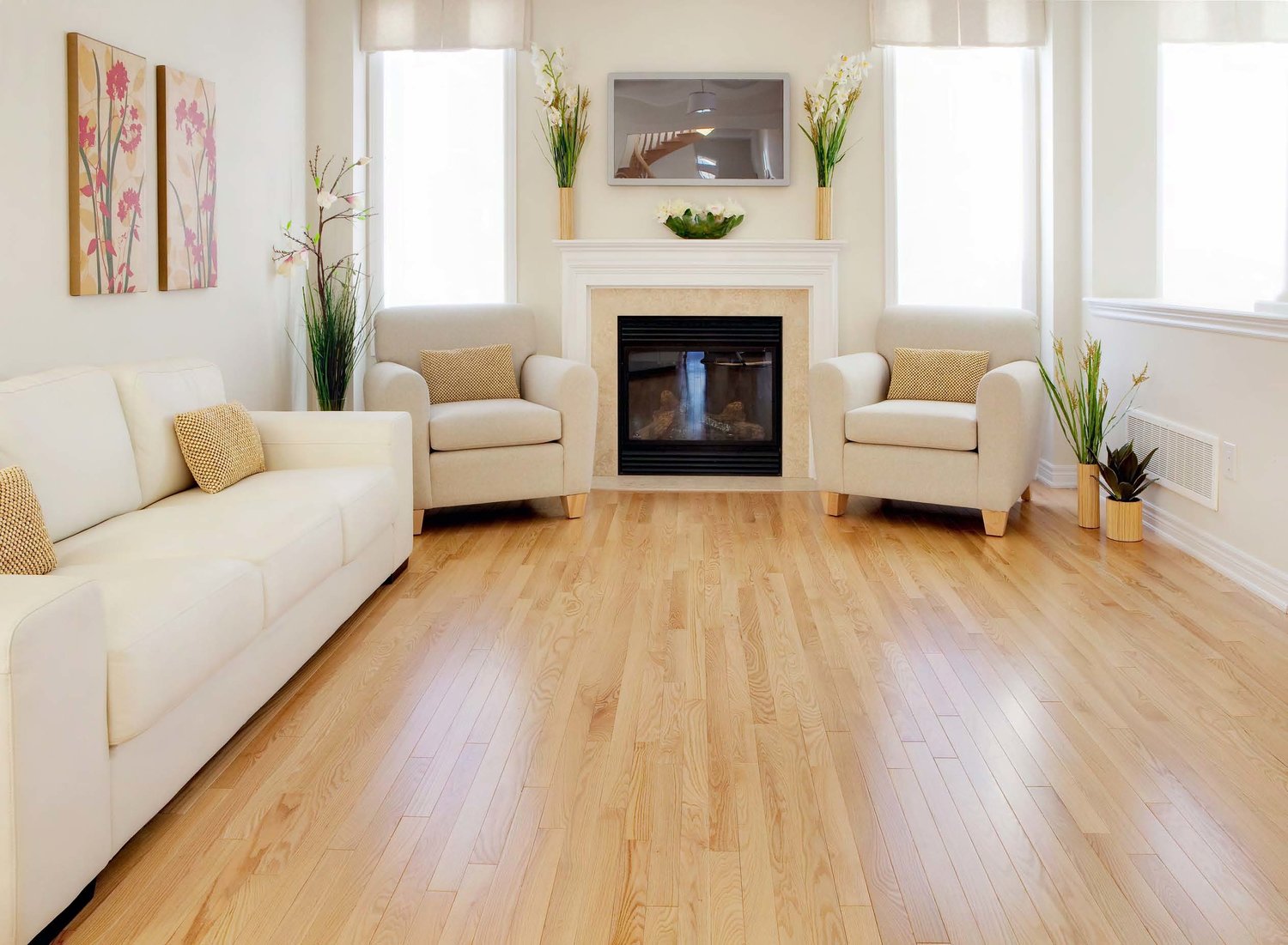
Modern engineered hardwood is virtually indistinguishable from solid hardwood. Both offer the same wood species, stains, and finishes. Unless you get on your hands and knees to inspect the edges, you likely won't notice a difference.
Our Recommendation for Chicago Homeowners
After years of installing both engineered and solid hardwood floors throughout Chicago and our service area extending 60 miles North and West, here's our honest take:
For most Chicago homes, engineered hardwood is the smarter choice. The superior dimensional stability, wider humidity tolerance, and installation flexibility make it better suited to our climate's demands. You'll spend less time worrying about your floors and more time enjoying them.
That said, solid hardwood still makes sense in certain situations:
- You're committed to maintaining strict humidity control year-round
- You want floors that can be refinished many times over generations
- You're installing on upper floors with wood subfloors and good climate control
- The authentic character of solid wood is important to you
Making the Right Choice for Your Home
Ultimately, both engineered and solid hardwood can look stunning in your Chicago home. The best choice depends on your specific situation: your subfloor type, your home's climate control capabilities, your budget, and your long-term plans.
If you're still unsure which option is right for you, we're happy to help. At Rovin's Flooring, we've been helping Chicago-area homeowners navigate these decisions for years. We'll assess your specific situation and give you an honest recommendation based on what's best for your home: not what's easiest for us to install.
Ready to explore your options? Request a free estimate or contact our team to schedule a consultation. We serve Chicago and a 60-mile radius extending North and West, and we'd love to help you find the perfect flooring solution for your home.