
Choosing the right hardwood floor for your home isn't just about picking a color you like. If you live in Chicago or the surrounding North and West suburbs, you know that our climate is… well, demanding. One day it’s 90 degrees with 80% humidity, and a few months later, it’s sub-zero temperatures and the air is bone-dry.
At Rovin's Flooring Inc, we’ve spent years helping homeowners navigate these challenges. We work with over 20 unique wood species, from the classic American Red Oak to the strikingly hard Brazilian Cherry. Every species reacts differently to our local environment, and every species has a different "Janka" rating: a measure of how well it stands up to your Great Dane’s claws or your toddler’s toy trucks.
In this guide, I’m going to break down the most popular species we install and refinish, comparing them by durability, style, and how they handle the Chicago "humidity roller coaster."
The Chicago Climate Factor: Why Species Choice Matters
Before we look at the woods, we have to talk about the air. Wood is a natural material that breathes. In the summer, it absorbs moisture and expands. In the winter, when your heater is blasting, the wood loses moisture and shrinks.
If you choose a species with poor dimensional stability, you might see significant gaps in the winter or "cupping" (where the edges of the planks rise) in the summer. This is why understanding humidity response is vital. We always recommend maintaining a consistent indoor environment to protect your investment, but starting with the right species makes that job much easier.
Understanding the Janka Hardness Scale
As you read through these species, you’ll see me mention the Janka Hardness Scale. This is a standardized test that measures the force required to embed a small steel ball halfway into a piece of wood.
- High Janka (1500+): Great for high-traffic kitchens, pets, and kids.
- Medium Janka (1000–1500): The "sweet spot" for most residential homes.
- Low Janka (Under 1000): Best for bedrooms or areas where you prioritize aesthetics over dent resistance.
The Classics: Red Oak vs. White Oak
Oak is the king of Chicago flooring. In fact, it's found in nearly 96% of residential homes in our area. It is plentiful, native to the region, and handles our climate changes better than almost any other wood.
Red Oak (Janka: 1290)
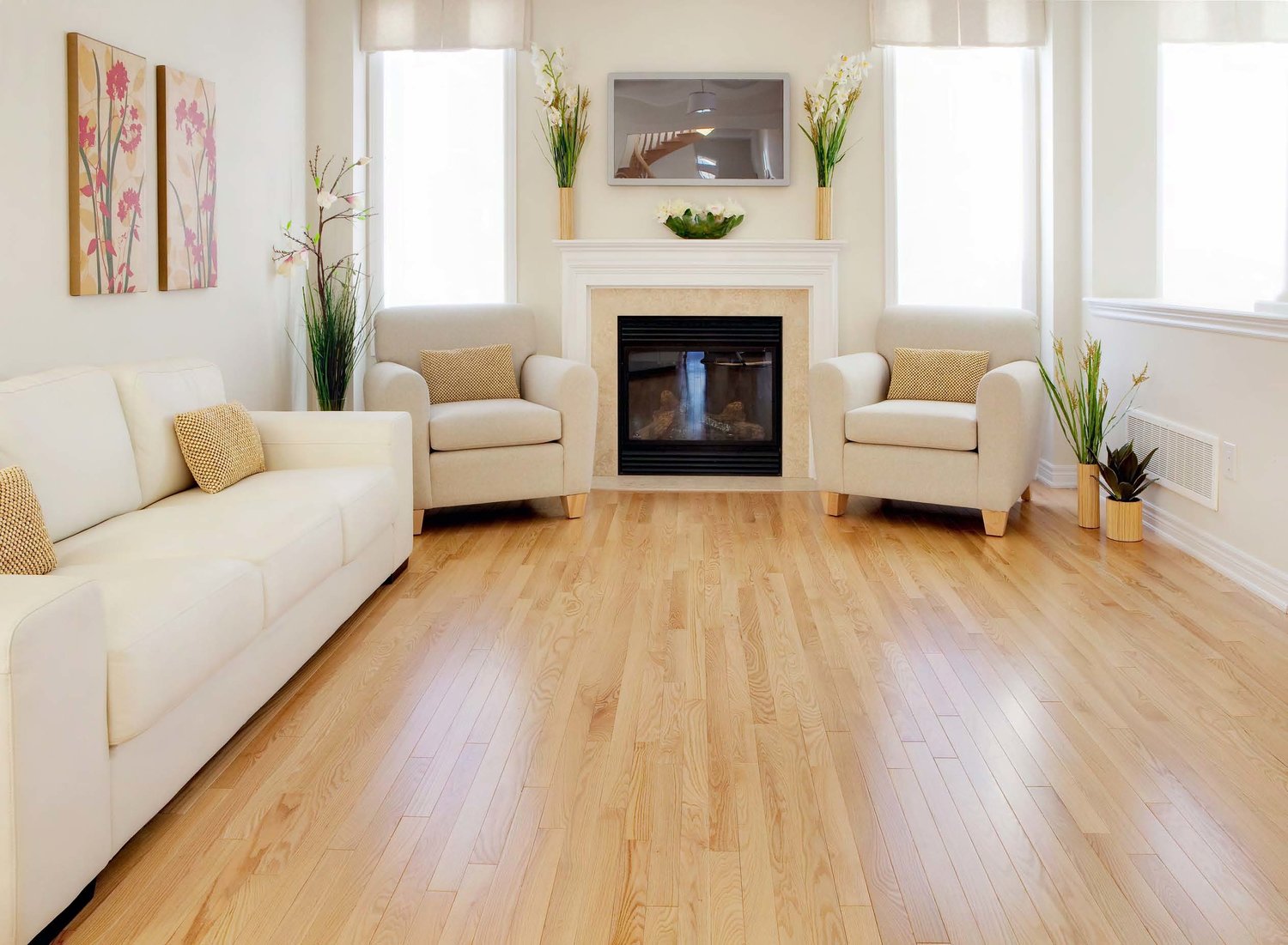
Red Oak is the traditional choice. It has a warm tone with pinkish undertones and a very pronounced, porous grain. This grain is actually a benefit: it helps hide small scratches and dents, making it a favorite for busy families.
- Best for: Homeowners who want a classic, "timeless" look and durability.
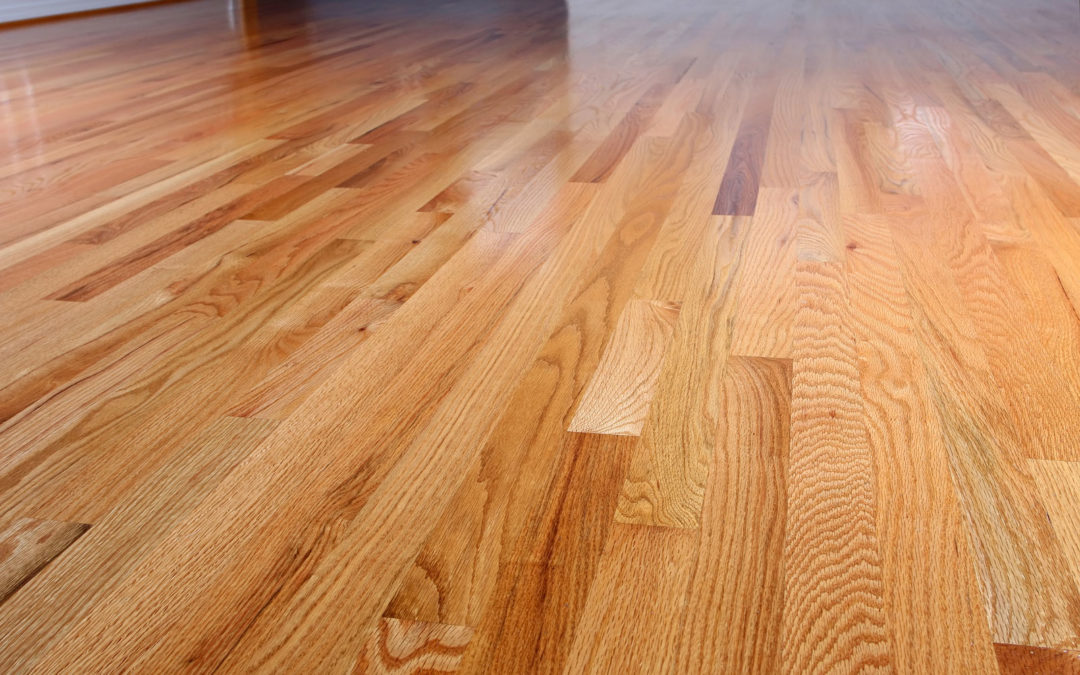
White Oak (Janka: 1360)
White Oak has surged in popularity lately because of its cooler, grayish-brown undertones. It has a tighter grain than Red Oak and is more water-resistant (which is why it’s often used in boat building). If you are looking for a modern, "scandi-chic" look or want to use a gray or white-wash stain, White Oak is your best friend.
- Best for: Modern designs, gray stains, and slightly better moisture resistance.
Modern Favorites: Natural Maple and Walnut
If you want to move away from the traditional oak look, Maple and Walnut offer two very different paths.
Natural Maple (Janka: 1450)
Maple is harder than Oak and has a very light, creamy color with a smooth, subtle grain. It makes a room feel incredibly bright and airy. However, Maple is a bit "fussy." Because its pores are so tight, it doesn't always take stains evenly (it can look blotchy). Most homeowners choose to leave Maple in its natural state.
- Best for: Bright, contemporary spaces and homeowners who want a smooth, clean look.
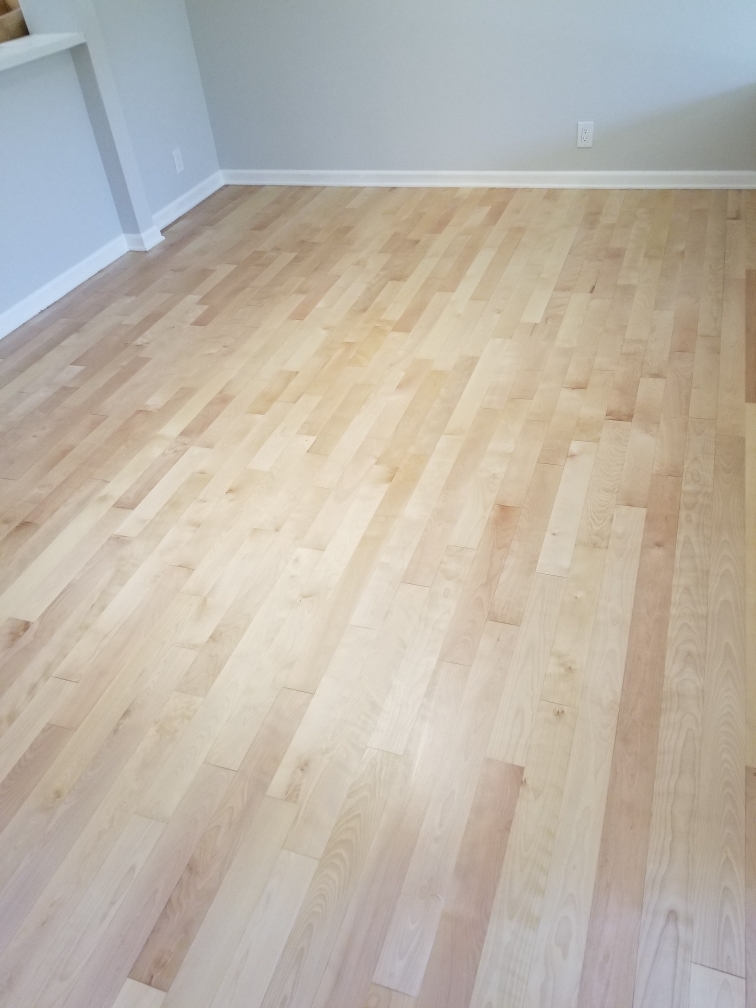
American Walnut (Janka: 1010)
Walnut is the ultimate luxury wood. It features deep, chocolatey browns and stunning grain patterns. The catch? It’s softer than Oak. If you have big dogs or wear high heels inside, Walnut will show the wear and tear much faster. We often install Walnut in master bedrooms or formal dining rooms where traffic is lighter.
- Best for: High-end aesthetics and areas with lower foot traffic.
The Exotics: Brazilian Cherry and Bamboo
At Rovin's Flooring Inc, we specialize in both domestic and exotic species. Exotics often offer colors and hardness levels you just can't find in North American woods.
Brazilian Cherry (Janka: 2350)
If you want a floor that is nearly "bulletproof," Brazilian Cherry (Jatoba) is a top contender. It is nearly twice as hard as Oak. It has a deep, reddish-orange hue that darkens and richens significantly when exposed to sunlight over time.
- Best for: Intense foot traffic and homeowners who love deep, warm colors.
Bamboo (Janka: Varies, 1200–3000+)
While technically a grass, Bamboo is a popular "wood" alternative. High-quality strand-woven bamboo can be incredibly hard. It offers a unique, linear aesthetic and is often cited for its sustainability. However, be careful with cheap bamboo; it can be sensitive to Chicago’s dry winters.
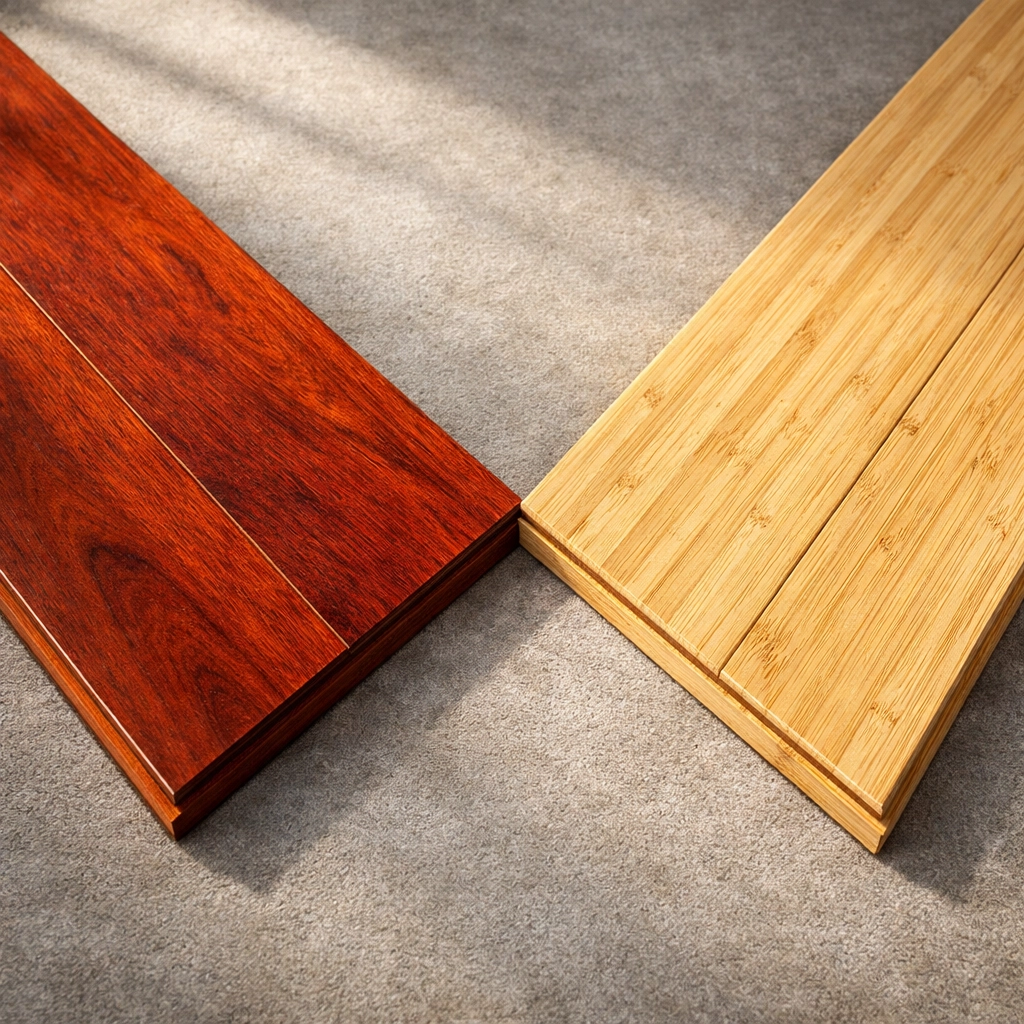
(Caption: A comparison showing the rich, dark tones of Brazilian Cherry alongside the unique grain of strand-woven Bamboo.)
The Tough Guys: Hickory and Ash
For those who live in the North or West suburbs with active lifestyles, hiking boots, and pets, you need something that can take a beating.
Hickory (Janka: 1820)
Hickory is the hardest domestic wood we commonly install. it has a lot of "character": meaning you’ll see a wide variety of colors (from tan to dark brown) and knots within the same floor. It’s perfect for a rustic or "farmhouse" style.
- Best for: Extreme durability and high-contrast visual interest.
Ash (Janka: 1320)
Ash looks very similar to Oak but is actually more flexible. This flexibility makes it great for absorbing shock. It has a beautiful light color and takes stains very well. Unfortunately, due to the Emerald Ash Borer, it’s becoming harder to source, but it remains a fantastic choice if you can get it.
Specialty Species We Offer
While the woods above cover 80% of installations, we also work with:
- Birch: Similar to Maple but with more color variation.
- American Cherry: Very soft (Janka 950) but has a beautiful red glow.
- Teak: Excellent moisture resistance, often used in bathrooms or luxury entries.
- Pine: Very soft, used mostly for historical restorations or to achieve a specific "reclaimed" look.
If you are curious about a specific species not listed here, contact us: chances are, we’ve installed it or refinished it.
Unfinished vs. Prefinished: Does Species Matter?
When choosing your species, you also have to decide between unfinished (sanded and stained on-site) and prefinished (finished at the factory).
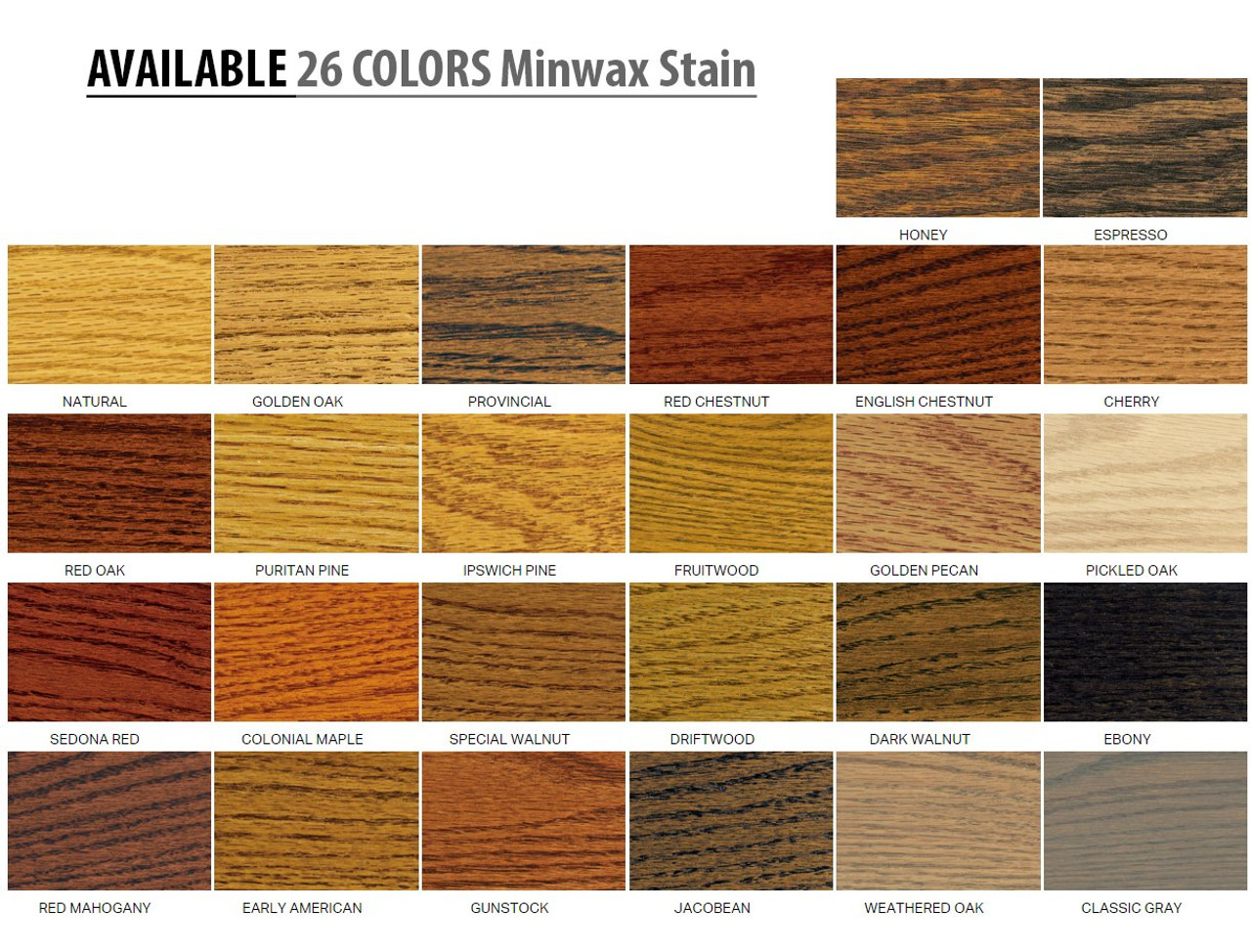
- Unfinished: This allows for a completely flat, seamless surface. It also gives you total control over the stain color. We can use a Minwax Stain color chart to help you find the exact shade that matches your decor. This is our specialty at Rovin's Flooring Inc.
- Prefinished: Usually comes with a "micro-bevel" between planks. It’s faster to install but doesn't allow for the same level of customization in the long run.
How Sunlight Impacts Your Choice
Chicago gets plenty of sun, especially in homes with large, west-facing windows. Some species, like Cherry and Walnut, are "photosensitive." They will change color over the first six months of being installed. If you have a room with a lot of natural light, we need to discuss how your chosen species will age so you aren't surprised when your floor looks different a year later.
Final Thoughts: Finding Your Perfect Match
Choosing a wood species is a balance of three things: How it looks, how it wears, and how it handles the air.
If you want the safest bet for a Chicago home, White Oak or Hickory are hard to beat. If you want something that makes a statement, Brazilian Cherry or Walnut are showstoppers.
At Rovin's Flooring Inc, we don't just sell you a floor; we help you choose a material that will last for decades. Whether you are looking for a commercial installation or a residential refresh, our expertise across 20+ species ensures you get the right advice.
Ready to see these species in person?
We serve Chicago and a 60-mile radius (primarily North and West). Contact us today for a consultation, and let’s find the perfect species for your lifestyle and your home.