If you live in the Chicago area, you know that our weather is anything but predictable. We experience everything from sweltering, humid summers to bone-chilling, dry winters where the "Polar Vortex" becomes a household term. While we can retreat indoors and crank up the heat, our homes: and specifically our floors: don't have it quite so easy.
For homeowners considering hardwood flooring installation in Chicago, the local climate is the single most important factor to consider. The drastic swings in temperature and humidity can wreak havoc on natural materials. If you choose the wrong wood species, you might find yourself dealing with significant gaps, cupping, or even structural cracking by the time February rolls around.
At Rovin's Flooring Inc, we’ve spent years servicing Chicago and the surrounding suburbs: extending 60 miles North and West into areas like Arlington Heights, Elgin, and Waukegan. We’ve seen firsthand which floors stand the test of time and which ones succumb to the "Big Freeze." Here is everything you need to know about selecting the best hardwood floor species for Chicago winters.
The Science of Wood Stability: Why Chicago is Unique
Wood is a hygroscopic material, meaning it acts like a sponge. It absorbs moisture when the air is humid and releases it when the air is dry. In Chicago, summer humidity can easily push indoor levels above 60%, while winter heating systems can drop indoor humidity to as low as 15%.
This cycle causes wood to expand and contract. "Dimensional stability" refers to how much a particular wood species moves during these cycles. A "stable" wood moves very little, while an "unstable" wood will shrink significantly in the winter, leaving unsightly gaps between the planks.
Before you choose a floor based solely on color, you must consider its Janka hardness rating and its stability coefficient. Choosing a species that can handle temperature fluctuations is the key to a floor that looks as good in ten years as it does on day one.
Top 3 Hardwood Species for the Chicago Climate
When it comes to chicago wood floors, three domestic species consistently outperform the rest: Hickory, White Oak, and Maple.
1. Hickory: The Durability Champion
Hickory is the powerhouse of North American hardwoods. With a Janka hardness rating of 1,820, it is significantly harder than Oak or Maple. This density makes it incredibly resistant to dents and scratches, but it also provides excellent dimensional stability when properly kiln-dried and acclimated.
Because Hickory has a very busy, character-rich grain, any minor seasonal movement is often invisible to the naked eye. If a small gap opens up in mid-January, the natural variations in the wood camouflage it perfectly. For active households in the North and West suburbs with kids or pets, Hickory is often our top recommendation.
2. White Oak: The Professional’s Choice
While Red Oak is a classic, White Oak is often the superior choice for Chicago winters. White Oak has a Janka rating of 1,360, making it slightly harder than its Red cousin. More importantly, White Oak is "closed-grained." Its pores are plugged with a substance called tyloses, which makes the wood highly resistant to moisture and decay.
This cellular structure makes White Oak exceptionally stable. It doesn't react as violently to the dry air produced by Chicago furnaces. Additionally, White Oak takes stains beautifully, allowing for a wide range of aesthetic options, from modern grays to deep walnuts.
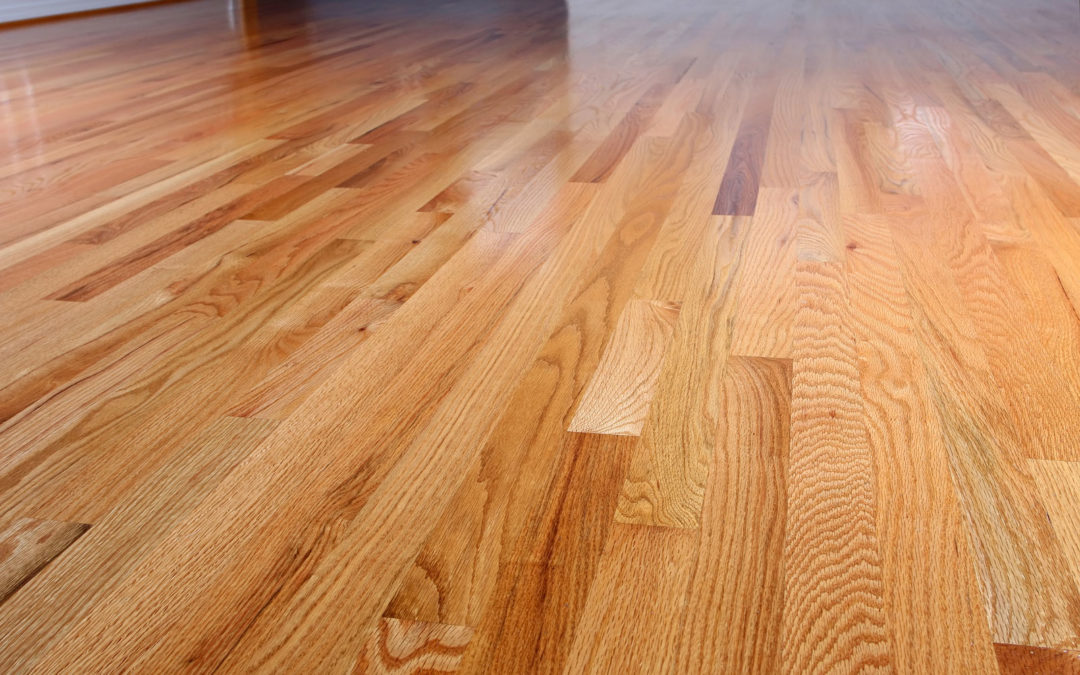
Above: A professional application of finish on Oak flooring. While Red Oak (shown) is common, White Oak offers even greater stability for extreme winters.
3. Hard Maple: Clean and Resilient
Maple is a favorite for modern Chicago homes because of its light color and subtle grain. With a Janka rating of 1,450, it is harder than Oak. Maple is very dense, which helps it resist the wear and tear of winter boots and salt tracked in from the driveway.
However, Maple is slightly more sensitive to humidity than Oak. If you choose Maple, we always recommend maintaining a consistent indoor climate. When installed correctly by a professional team familiar with the local environment, Maple provides a stunning, durable surface that brightens up those dark winter months.
Engineered Hardwood: The Stability "Cheat Code"
If you love the look of a species that isn't naturally stable, or if you are installing floors over a concrete subfloor or radiant heating system, engineered hardwood is the answer.
Unlike solid hardwood, which is one piece of wood from top to bottom, engineered hardwood is constructed in layers. The top is a real wood veneer (the "wear layer"), but the core consists of multiple layers of plywood or HDF stacked in a cross-grain configuration.
This cross-grain construction counteracts the natural tendency of wood to expand and contract. When the top layer wants to shrink, the layers underneath hold it in place. For many homeowners looking for hardwood flooring installation in Chicago, engineered wood offers the best peace of mind against winter gaps.
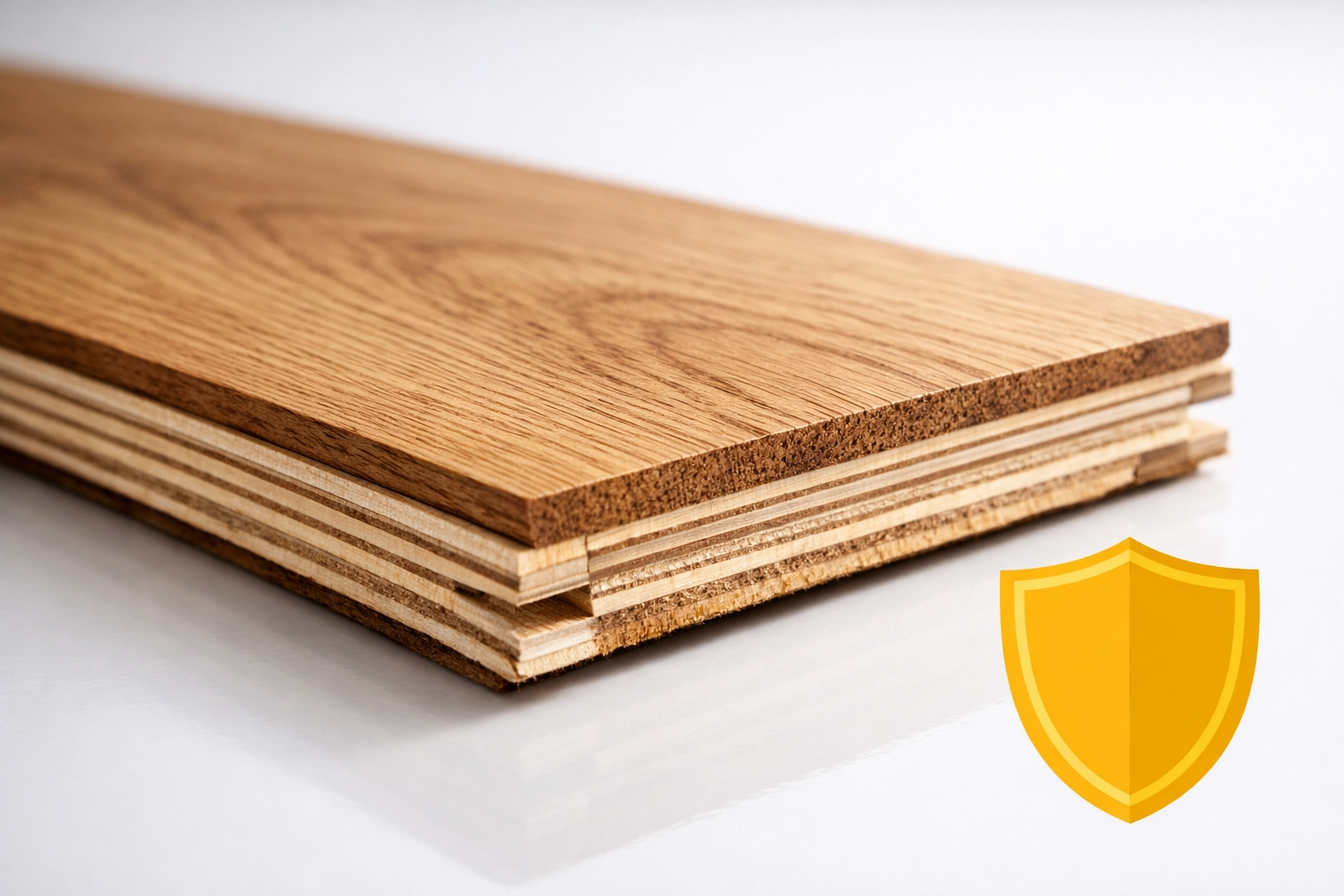
Caption: A diagram showing the cross-layered construction of engineered hardwood, illustrating why it resists warping and gapping better than solid wood.
Species to Approach with Caution
Not all woods are cut out for the Midwest. We generally advise Chicago homeowners to be cautious with:
- American Cherry and Walnut: While beautiful, these are softer woods (Janka ratings around 950–1010). They are more prone to denting and can show significant movement during seasonal shifts.
- Exotic Woods (like Brazilian Cherry or Ipe): These are incredibly hard but often come from tropical environments. Transitioning to a dry Chicago winter can cause them to "check" or crack because the air is simply too dry for what the wood is used to.
- Pine: Often used in older homes, Pine is very soft and expands/contracts significantly. It requires a lot of maintenance to keep it looking sharp.
The Importance of Professional Installation and Acclimatization
Even the most stable wood species will fail if it isn't installed correctly. At Rovin's Flooring Inc, we emphasize a strict acclimatization process. We don't just drop the wood off and start nailing it down. The wood needs to sit in your home: with the HVAC system running: until its moisture content matches the environment of the house.
During a hardwood flooring installation in Chicago, we also factor in "expansion gaps" around the perimeter of the room. This allows the floor to breathe. We often use professional tools to ensure subfloor preparation is perfect, as an uneven subfloor can exacerbate winter creaking and gapping.
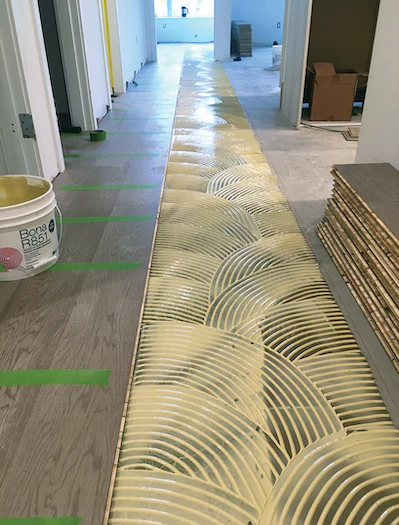
Above: Professional installation techniques, such as proper adhesive spread and alignment, are critical for ensuring long-term stability in changing climates.
Winter Maintenance Tips for Your Chicago Floors
Once your floor is installed, your job is to protect your investment. Chicago winters bring two main enemies: dry air and road salt.
- Use a Humidifier: Aim to keep your home between 35% and 55% humidity. This keeps the wood "plump" and prevents gaps from forming.
- Matting is Key: Place heavy-duty mats at every entrance. Road salt is abrasive and can eat through your floor's finish if left to sit.
- Avoid Excessive Water: When cleaning up melted snow, use a damp (not soaking) microfiber mop. Standing water can seep into the wood grain, especially during the winter when the wood is more likely to have microscopic gaps.
If you ever experience a major leak or burst pipe during a freeze, remember that we offer specialized water extraction services to save your hardwood before the damage becomes permanent.
Conclusion: Choosing the Right Foundation
Chicago winters are tough, but your floors can be tougher. By selecting a stable species like Hickory or White Oak: or opting for the structural advantages of engineered hardwood: you can enjoy the beauty of natural wood without the headache of seasonal damage.
Whether you are in the heart of the city or out in the Western suburbs, Rovin's Flooring Inc is here to help you navigate the complexities of material selection. We understand the Chicago climate because we live and work in it every day.
Ready to upgrade your home with floors built to last? Contact us today for an estimate and let’s find the perfect species for your space.