
Hardwood flooring is more than just a home improvement project; it’s an investment in the soul of your Chicago home. Whether you’re restoring a vintage bungalow in Evanston, updating a sleek condo in Arlington Heights, or building a new family home in Schaumburg, the right hardwood floors in Chicago bring a level of warmth, durability, and value that few other materials can match.
However, the Windy City presents a unique set of challenges. Between our humid, sweltering summers and the bone-dry, sub-zero winters, your floors go through a lot. Getting a "perfect result" isn't just about picking a pretty color: it’s about understanding the science of wood in our local climate. At Rovin's Flooring Inc, we’ve spent years mastering the nuances of the Chicago region, serving homeowners across the city and throughout the North and West suburbs.
In this guide, we’ll walk you through everything you need to know about professional wood floor installation, from climate control to the specialized world of engineered hardwood floor repair.
1. The Chicago Climate Challenge: Managing Humidity
If you live in the Chicago area, you know the routine: your windows stick in July, and you see gaps in your trim by January. Wood is a hygroscopic material, meaning it absorbs and releases moisture based on the environment.
For a successful wood floor installation in Chicago, IL, humidity control is non-negotiable.
- The Ideal Range: You should aim to keep your home's relative humidity (RH) between 35% and 45% year-round.
- The Winter Dryness: Forced-air heating and radiators dry out the air, causing wood planks to shrink and create seasonal gaps.
- The Summer Humidity: Without proper AC or dehumidification, boards can expand, leading to "cupping" (where the edges are higher than the center).
Before we even bring the wood into your home, we ensure the environment is stabilized. We recommend running your HVAC system for at least five days prior to delivery to ensure the wood acclimates to "lived-in" conditions, not just a drafty construction site.
2. Choosing the Right Material: Solid vs. Engineered
One of the first decisions you'll face is choosing between solid hardwood and engineered wood. Both are excellent choices, but they serve different purposes depending on where they are being installed in your home.
Solid Hardwood
Solid wood is a single, thick piece of timber from top to bottom. It’s the gold standard for longevity because it can be sanded and refinished many times over decades. It’s perfect for the main levels of your home where you have a plywood or OSB subfloor. We specialize in everything from classic Red Oak to exotic species like Brazilian Cherry.
Engineered Hardwood
Engineered flooring consists of a real wood "wear layer" on top of high-quality plywood layers. This construction makes it much more dimensionally stable: meaning it moves less than solid wood when the Chicago humidity swings.
- Where to use it: It’s the preferred choice for installation over concrete slabs or in basements.
- Installation: It can be glued down, stapled, or even floated.
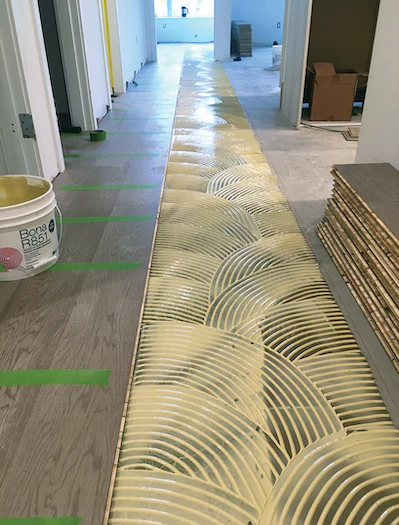
When it comes to engineered hardwood floor repair, the process is a bit more surgical. Unlike solid wood, you can't sand engineered floors indefinitely. If a board is deeply gouged or water-damaged, we often perform a localized replacement, carefully removing the damaged plank and integrating a new one to match the existing floor seamlessly.
3. The Importance of Professional Preparation
A beautiful floor is only as good as what’s underneath it. At Rovin's Flooring, we spend a significant amount of time on subfloor preparation.
Moisture Testing
We don't guess: we measure. We use professional-grade moisture meters to check both the subfloor and the new hardwood. In Chicago, the moisture content of the flooring should typically be within 2% to 4% of the subfloor's moisture level before the first nail is driven or the first drop of glue is spread.

Acclimation
"Acclimation" is the process of letting the wood sit in your home so it can reach equilibrium with the indoor environment. We don't just drop the boxes and start working; the wood needs to "breathe" in the rooms where it will live. Skipping this step is the #1 cause of floor failure in the Midwest.
4. The Installation Roadmap: Step-by-Step
Once the site is prepped and the wood is acclimated, the real magic happens.
- Layout & Undercutting: We start by snapping lines to ensure the floor runs perfectly straight. We also undercut door casings so the wood can slide underneath, providing a clean, professional look without clunky trim.
- The First Rows: Whether we are using the nail-down method for solid oak or a glue-down approach for engineered planks, the first few rows are critical for setting the "square" of the entire room.
- Staggering Joints: To ensure structural integrity and visual beauty, we stagger the end joints of the boards by at least 6 to 8 inches. This prevents "H-joints" or "lightning bolt" patterns that look amateurish.
- Expansion Gaps: We always leave a small gap around the perimeter of the room. This is hidden by your baseboards and shoe molding, but it gives the wood the space it needs to expand during a humid Chicago August without buckling.
5. Sanding, Staining, and Finishing
If you’ve chosen unfinished hardwood, the installation is just the beginning. Our sanding and refinishing process is what truly brings the wood to life.
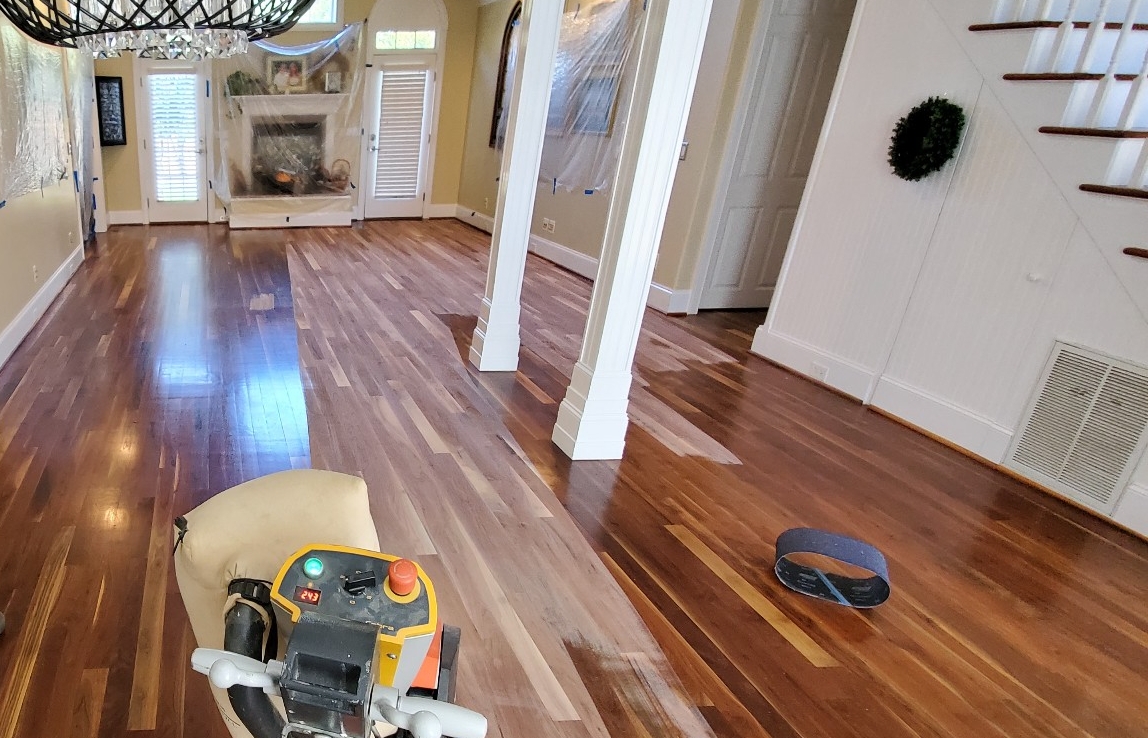
We utilize technologically advanced equipment: including dustless sanding systems: to keep your home clean during the process.
- Staining: You can choose from over 20 unique colors, ranging from trendy grays and whites to deep, classic walnuts.
- Finishing: We offer both oil-based and water-based finishes. Water-based finishes are incredibly popular in Chicago right now because they dry faster, have lower odors (VOCs), and won't "yellow" over time, keeping your floors looking fresh for years.
6. Maintenance and Long-Term Care
Once your hardwood floors in Chicago are installed, a little maintenance goes a long way.
- Cleaning: Use only manufacturer-recommended cleaners. Never use steam mops or excessive water, as moisture is the enemy of wood.
- Protection: Use felt pads on all furniture legs and place rugs at entryways to catch Chicago’s winter salt and grit.
- Repairs: If you notice scratches or wear, don't wait for the wood to be bare. A simple "buff and recoat" can save you from a full sanding project later. For homes with engineered products, keep our number handy for specialized engineered hardwood floor repair to handle any localized board damage.
Why Choose Rovin's Flooring Inc?
Choosing a flooring contractor is a big decision. You need a team that knows the local architecture: from the joist spacing in a 1920s bungalow to the sound-dampening requirements of a modern high-rise.
Rovin's Flooring Inc provides comprehensive services including:
- Expert installation of domestic and exotic species.
- Dustless sanding and refinishing.
- Specialized staircase and trim work.
- Water and fire damage repairs.
We proudly serve Chicago and its surrounding North and West suburbs, bringing professional craftsmanship and a casual, customer-first attitude to every jobsite.
Ready to transform your home? Get a free estimate today and let Chicago's hardwood specialists help you achieve the perfect result.