Installing hardwood floors in a Chicago home isn't the same as doing it in Phoenix or Miami. Between our brutal winters, humidity swings, and the fact that half the homes here were built before 1950, there are plenty of opportunities for things to go sideways.
After years of fixing botched installations across the North and West suburbs, from Evanston to Naperville and everywhere in between, we've seen the same mistakes pop up again and again. The good news? They're all preventable when you work with someone who knows what they're doing.
Here are the seven biggest hardwood installation mistakes we see in the Chicago area, and how professional contractors actually fix them.
1. Skipping Proper Subfloor Preparation
The Mistake: Too many installers treat the subfloor like it's just "good enough" and slap hardwood right on top. They ignore debris, skip moisture testing, and don't bother checking if the surface is actually level. In Chicago's older homes, especially those beautiful brick bungalows and two-flats, subfloors can be warped, uneven, or still holding moisture from decades of use.
How We Fix It: Before any plank goes down, we're checking moisture content (should be between 10-12% in plywood), cleaning every speck of old adhesive or drywall compound, and making sure the surface is flat. If there's any sign of moisture, common in basements or ground-level rooms, we address it first. No exceptions. A bad subfloor will ruin even the most expensive hardwood you can buy.
2. Winging the Layout Without a Plan
The Mistake: This is where you end up with those awkward "stair-step" or "lightning bolt" patterns where the seams line up row after row. It screams amateur hour. Some installers just start at one wall and hope for the best, especially in rooms that aren't perfectly square (spoiler: most Chicago homes have at least one room that's slightly off).
How We Fix It: Professional installation means measuring multiple times, doing the math, and creating an actual layout plan before the first board is cut. We make sure end joints are spaced at least three times the board width apart, and we account for those quirky room angles that come with older construction. The result? A floor that looks intentional, not random.
3. Using Too Few (or Too Many) Fasteners
The Mistake: Cutting corners on nails or staples leads to loose boards, gaps that open up over time, and that awful squeaking sound when you walk across the floor. On the flip side, over-fastening can make the floor too rigid, causing it to crack when humidity levels change, which they absolutely will in Chicago.
How We Fix It: We follow manufacturer specifications exactly. Every board gets the right number of fasteners in the right spots. It's not complicated, but it requires patience and attention to detail. This is especially important with Chicago's seasonal humidity swings, floors need just enough room to expand and contract naturally without going haywire.
4. Ignoring Chicago's Humidity Roller Coaster
The Mistake: Installing hardwood without checking moisture content or room humidity is like building a house on sand. Wood is hygroscopic, it absorbs and releases moisture based on the environment. In Chicago, we go from bone-dry winters (thanks to forced-air heating) to humid summers. If your installer doesn't account for this, you'll see cupping, crowning, or gaps that could fit a nickel.
How We Fix It: Before installation, we verify that room humidity is between 35-50% and that the hardwood itself has 7-9% moisture content. We also let the wood acclimate in the room for several days before installation. It sounds simple, but you'd be shocked how many installers skip this step, especially during busy seasons when they're rushing between jobs.
Chicago homeowners dealing with extreme winter conditions should also check out our guide on protecting floors from winter salt and slush.
5. Putting Solid Hardwood Where It Doesn't Belong
The Mistake: Solid hardwood in a basement? In a bathroom? Near a laundry room? Hard no. Yet we get calls all the time from homeowners whose floors are warping, cupping, or falling apart because someone installed the wrong material in the wrong place. Solid hardwood and moisture are enemies.
How We Fix It: We recommend engineered hardwood, luxury vinyl plank, or tile for below-grade spaces and moisture-prone areas. Engineered hardwood is especially popular in Chicago because it handles humidity changes better than solid wood while still giving you that authentic hardwood look. For main living areas away from water sources, solid hardwood is still king: but location matters.
6. Poor Installation Technique and Misalignment
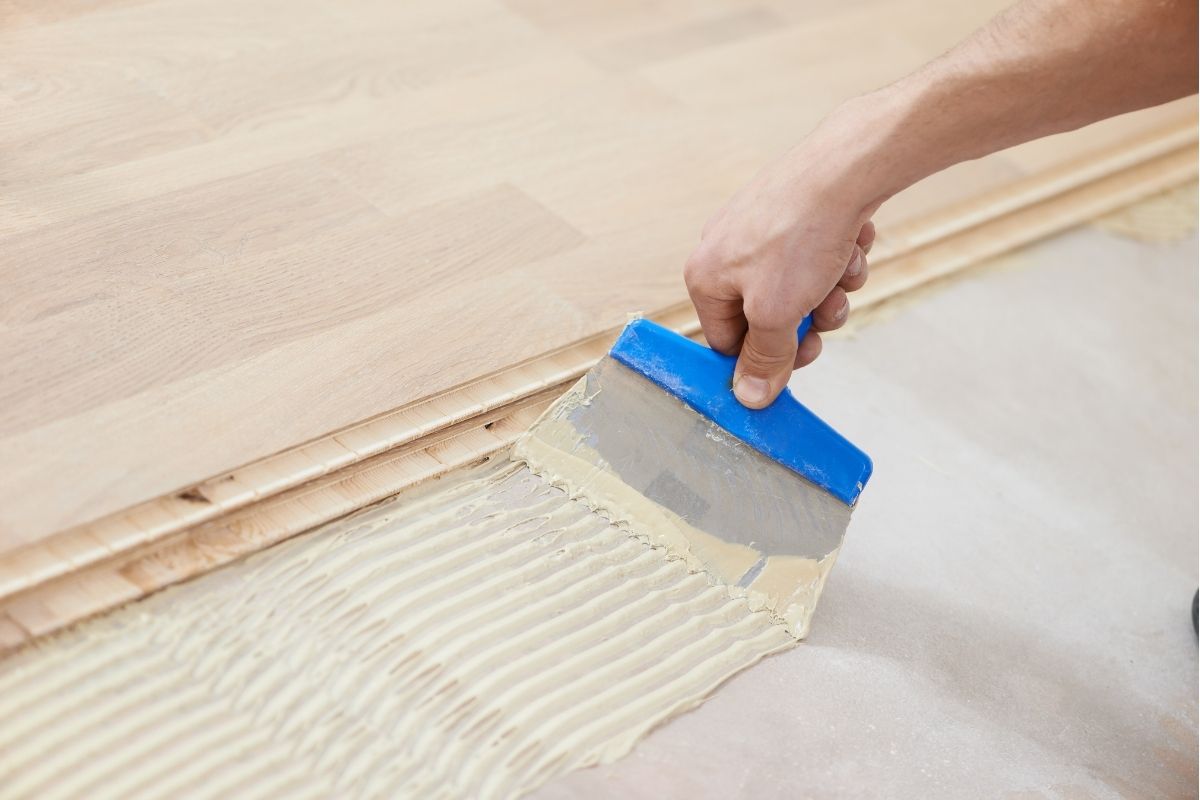
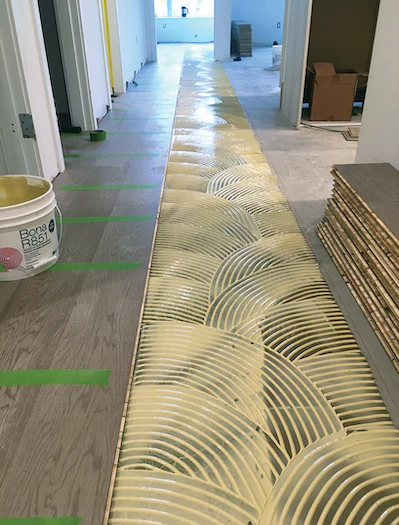
The Mistake: Crooked lines, uneven planks, visible adhesive squeeze-out, and seams that don't line up properly. Sometimes it's inexperience. Sometimes it's rushing. Either way, it ruins an otherwise beautiful floor. Even premium materials can't save a sloppy installation.
How We Fix It: Professional installers use the right tools: tapping blocks, spacers, proper saws: and they take their time. We verify measurements before cutting, use manufacturer-approved installation methods (nail-down, glue-down, or floating depending on the product), and make sure every plank is level with its neighbor. The difference between a good installation and a great one is often just patience and attention to detail.
Throughout the Chicago area and up to 60 miles North and West, we see this mistake constantly in homes where previous owners tried DIY installation or hired the lowest bidder.
7. Tossing the Manufacturer Instructions
The Mistake: Every hardwood product comes with specific installation guidelines: adhesive types, expansion gap requirements, stagger patterns, environmental conditions. Ignoring these instructions can void your warranty and lead to serious problems down the road. Yet plenty of installers think they know better or just don't bother reading them.
How We Fix It: We review manufacturer specs before every job. Different products have different requirements, and following them precisely protects both the floor and your investment. This includes using the correct adhesive for glue-down installations, maintaining proper expansion gaps around the perimeter, and staggering planks according to the manufacturer's recommendations. It's not rocket science: it's just doing the job right.
The Bottom Line
Hardwood floor installation in Chicago isn't just about laying down pretty planks. It's about understanding how wood behaves in our climate, respecting the quirks of older construction, and having the patience to do every step correctly.
Whether you're in a vintage Chicago bungalow, a newer build in the Northwest suburbs, or anywhere within 60 miles North and West of the city, these mistakes are completely avoidable when you work with experienced professionals who actually care about the outcome.
At Rovin's Flooring Inc, we've been fixing (and preventing) these mistakes for years. If you're considering hardwood installation or dealing with problems from a previous installation, reach out to us for an honest assessment.
Your floors are an investment. Make sure they're done right the first time.