Hiring a hardwood flooring contractor in Chicago shouldn't feel like playing Russian roulette with your biggest investment. Yet every year, thousands of homeowners across Chicago and the surrounding 60-mile radius: stretching North and West from the city: make costly mistakes that turn their dream floor project into a nightmare.
Whether you're refinishing century-old oak in a Lincoln Park bungalow or installing new engineered hardwood in a Naperville colonial, the wrong contractor can leave you with buckling boards, uneven finishes, and a hefty bill for do-overs. Here are the seven biggest mistakes Chicago homeowners make when hiring hardwood flooring contractors, plus the red flags that should send you running.
Mistake #1: Choosing Based Solely on Price
We get it: hardwood flooring projects aren't cheap. When you're comparing three estimates and one comes in at half the price of the others, it's tempting to grab your wallet and sign on the dotted line.
Here's the problem: being the cheapest contractor doesn't allow them to be the best or, most of the time, even mediocre in their performance. There's a reason that estimate is so low, and it usually involves cutting corners you'll regret later.
Low-ball estimates often mean:
- Rushed work with visible imperfections
- Cheap or inappropriate materials
- Inexperienced workers
- No proper insurance or licensing
- Projects that drag on for weeks
The Red Flag: If an estimate seems suspiciously low or "too good to be true," it probably is. Quality hardwood refinishing and installation in the Chicago area requires skilled labor, proper equipment, and time. You simply can't deliver professional results at rock-bottom prices.
What to Do Instead: Get at least three estimates and be wary of outliers on either end. The middle-range quote from a licensed, insured contractor with solid references is usually your sweet spot.

Mistake #2: Skipping the Verification Process
Here's a scenario that plays out too often: a contractor shows up with a friendly smile, impressive portfolio on their phone, and a competitive price. You shake hands and schedule the work. Then halfway through the project, a worker gets injured on your property, and you discover the contractor has no workers' compensation insurance. Guess who's liable?
The Red Flag: Any contractor who can't immediately provide proof of licensing, general liability insurance, and workers' compensation insurance should be crossed off your list. Same goes for contractors who get defensive or evasive when you ask for verification.
In Chicago, legitimate hardwood flooring contractors should have:
- Valid business license
- General liability insurance (minimum $1 million coverage)
- Workers' compensation insurance
- Ideally, NWFA (National Wood Flooring Association) certification
What to Do Instead: Ask for copies of all insurance certificates and verify them directly with the insurance company. Check online reviews, the Better Business Bureau, and ask for recent customer references. A professional contractor will have this information ready and expect you to ask for it.
Mistake #3: Paying the Full Amount Upfront
If a contractor demands full payment before starting work, that's a pretty good sign they can't be trusted to do quality work. Legitimate contractors understand that payment schedules protect both parties and demonstrate confidence in their work.
The Red Flag: Requests for 100% payment upfront, pressure to pay in cash only, or reluctance to provide a written payment schedule.
What to Do Instead: A standard payment structure for hardwood flooring projects typically looks like:
- 10-30% deposit to secure your spot and order materials
- 30-50% at project midpoint or upon substantial completion
- Final 20-40% after completion and your approval
Get this payment schedule in writing as part of your contract. Never pay the final installment until you've inspected the work and confirmed it meets the agreed-upon standards.
Mistake #4: Letting Contractors Skip Acclimation
Chicago's dramatic seasonal humidity swings: from bone-dry winter heating to sticky summer humidity: make acclimation absolutely critical for hardwood flooring. Yet many contractors skimp on this step to meet tight timelines or because they simply don't understand its importance.
Acclimation is the process of letting hardwood materials adjust to your home's specific humidity and temperature conditions before installation. Skip it, and you're setting yourself up for gaps, buckling, and cupping down the road.
The Red Flag: Contractors who want to install or refinish immediately without checking moisture levels or allowing proper acclimation time. Or those who can't explain why acclimation matters.
What to Do Instead:
- Unfinished hardwood typically needs 3-7 days of acclimation
- Engineered hardwood needs 1-3 days
- Your contractor should use a moisture meter to verify both the wood and subfloor are within acceptable ranges before beginning work
If a contractor promises to start immediately without these steps, find someone else. The few days of acclimation could save you thousands in repairs.

Mistake #5: Not Asking About Timeline Expectations
"How long will this take?" seems like a simple question, but the answer reveals a lot about a contractor's approach to quality. Hardwood floor refinishing isn't something you rush: proper sanding requires multiple passes with progressively finer grits, and finishes need adequate drying time between coats.
The Red Flag: Contractors who promise unrealistically fast completion ("We'll have you walking on your refinished floors tomorrow!") are setting you up for problems like:
- Drum streak marks from aggressive sanding
- Uneven coloring and blotchy stains
- Finish that peels or wears prematurely
- Visible sanding swirls
What to Do Instead: For a typical Chicago home refinishing project:
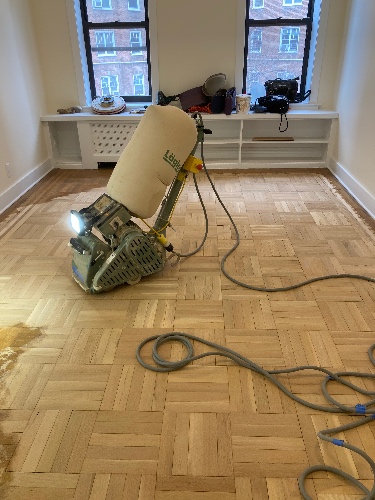
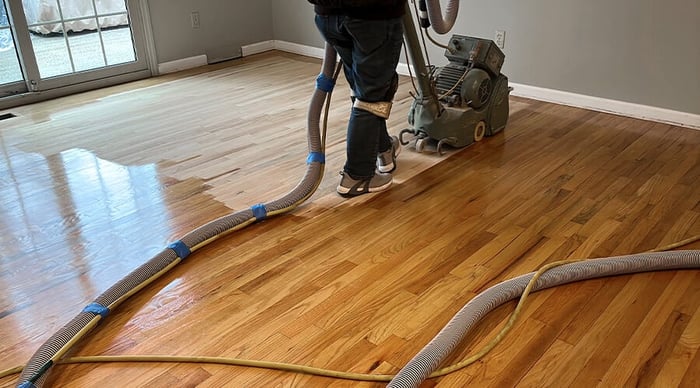
- Sanding and preparation: 1-2 days
- Staining (if applicable): 1 day plus drying time
- Water-based finish: 2-3 coats over 2-3 days
- Curing time before furniture: 1-3 days
A contractor who explains their timeline and the reasoning behind it: including proper drying times for our climate: demonstrates expertise and respect for the process.
Mistake #6: Failing to Research and Vet Thoroughly
In the age of online reviews and social media, there's no excuse for hiring a contractor blindly. Yet homeowners still get burned by failing to do basic due diligence.
During initial interviews, inexperienced or unprofessional contractors give out clues about their character and capabilities. Are they on time? Do they ask informed questions about your project? Can they clearly explain their process? Do they have a professional website and documented past projects?
The Red Flag:
- No online presence or reviews
- Only positive reviews (some negative reviews are normal; how they respond matters more)
- Can't provide local references
- Vague answers to technical questions
- High-pressure sales tactics
What to Do Instead:
- Check Google reviews, Yelp, and Angie's List
- Ask for 3-5 recent references and actually call them
- Request to see completed projects in person if possible
- Trust your gut: if something feels off, it probably is
- Verify they're familiar with Chicago-specific flooring challenges like salt damage and moisture issues
Mistake #7: Not Understanding Quality Standards
The biggest disadvantage you face as a homeowner is not knowing what constitutes quality workmanship. Without that knowledge, you can't spot problems until they become obvious disasters.
Common quality issues that homeowners miss include:
- Inadequate expansion gaps (hardwood needs 3/4" around perimeters to expand and contract)
- Poor edge work where floors meet walls
- Uneven sanding leaving waves or dips
- Dirt, bubbles, or debris in the finish
- Streaky or blotchy stain application
- Boards that squeak or feel spongy
The Red Flag: If you don't know what to look for, you won't spot substandard work until the contractor is long gone.
What to Do Instead:
- Educate yourself on proper installation and finishing techniques
- Review your contractor's written quality standards before signing
- Consider hiring a certified flooring inspector for large projects
- Ask your contractor to walk you through their quality checkpoints
- Don't sign off on final payment until you've inspected the work in good lighting
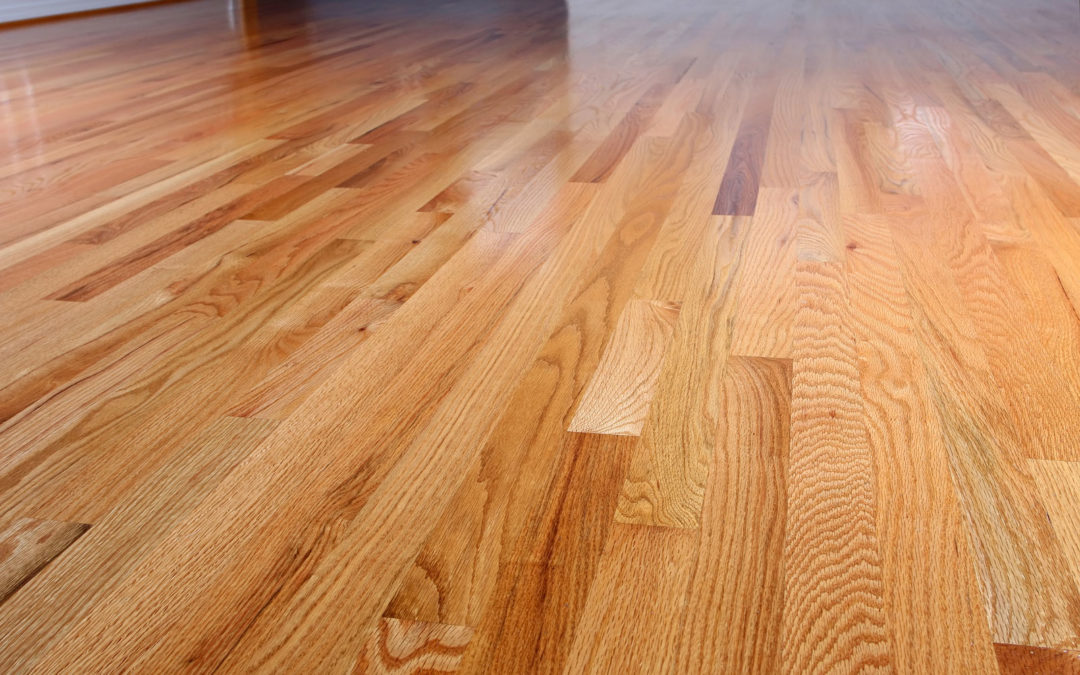
For refinishing projects, the finished surface should be smooth and uniform with no visible sanding marks, the stain color should be consistent, and the finish should be free of bubbles, brush marks, or debris.
Protecting Your Investment
Your hardwood floors are a major investment that should last decades with proper installation and care. Taking the time to hire the right contractor: one who is licensed, insured, experienced, and committed to quality: makes all the difference.
At Rovin's Flooring Inc, we serve Chicago and a 60-mile radius extending North and West with professional hardwood installation, refinishing, and repair services. We're NWFA certified, fully insured, and proud of our dustless refinishing process that respects your home and health.
Before you sign any contract, make sure you're protecting yourself from these seven common mistakes. Ask questions, verify credentials, check references, and never feel pressured to move faster than you're comfortable with. The right contractor will welcome your due diligence: because they have nothing to hide.
Your floors deserve better than the cheapest quote and a handshake. They deserve expertise, attention to detail, and a contractor who stands behind their work. Now you know exactly what to look for: and what to avoid.