
Winter refinishing projects in Chicago aren't impossible, but they do require extra attention to detail. Between our single-digit temperatures, bone-dry indoor air, and unpredictable furnace cycles, there are plenty of ways a hardwood floor refinishing job can go sideways from December through February.
We've been refinishing floors across Chicago and within a 60-mile radius (extending North and West) for years, and we've seen the same mistakes pop up every winter season. Here's what to watch out for, and how to get it right.
Mistake #1: Ignoring Indoor Humidity Levels
Chicago winters are brutal on humidity. When it's 15°F outside and your furnace is cranking, indoor humidity can plummet to 15-20%, sometimes even lower. That's desert-level dryness, and it's terrible news for hardwood refinishing.
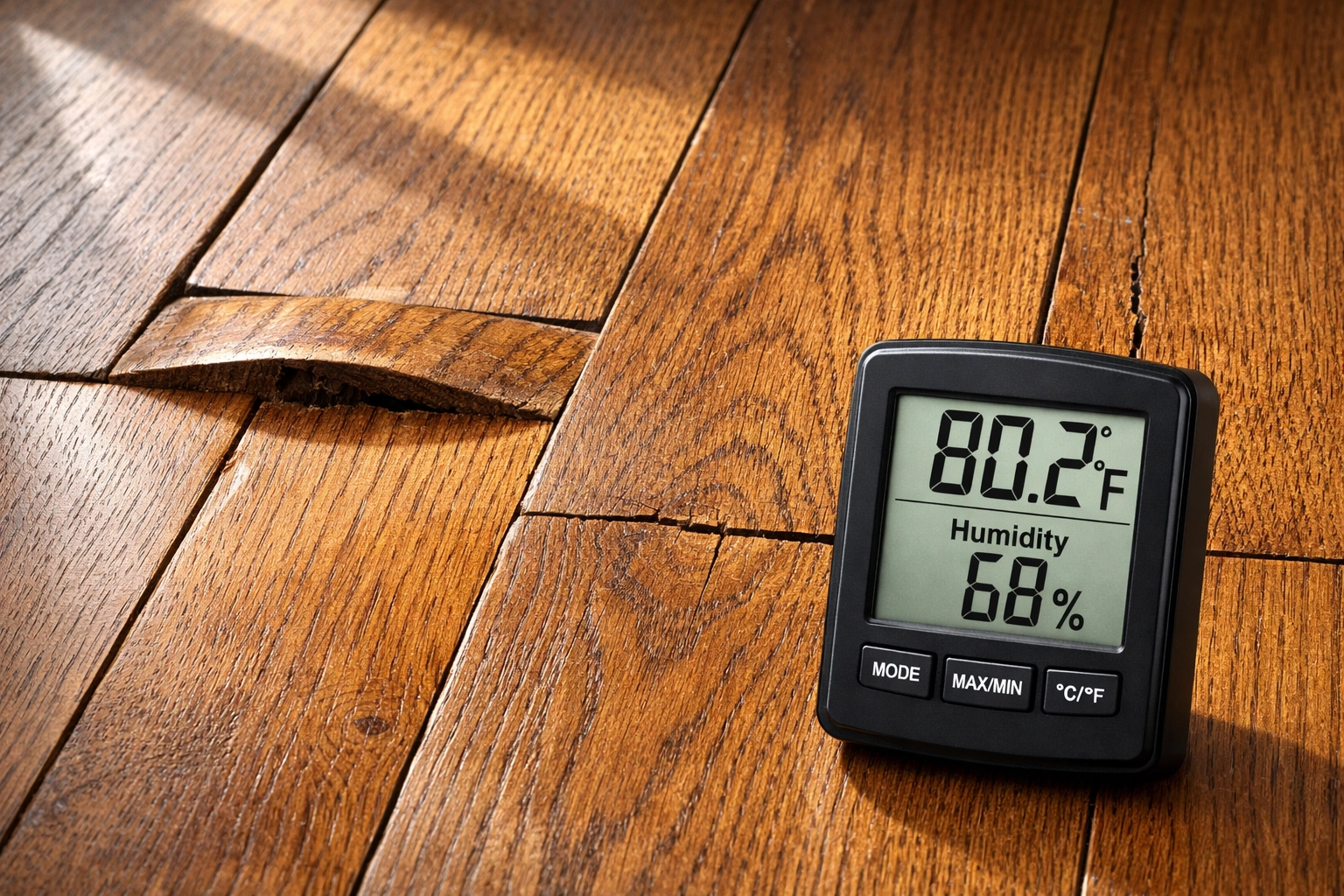
Here's why it matters: polyurethane and other finishes need proper humidity levels to cure correctly. Too dry, and your finish can cure too fast, leading to adhesion problems, cracking, or a chalky appearance. Wood itself also reacts to low humidity by contracting, which can create gaps between boards or cause existing cracks to widen.
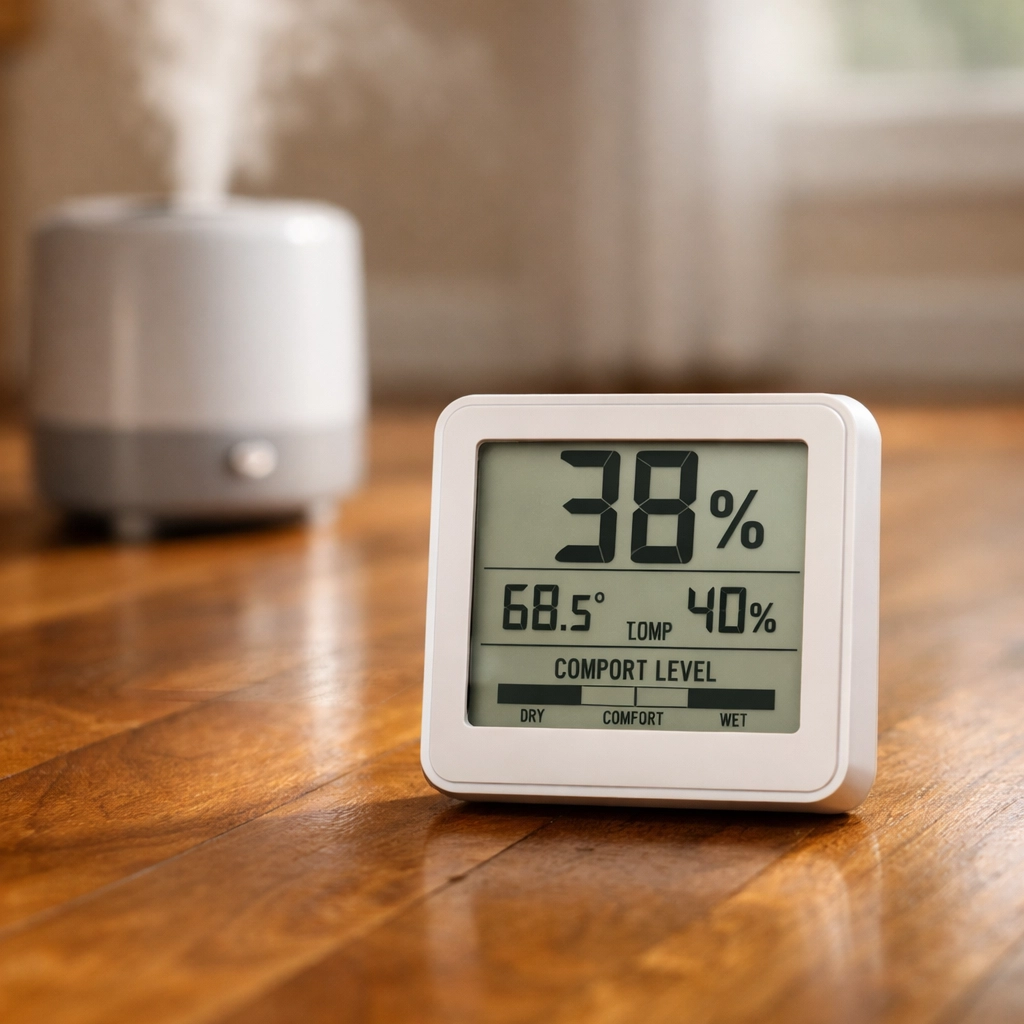
The fix: Keep indoor humidity between 35-55% during the entire refinishing process. Run a whole-house humidifier if you have one, or set up portable humidifiers in the work area. Check levels with a hygrometer (you can grab one for under $20). This isn't optional, it's the foundation of a successful winter refinishing job.
Mistake #2: Not Controlling Temperature Consistently
Your buddy tells you to "just keep it around 70 degrees," and you figure close enough is fine. Here's the problem: temperature swings mess with drying times and finish quality.
If your thermostat cycles between 65°F and 75°F throughout the day, common in older Chicago homes, your finish won't cure evenly. Cold spots near windows or exterior walls cure slower. Areas near heating vents cure faster. The result? An uneven finish that looks cloudy or feels tacky in spots.
The fix: Maintain a steady temperature between 65-75°F for the entire project, including the 48-72 hours after the final coat. Don't let your programmable thermostat drop overnight. Consider the temperature requirements seriously, especially if you're refinishing a room with lots of exterior walls or older windows.
Mistake #3: Rushing Drying Times Because "It's Been Long Enough"
This is huge. Cold, dry air changes everything about drying and curing times. Just because your floor feels dry to the touch doesn't mean it's ready for the next coat, or ready for furniture.
Water-based finishes typically dry faster, but even they need adequate time in winter conditions. Oil-based polyurethane, which many Chicago homeowners prefer for durability, can take significantly longer to cure when it's cold. We're talking days, not hours, between coats.
The fix: Add 25-50% more time to all manufacturer recommendations during winter. If the can says "recoat in 4 hours," give it 6. If it says "light traffic after 24 hours," wait 36. Your floors will thank you with a harder, more durable finish. Check out our guide on fast-drying hardwood finishes in Chicago for more details on realistic timelines.
Mistake #4: DIY Sanding Without Proper Dust Control
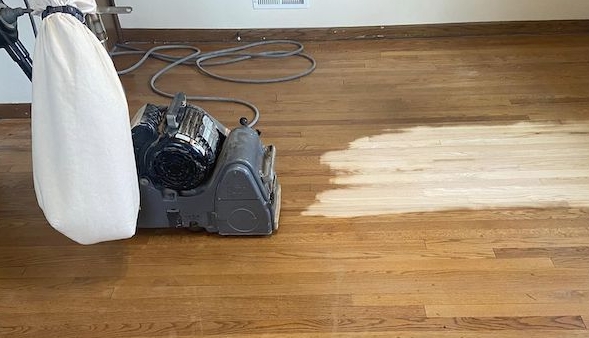
Look, we get it. Renting a drum sander and doing it yourself seems like a money-saver. But here's what happens in winter: you seal up your house to keep the heat in, which means all that dust has nowhere to go. It circulates through your HVAC system, settles on every surface, and infiltrates the finish while it's still wet.
Plus, those rental sanders are aggressive. One wrong move on frozen, contracted winter wood and you've got gouges that even professionals struggle to fix.
The fix: Invest in professional dustless refinishing. Our dustless systems capture 99% of the dust at the source, which is especially critical in winter when you can't open windows for ventilation. It's worth it for your lungs, your HVAC system, and the quality of the final finish.
Mistake #5: Skipping Material Acclimation Time
You pick up your stain and polyurethane from the store where they've been sitting in a 40°F warehouse. You bring them straight home and start applying. Bad move.
Cold finishing products don't flow properly. They're thick, don't level well, and can trap bubbles. The chemical reactions that make them cure properly also don't work right when the product is cold.
The fix: Bring all materials inside at least 48 hours before you plan to use them. Store them in the room where you'll be working so they reach the proper application temperature. Yes, this means planning ahead. No, you can't skip it.
Mistake #6: Not Properly Sealing the Work Area
Winter means your heat is running constantly. That means return air vents are pulling air (and dust, and fumes) from your refinishing project and distributing them throughout your house. It also means temperature and humidity variations between rooms can affect your finish.
Many DIYers throw up a sheet of plastic and call it good. Then they wonder why their finish has debris in it or why it cured unevenly.
The fix: Properly seal the work area with heavy-duty plastic and high-quality tape. Cover heat registers and return air vents. Create an airlock entry if possible. Control the environment inside that sealed space with dedicated heating and humidification equipment. This level of preparation separates amateur jobs from professional results.
Mistake #7: Choosing the Wrong Finish for Winter Conditions
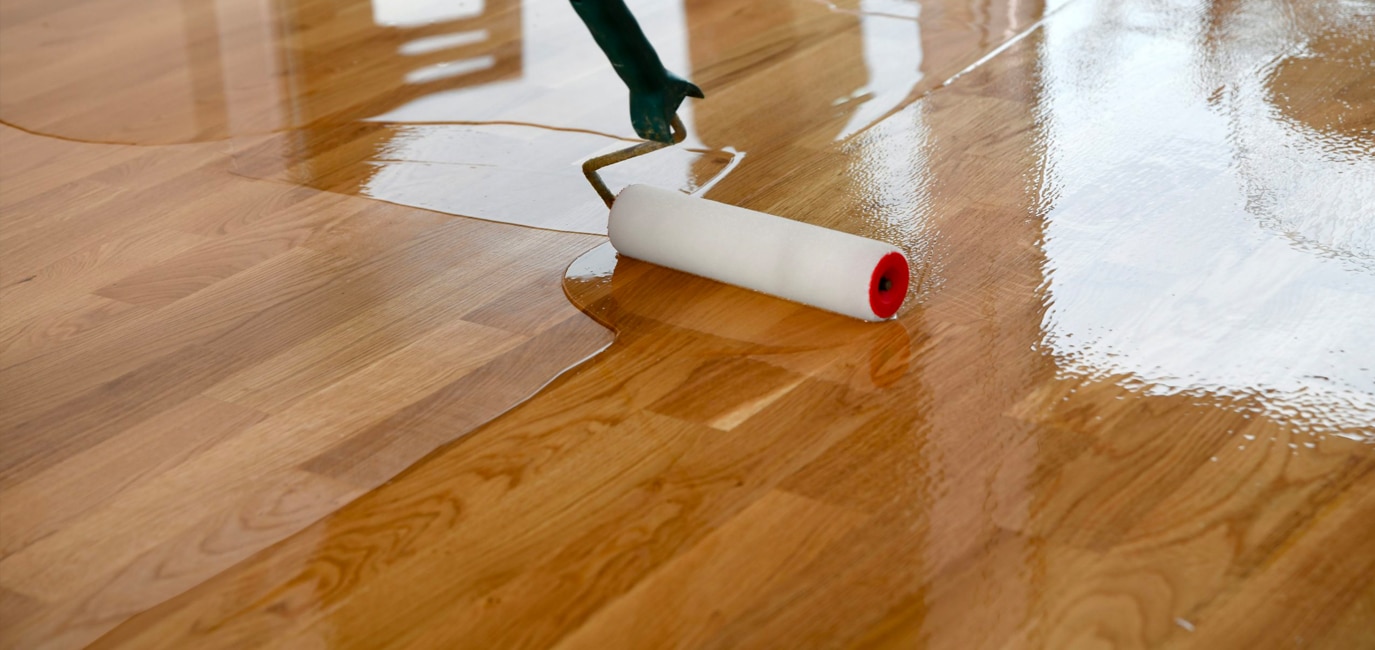
Not all polyurethane products perform the same in cold, dry conditions. Some water-based finishes, while environmentally friendlier and lower in VOCs, can be finicky in winter's low humidity. They may not flow or level as well, leading to lap marks or streaking.
On the flip side, oil-based finishes are more forgiving with temperature and humidity variations, but they take longer to cure and produce strong fumes: which is a bigger problem when you can't ventilate properly in winter.
The fix: Choose professional-grade products specifically designed for challenging conditions. At Rovin's Flooring Inc, we use high-quality water-based coatings that we know perform reliably in Chicago winters because we've refined our application techniques over years of experience. If you're going DIY, talk to a flooring specialist (not just the person at the big box store) about products that work well in your specific conditions.
The Bottom Line: Winter Refinishing Requires Extra Care
Refinishing hardwood floors in Chicago during winter isn't inherently problematic: it just requires more attention to environmental factors. The biggest issues all trace back to humidity control, temperature consistency, and patience with drying times.
If you're considering a winter refinishing project, be honest about whether you can control these variables. Professional refinishing services already have the equipment, knowledge, and experience to handle Chicago's challenging winter conditions. We work throughout the cold months across Chicago and extending North and West up to 60 miles, and we've developed proven processes for delivering consistent results year-round.
Your floors are a major investment. Whether it's the middle of January or the heat of July, they deserve to be refinished correctly. If you're unsure about tackling a winter project yourself, reach out to us at Rovin's Flooring Inc. We're happy to discuss your specific situation and help you decide on the best timing and approach.
For more insights on protecting your investment, check out our guide on winter floor maintenance, or learn more about choosing the right finish for your lifestyle.