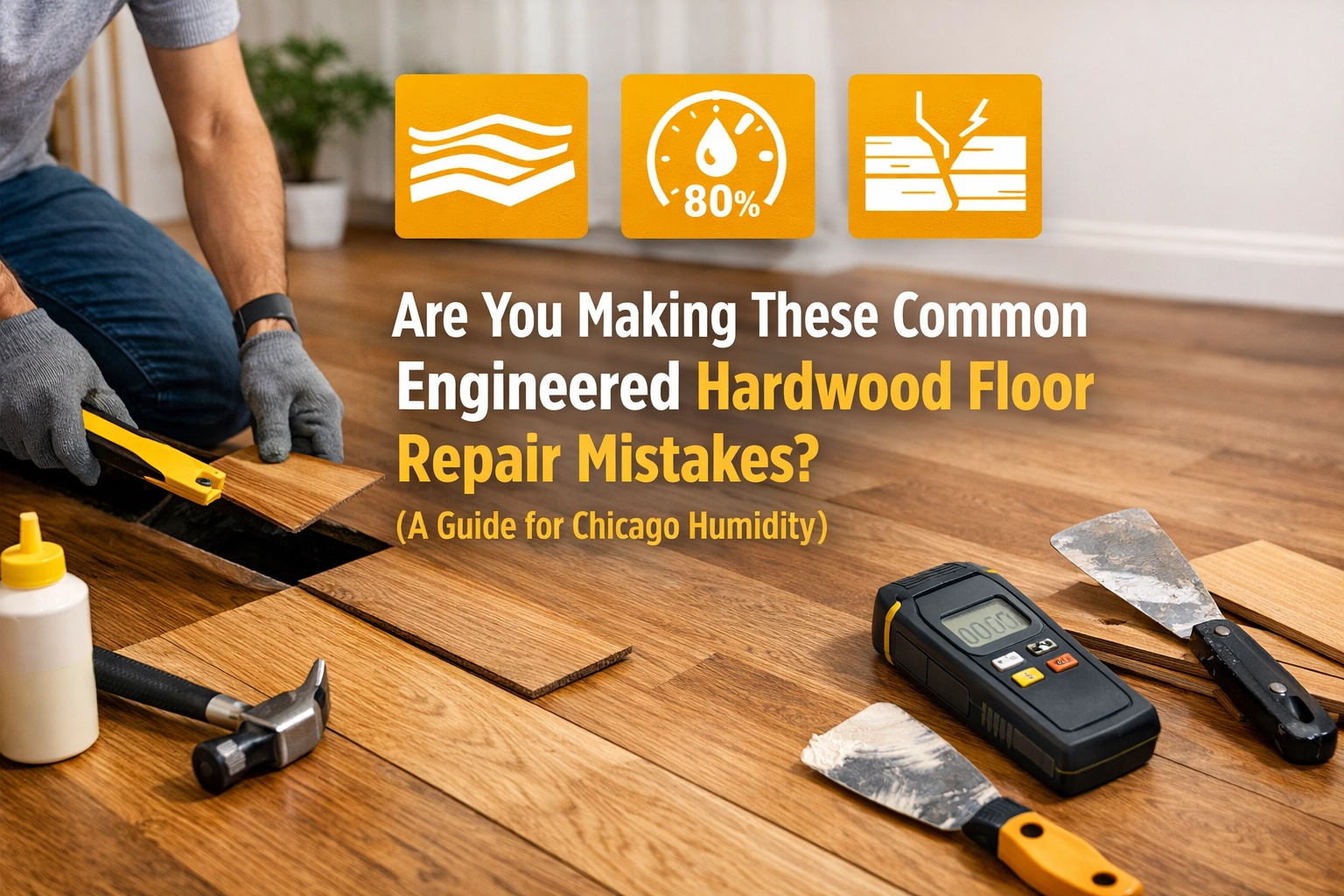
Living in Chicago means dealing with a special kind of weather chaos. One day you’re enjoying a crisp fall breeze, and the next, you’re dealing with a humid heatwave that makes the air feel like soup. While we locals just grab an extra layer or crank the A/C, your floors aren't quite as adaptable.
If you’ve invested in engineered hardwood flooring, you probably chose it because it’s known for being more stable than solid wood. And that’s true! But there’s a common myth floating around the North and West suburbs: the idea that engineered floors are "indestructible."
At Rovin's Flooring Inc, we’ve seen it all: from the Gold Coast to Naperville. We’ve seen beautiful floors ruined by simple DIY mistakes and a lack of understanding of how Chicago humidity hardwood floors actually interact. If you’re noticing gaps, creaks, or "cupping," you might be tempted to grab a toolbelt and get to work. Before you do, let’s talk about the mistakes that could turn a simple fix into a total floor replacement.
The Chicago Climate: A Rollercoaster for Your Floors
In Chicago, our humidity levels are all over the map. In the summer, the lake keeps things damp and heavy. In the winter, we blast our furnaces, which sucks every last drop of moisture out of the air. This constant "breathing" of the wood: expanding in summer and shrinking in winter: is the primary cause of floor damage.
Engineered wood is designed with a plywood or HDF core to resist this movement, but it isn't immune. When the humidity inside your home swings outside the ideal 35% to 55% range, the wood struggles. If you don't manage your indoor climate, even the best installation will eventually show signs of stress. You can learn more about how we monitor these factors on our humidity information page.
Mistake #1: Ignoring Gaps or "Cupping" Until It’s Too Late
One of the biggest mistakes homeowners make is the "wait and see" approach. You notice a small gap between planks in February and think, "I'll deal with that later." Or maybe you notice the edges of the planks are slightly higher than the center (that’s called cupping) during a particularly humid July.
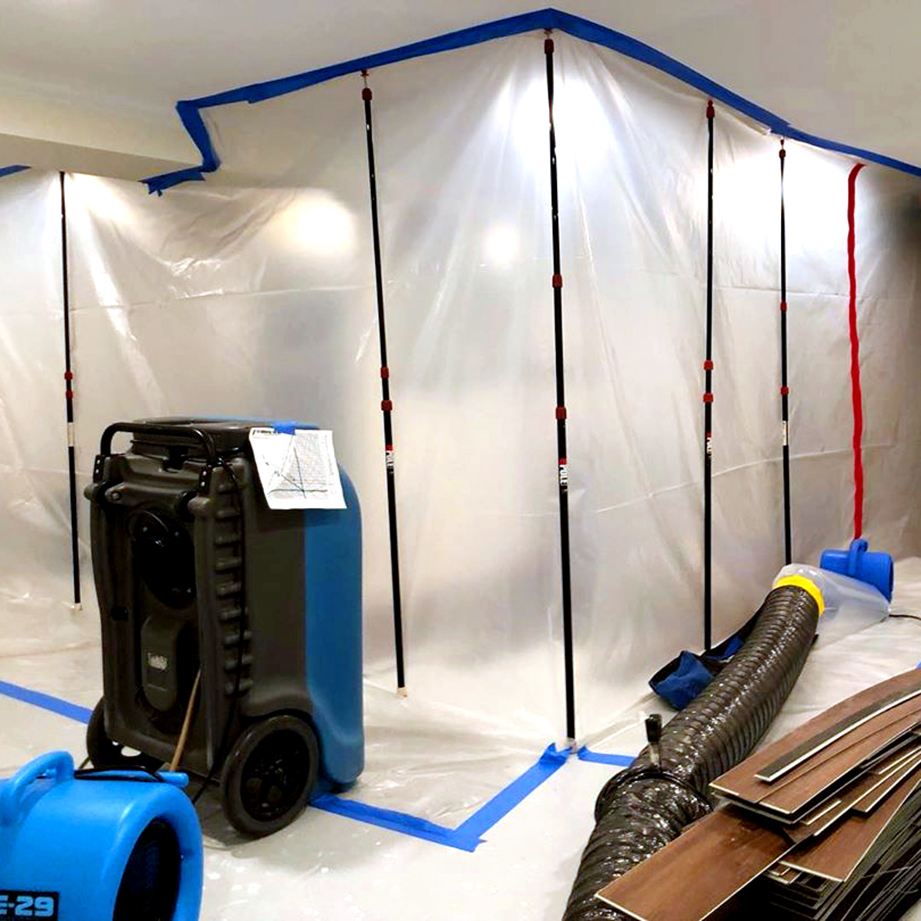
Ignoring these signs is a recipe for disaster. Gaps aren't just an eyesore; they allow dirt and moisture to penetrate the sides of the planks, which can damage the core. Cupping is usually a sign of a moisture imbalance between the top and bottom of the floor.
Often, these issues can be resolved simply by stabilizing your home’s humidity or performing a minor repair. But if you wait too long, the wood fibers can "set" in that warped position, or the adhesive can fail. By the time it becomes a major problem, you’re looking at a much higher cost for repair vs. replacement.
Mistake #2: The "Wet Mop" Blunder
We get it: you want your floors to shine. But using too much water on an engineered floor is one of the fastest ways to kill it.
Engineered hardwood consists of a real wood veneer bonded to a core. When you saturate the floor with water, that liquid can seep into the seams. Once it hits the core, the wood swells. This leads to "delamination," where the top beautiful wood layer actually starts to peel away from the base.
For proper engineered wood floor maintenance, you should never use a steam mop or a soaking wet rag. Instead, use a damp (not dripping) microfiber mop and a cleaner specifically designed for hardwood. If you’ve already had a spill or a leak, check out our water extraction services before the damage becomes permanent.
Mistake #3: DIY Sanding on High-End Finishes
This is the big one. We see this all the time in the Chicago area: a well-intentioned homeowner rents a drum sander from a big-box store to "freshen up" their engineered floors.
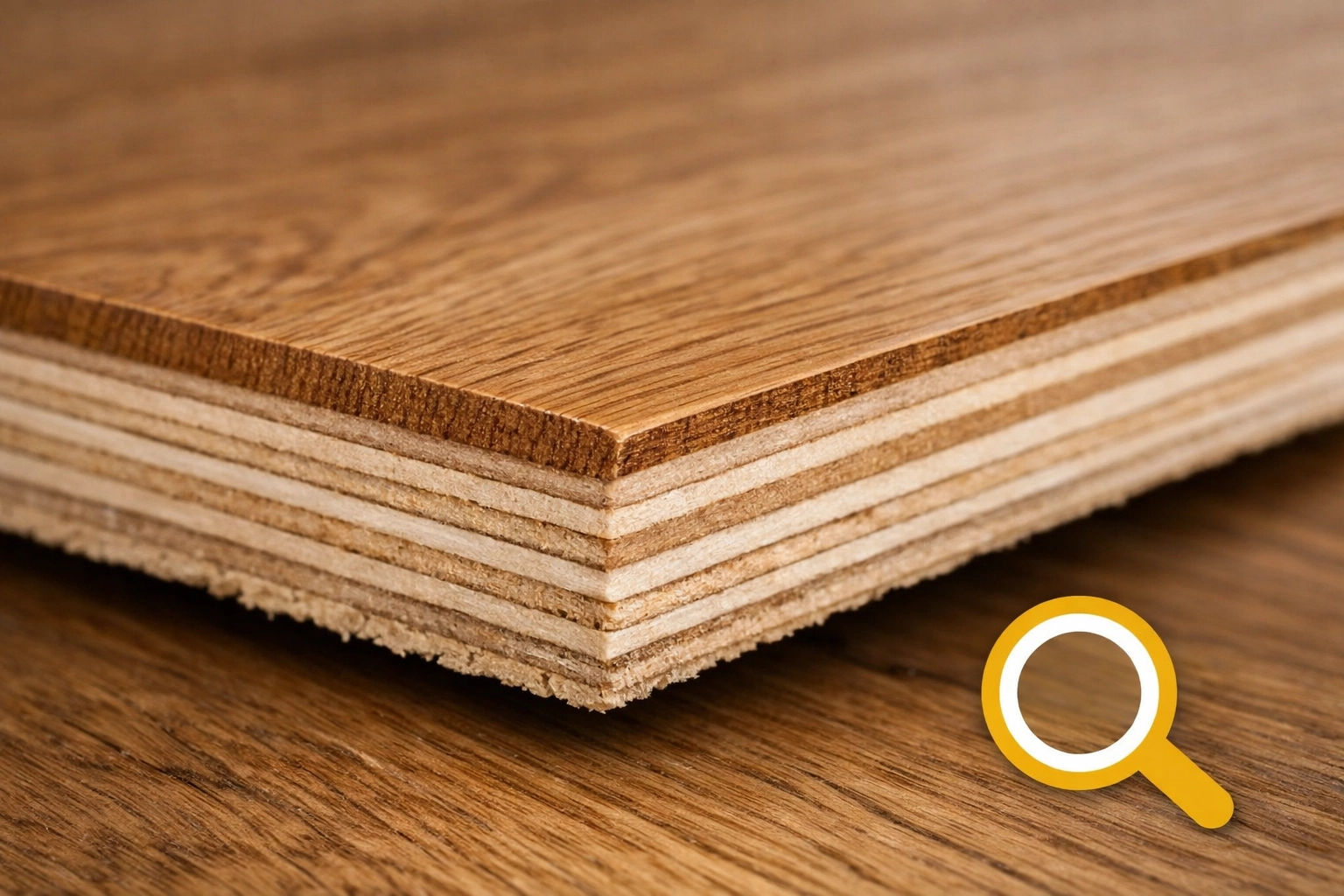
Here is the cold, hard truth: Engineered hardwood has a "wear layer" (the top slice of real wood). On some budget products, that layer is paper-thin. On high-end products, it’s thicker, but it is not infinite. A professional knows exactly how much they can sand. An amateur with a heavy machine can sand through the veneer in seconds, exposing the plywood core underneath. Once you see the plywood, the floor is ruined. There is no "fixing" a sanded-through floor; you have to replace the planks.
If your floors look dull or have scratches, professional refinishing is the way to go. We use specialized equipment and techniques to ensure we stay within the safe limits of your floor’s wear layer. You can see some of our restoration work here.
Mistake #4: Using the Wrong Adhesive for Repairs
If a plank comes loose or needs to be replaced, what you use to stick it back down matters: a lot. Many DIYers grab a tube of general construction adhesive, but these can be too rigid. Wood needs to move.
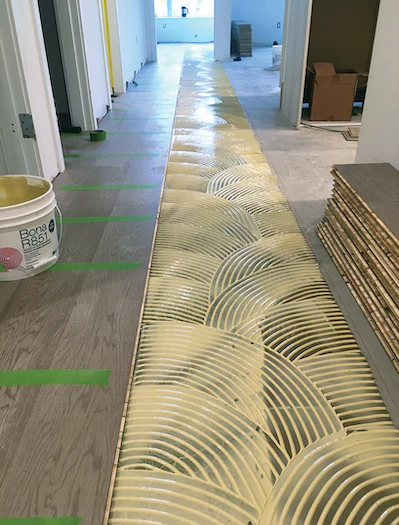
At Rovin's Flooring Inc, we use premium adhesives like Bona R851. This is a silane-based adhesive that provides a strong bond while remaining flexible. This flexibility is crucial for engineered hardwood floor repair in Chicago because it allows the floor to expand and contract with our crazy weather without snapping the bond or cracking the wood.
Why Professional Expertise Matters in Chicago
Whether you’re in a high-rise downtown or a family home in the West suburbs, your flooring needs a professional touch that understands local conditions. We don't just "slap down" floors. We look at the subfloor, the moisture levels, and the specific product requirements.
For example, a glue-down installation on a concrete subfloor in a basement requires a completely different approach than a floating floor in a second-story bedroom. We specialize in subfloor preparation to ensure that your repair or installation lasts for decades, not just seasons.
How to Protect Your Investment
To avoid these common mistakes and keep your engineered floors looking like the day they were installed, follow these three simple rules:
- Monitor Your Air: Invest in a hygrometer (they’re cheap!) to track the humidity in your home. Aim for a steady 45%.
- Clean Smart: Use the right products and zero excess water. Check out our maintenance guide for more tips.
- Call the Pros Early: If you see a gap, a creak, or a weird hump, give us a call. A small adjustment now is much cheaper than a full floor replacement later.
Expert Engineered Hardwood Repair in Chicago
At Rovin's Flooring Inc, Adrian Tiutiu and the whole team are dedicated to keeping Chicago’s floors beautiful. We serve Chicago and a 60-mile radius, focusing specifically on the North and West suburbs. We know the local architecture, the local weather, and exactly what it takes to make your engineered hardwood stand up to the test of time.
If you’re worried about your floors or if you’ve noticed any of the "red flags" mentioned above, don’t wait for the next season to bring more damage. Whether it’s a residential project or a commercial restoration, we have the tools and the experience to do it right the first time.
Ready for a floor that lasts?
Contact us today for a professional assessment. We’ll help you navigate the tricky world of Chicago humidity and ensure your engineered hardwood floors remain a stunning feature of your home for years to come.