
If you're considering hardwood floors for your Chicago home, you're making a timeless choice that adds value and beauty to any space. But here's the thing: installing hardwood in Chicago isn't quite the same as doing it in, say, Arizona or Florida. The Windy City's dramatic seasonal swings: from frigid, dry winters to humid summers: create unique challenges that every homeowner should understand before diving in.
This guide will walk you through everything you need to know about choosing, installing, and maintaining hardwood floors in Chicago and the surrounding 60-mile radius extending north and west. Whether you're a first-time homeowner or simply new to hardwood, we've got you covered.
Why Chicago's Climate Matters for Your Hardwood Floors
Let's start with the elephant in the room: Chicago weather is intense. We experience some of the most significant humidity and temperature fluctuations in the country. In winter, indoor air becomes bone-dry from heating systems. Come summer, humidity levels spike. This constant expansion and contraction can wreak havoc on improperly chosen or installed hardwood floors.
The good news? When you understand these challenges upfront, you can make smart choices that'll keep your floors looking gorgeous for decades.
Choosing the Right Hardwood for Chicago Homes
Solid vs. Engineered: What Works Best?
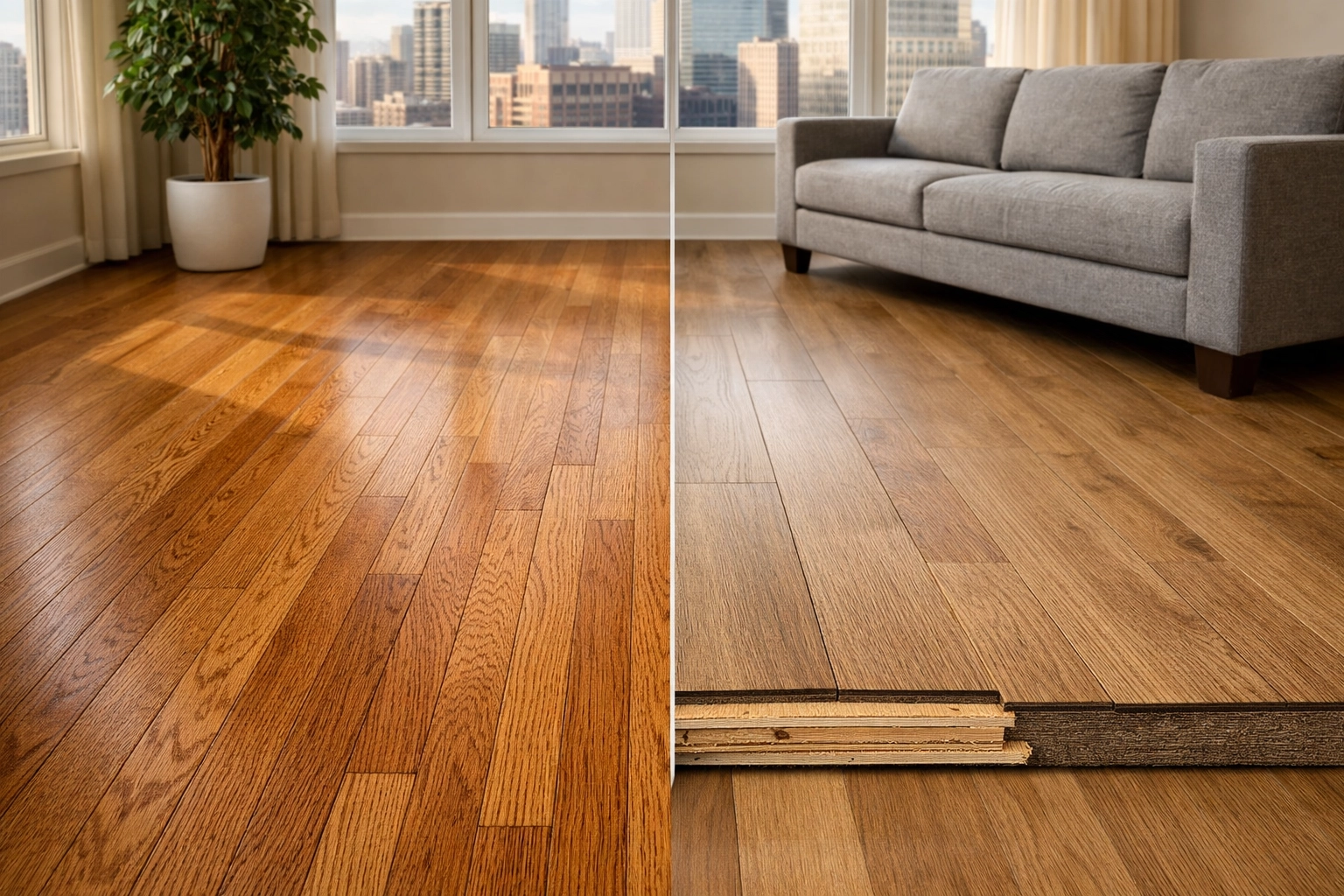
One of the first decisions you'll face is whether to go with solid hardwood or engineered hardwood. For Chicago homes, especially those with concrete slab foundations, engineered hardwood often comes out on top. Here's why:
Engineered hardwood consists of multiple layers of wood pressed together, with a real hardwood veneer on top. This construction makes it more dimensionally stable than solid hardwood, meaning it handles humidity changes better. If you're installing over concrete: common in many Chicago homes: engineered is typically your best bet.
That said, solid hardwood remains a fantastic choice for homes with wooden subfloors, particularly if you want the option to refinish your floors multiple times over the years.
Species Selection: Finding Your Perfect Match
Not all wood species handle Chicago's climate equally. Here are some crowd favorites:
Red Oak remains Chicago's most popular choice for good reason. It's durable, takes stain beautifully, and handles moisture changes reasonably well. You'll find it in countless Chicago homes built from the 1920s onward.
White Oak has been trending upward recently. It's slightly harder than red oak and has a tighter grain pattern that many homeowners love for modern aesthetics. Check out our post on hardwood flooring trends Chicago homeowners are falling for to see what's hot right now.
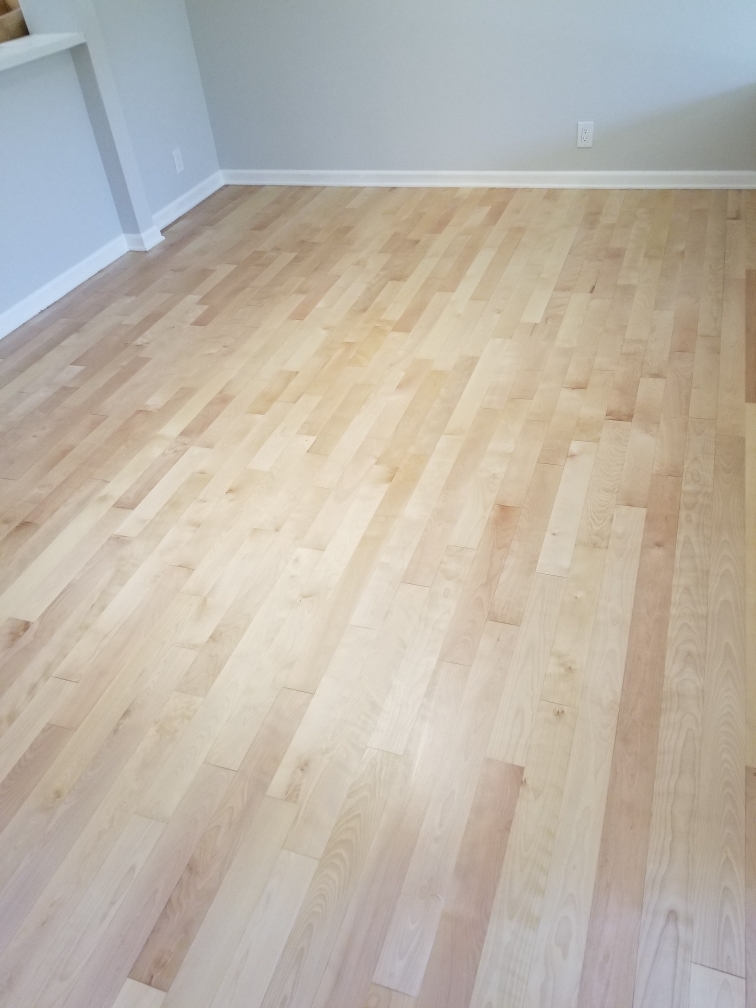
Maple offers exceptional hardness: perfect if you've got kids or pets. Its lighter natural color creates an airy feel, though it's pickier about accepting stain than oak.
Hickory sits at the top of the hardness scale but comes with dramatic grain variation. Love it or hate it: there's not much middle ground with hickory.
Finish Matters More Than You Think
The finish you choose affects both appearance and maintenance. Water-based polyurethane finishes have become the gold standard in Chicago installations. They dry faster than oil-based options, emit fewer fumes, and maintain their clarity without yellowing over time.
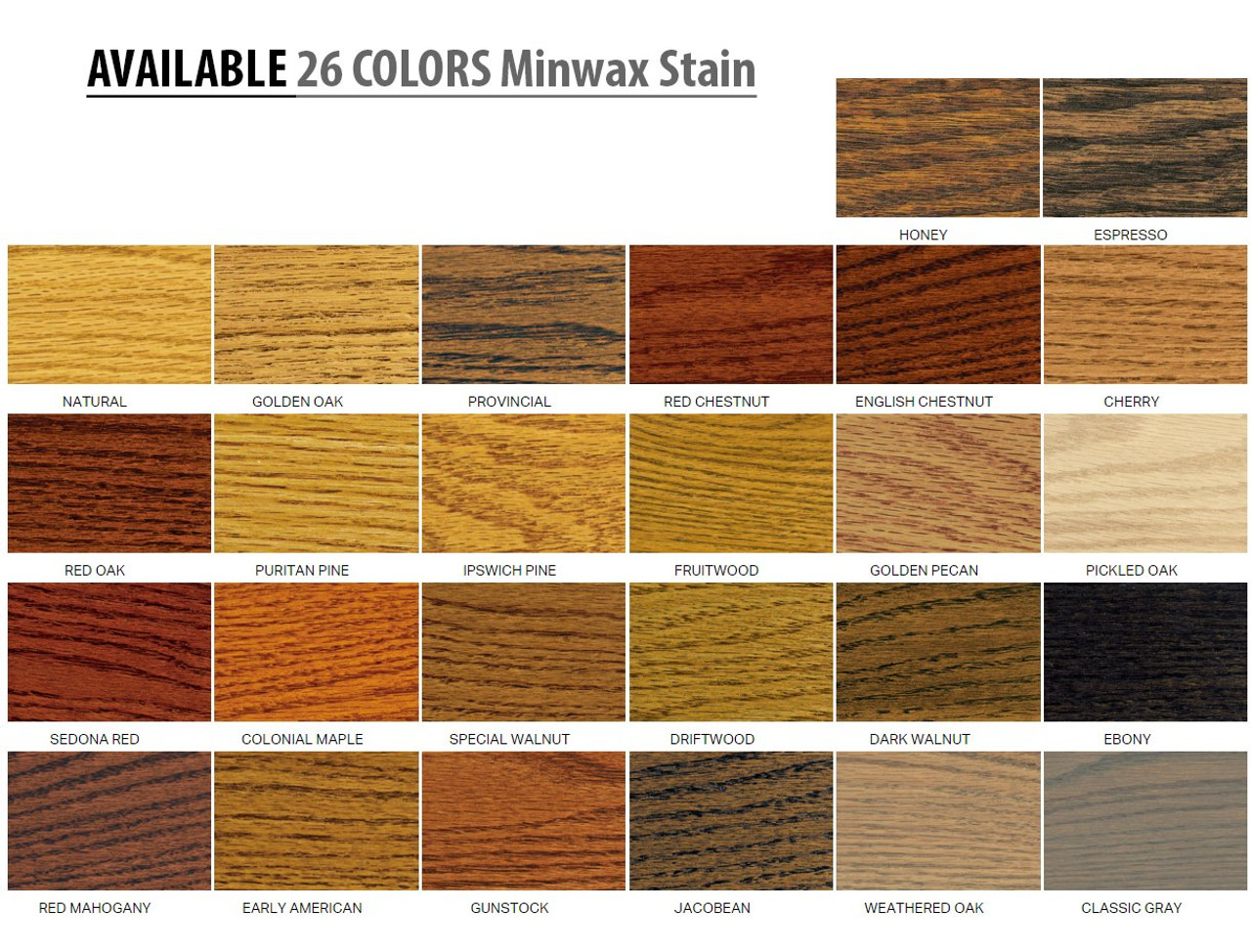
For color, Chicago homeowners are increasingly gravitating toward natural finishes that highlight the wood's inherent beauty, along with mid-tone stains like natural oak and special walnut. If you want to see the full range of possibilities, stain charts show dozens of options from light natural tones to deep ebonies.
Installation Considerations for Chicago's Climate
The Critical Acclimation Period
Here's where many DIYers and even some installers cut corners: don't let this happen to you. Your hardwood flooring must acclimate to your home's environment for at least 72 hours before installation. Ideally, shoot for a week or even longer.
Why? Because that wood needs to adjust to your home's specific temperature and humidity levels. Skip this step, and you're setting yourself up for gaps, buckling, or squeaking down the road. During acclimation, open the boxes and spread the planks throughout the installation area with your HVAC running at normal settings.
Pre-Installation Prep Work
Before your installer even thinks about laying the first plank, several critical steps need to happen:
Subfloor Assessment: Your subfloor must be level within 3/16 inch over any 6-foot span. Uneven subfloors lead to squeaks, hollow spots, and premature wear. Professional installers will sand high spots or use leveling compound on low areas.
Moisture Testing: Especially important for concrete subfloors common in Chicago. Excess moisture will destroy hardwood faster than you can say "home insurance claim."
Room Clearing: Everything comes out: furniture, area rugs, window treatments that might get dusty. You want a completely empty, clean workspace.
Installation Methods Explained
Your installation method depends primarily on your subfloor type:
Nail-Down Installation is the traditional method for solid hardwood over wooden subfloors. Installers use a pneumatic flooring nailer to drive cleats through the tongue of each plank at a 45-degree angle. This creates an incredibly strong, durable floor that can be refinished multiple times. The process involves starting with a perfectly straight first row (maintaining that crucial 3/4-inch expansion gap along walls), then working row by row with careful attention to staggering end joints by at least 6 inches.
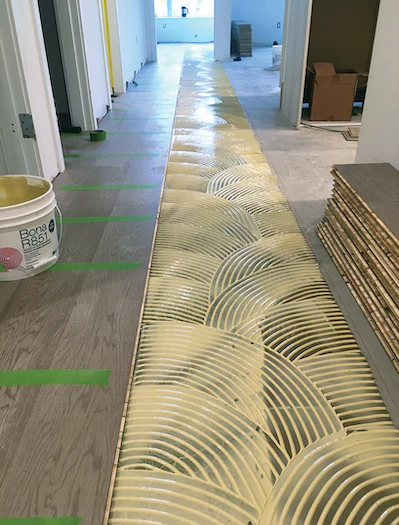
Glue-Down Installation works well for engineered hardwood over concrete. Installers spread adhesive with a notched trowel and carefully set each plank. This method requires patience: adhesive typically needs 24 hours to cure before you can walk on the floor.
Floating Floor Systems have gained popularity for engineered products. Planks click together without attaching to the subfloor, instead "floating" on a thin underlayment. While faster to install, floating floors can feel slightly less solid underfoot and have limitations on refinishing options.
The Finishing Touches
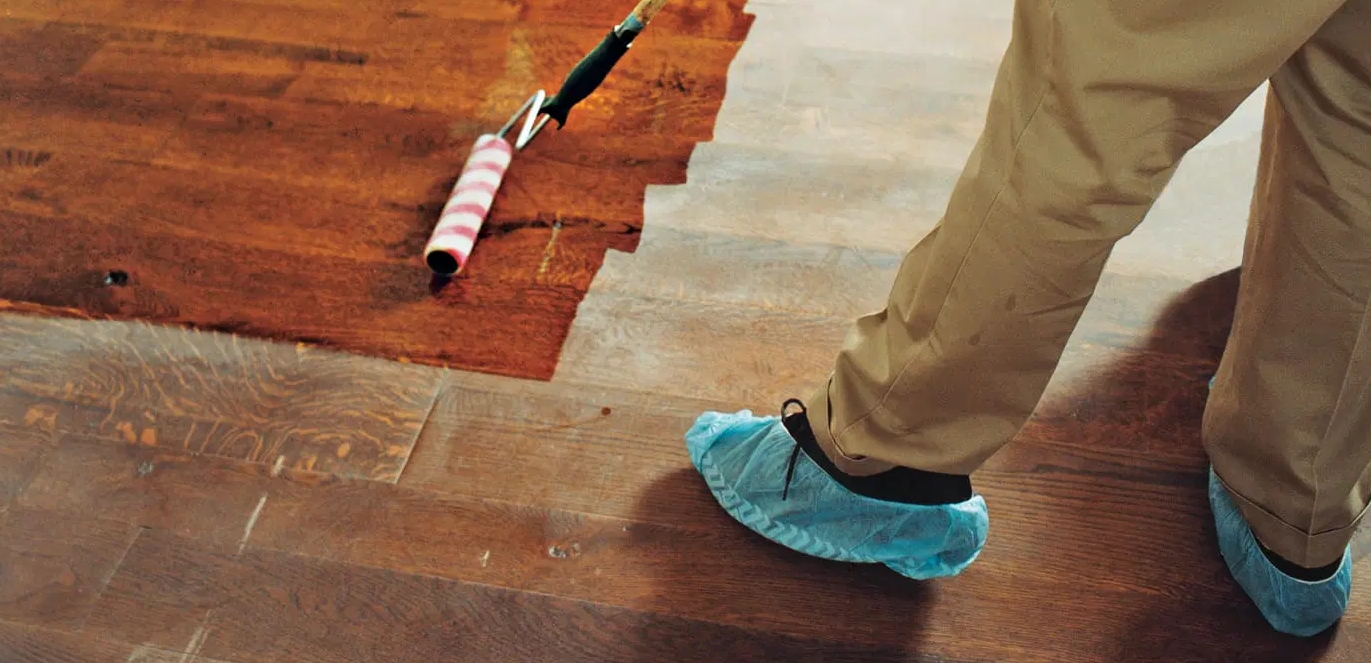
Professional installation doesn't end when the last plank goes down. Baseboards and quarter-round shoe molding cover those expansion gaps and give your room a polished look. If you're getting an unfinished floor, the finishing process happens next: sanding, staining (if desired), and applying multiple coats of polyurethane.
Maintaining Your Chicago Hardwood Floors
Installing beautiful hardwood is one thing; keeping it beautiful is another. Chicago's climate requires a proactive maintenance approach.
Humidity Control is Everything
Invest in a quality humidifier for winter and ensure your home stays between 30-50% relative humidity year-round. Too dry, and your floors will shrink and gap. Too humid, and they'll swell and possibly cup. A simple hygrometer costs $10-20 and could save you thousands in repair costs. For more detailed guidance, visit our humidity management page.
Daily and Weekly Care
Keep it simple: sweep or vacuum regularly using a soft-bristle attachment. Avoid beater bars that can scratch the finish. For damp mopping, use only hardwood-specific cleaners: never steam mops or excessive water. A slightly damp microfiber mop is your best friend.
Place mats at entrances to trap dirt and moisture. Felt pads under furniture legs prevent scratches. Trim your pet's nails. These small habits prevent most of the damage we see.
When to Refinish
Even with excellent care, hardwood floors eventually need refinishing. For solid hardwood, you can typically refinish 4-6 times over the floor's lifetime. Signs it's time include:
- Scratches that penetrate through the finish to bare wood
- Worn-through areas in high-traffic zones
- Discoloration that won't clean away
- Water damage or staining
Wondering whether to fix or replace damaged floors? We've covered this extensively in our guide to engineered hardwood floor repair in Chicago.
What to Expect Cost-Wise
Budget is always a consideration. In the Chicago area, typical hardwood installation runs approximately $6.40 per square foot total when you factor in materials ($2.40/sq ft), labor ($3.50/sq ft), and underlayment ($0.50/sq ft). These are ballpark figures: your actual costs depend on wood species, installation method, room configuration, and current market conditions.
High-end exotic species, intricate patterns, or extensive subfloor repair will push costs higher. Conversely, builder-grade oak in a simple rectangular room might come in under these averages.
Working with Chicago Area Professionals
Hardwood floor installation is one of those projects where professional expertise truly matters. At Rovin's Flooring Inc., we've been installing and maintaining hardwood floors throughout Chicago and the 60-mile radius extending north and west for years. We understand Chicago's climate challenges intimately and know exactly how to prepare, install, and finish floors that will last.
Whether you're ready to move forward with installation or just want to explore your options, we're here to help. Check out our gallery to see examples of our work, or contact us for a consultation and estimate.
Your hardwood floor investment should bring you joy for decades, not headaches and repair bills. With the right choices upfront and proper care ongoing, that's exactly what you'll get. Welcome to the wonderful world of hardwood floors: Chicago style.